Abu Ubayda ibn al-Jarrah: Commander and Governor of the Levant
Abu Ubayda ibn al-Jarrah, born as ʿĀmir ibn ʿAbd Allāh ibn al-Jarrāḥ (c. 583–639 CE), stands as one of the most revered figures in early Islamic history. Known as Amin ul-Ummah (the Trustee of the Ummah), he was among the ten companions of the Prophet Muhammad promised Paradise. His legacy is defined by his transition from a devoted companion to a pivotal military leader and the Governor of the Levant under the second Rashidun Caliph, Umar.
Key Facts
- Title: Amin ul-Ummah (Trustee of the Ummah).
- Roles: Commander-in-Chief of the Rashidun Army and Governor of the Levant (634–639 CE).
- Key Victories: Played critical roles in the Battle of Ajnadayn, the Siege of Damascus, and the Battle of Yarmouk.
- Major Achievement: Oversaw the formal surrender of Jerusalem in 637 CE.
- Death: Passed away during the Plague of Amwas in 639 CE.
Ancestry and Early Life
Abu Ubayda belonged to the al-Harith ibn Fihr clan (also known as the Balharith) of the Quraysh tribe, based in the lower quarter of Mecca. His father, Abd Allah, was a prominent chief during the Fijar War against the Hawazin nomads. In the pre-Islamic era, his clan was allied with the Banu Abd Manaf, the ancestral clan of the Prophet Muhammad.
Abu Ubayda embraced Islam in 611 CE at the age of 28, converting just one day after Abu Bakr. This early adoption placed him among the most senior and trusted companions of the Prophet.
Military Career under Prophet Muhammad
Throughout the early years of the Islamic state, Abu Ubayda was a constant presence in the Prophet's military expeditions. He participated in the foundational battles of Islam, including the Battle of Badr, Uhud, and the Trench, as well as the Conquest of Mecca and the Siege of Ta'if. His experience in these campaigns prepared him for the larger strategic challenges of the Rashidun Caliphate.
Command in the Levant
Appointment to Supreme Command
Following the Ridda Wars (the wars of apostasy), the Rashidun Caliphate turned its attention toward Byzantine Syria. While some early traditions suggest Abu Bakr initially considered him for command, modern research indicates that Abu Ubayda was dispatched to the Syrian front by Caliph Umar around 636 CE.
Initially serving in a supportive role to the renowned general Khalid ibn al-Walid, Abu Ubayda eventually assumed supreme command. Historical accounts vary on the timing, but many suggest the transition occurred after the decisive victory at the Battle of the Yarmouk.
The Road to Damascus and Ajnadayn
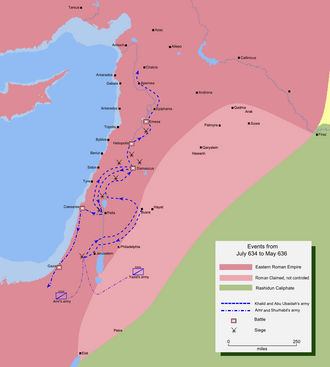
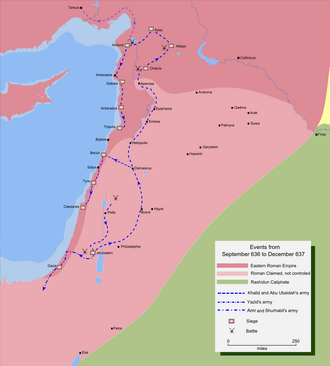
In July 634, Muslim forces encountered a massive Byzantine army at Ajnadayn. Under the leadership of Khalid ibn al-Walid, the Muslim army of 32,000 defeated the 90,000-strong Byzantine force. Following this, Abu Ubayda and Khalid marched toward Damascus, winning further engagements at Yaqusa and Marj al-Saffar.
During the 30-day siege of Damascus, Abu Ubayda was positioned at the Bab al-Jabiya (Jabiya Gate). It was to him that Thomas, the son-in-law of Emperor Heraclius, surrendered the city on September 19, 634.
Conquest of Central and Northern Syria
Abu Ubayda's strategic vision was essential in securing central Syria. He directed the defeat of a Byzantine garrison at Fahl (Pella) in January 635, a move that cut Byzantine communications between Palestine and northern Syria.
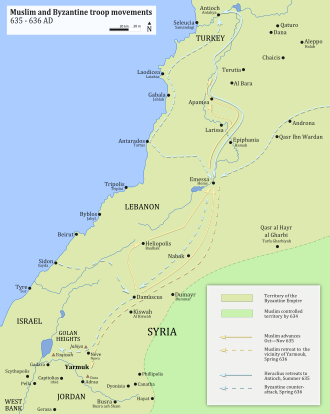
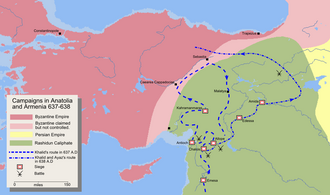
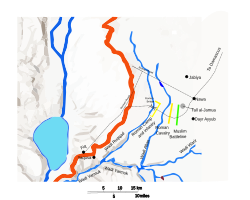
The campaign culminated in the Battle of Yarmouk (636 CE), where the Muslim forces shattered a massive Byzantine army. This victory left the region vulnerable, allowing Abu Ubayda and Khalid to push further north. They captured Chalcis in June 637 and Aleppo in October 637 after fierce resistance.
![Battle against the Byzantines for Aleppo in 637. Rawdat al-safa (Garden of felicity) by Mirkhwand (d. 1498), Shiraz, 1571-72 (Arthur M. Sackler Collection, S1986.241).[22]](/images/e0/39/e0392aceaddf9a4c6994f3d7ceb8e4e6b3d9d4cb5cd95eb5aed9c52a417917ea.jpg)
The Siege of Jerusalem
Following the victory at Yarmouk, the Muslim high command targeted Jerusalem. After a four-month siege, the city agreed to surrender, but only on the condition that Caliph Umar accept the surrender in person. Umar traveled from Medina, and Jerusalem formally surrendered in April 637.
Strategic Defense of Emesa
In 638, Emperor Heraclius attempted to regain footing by leveraging Christian Arab tribes from the Jazirah region to besiege Emesa. Abu Ubayda implemented a complex strategy, withdrawing forces into the city while Caliph Umar coordinated counter-invasions into the enemy's homeland in Al-Jazira. This forced the Christian Arab forces to abandon the siege, at which point Khalid ibn al-Walid's mobile guard attacked them from the rear, devastating the retreating army.
Humanitarian Efforts and Death
Beyond his military achievements, Abu Ubayda is remembered for his generosity. During a severe famine in 638, he organized food caravans from the Levant to Medina. He personally coordinated the distribution of supplies to the needy and famously refused a 4,000-dinar stipend from Caliph Umar, stating the work was done solely for the sake of God.
Abu Ubayda died in 639 CE during the Plague of Amwas, a devastating epidemic that swept through the Levant. He died at the age of 55 or 56, leaving no descendants.
Summary of Abu Ubayda's Career
| Category | Details |
|---|---|
| Primary Titles | Amin ul-Ummah, Governor of the Levant |
| Key Military Roles | Field Commander (632–634), Commander-in-Chief (634–639) |
| Major Cities Captured | Damascus, Jerusalem, Aleppo, Antioch |
| Key Battles | Ajnadayn, Yarmouk, Fahl, Iron Bridge |
| Death | 639 CE (Plague of Amwas) |
Frequently Asked Questions
Why is Abu Ubayda called Amin ul-Ummah?
He is called Amin ul-Ummah, which translates to "the Trustee of the Ummah," due to his exceptional honesty, integrity, and the trust placed in him by both the Prophet Muhammad and the early Caliphs.
What was Abu Ubayda's role in the capture of Jerusalem?
Abu Ubayda led the forces during the four-month siege of Jerusalem. He managed the negotiations that led to the city's surrender, though the final handover was performed by Caliph Umar in person as per the city's request.
How did Abu Ubayda's command differ from Khalid ibn al-Walid's?
While Khalid was renowned as a tactical genius and aggressive field commander, Abu Ubayda was often viewed as a strategic administrator and a moral leader. Caliph Umar eventually appointed Abu Ubayda as the supreme commander to provide a different style of leadership in the Levant.
Where is Abu Ubayda buried?
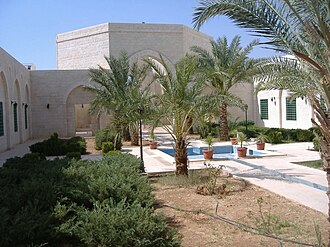
While historical traditions mention Tiberias and Beisan, his tomb is widely held to be in the village of Ammata in the Jordan Valley, an area now known as Ghawr Abi Ubayda.
What was the Plague of Amwas?
The Plague of Amwas was a deadly epidemic that struck the Rashidun army and the local population in the Levant around 639 CE, leading to the death of Abu Ubayda and many other high-ranking companions.