Abercrombie & Fitch: The Evolution of Brand Identity and Marketing
Abercrombie & Fitch has long been a polarizing force in the fashion industry, utilizing a high-concept approach to brand identity that blended aspiration, exclusivity, and provocation. By positioning itself not just as a clothing retailer but as a lifestyle "fantasy," the company redefined how youth apparel was marketed in the early 21st century.
The Strategy of Casual Luxury
For years, Abercrombie & Fitch cultivated an upscale image designed to elevate the brand above standard youth clothing. This shift became prominent following the 2005 opening of its Fifth Avenue flagship store, placing the brand alongside premium retailers like Prada. To solidify this positioning, the company introduced the trademark Casual Luxury, a fictional dictionary term used to describe the use of high-grade materials such as pima cotton, the finest cashmere, and high-quality leather.
This "near-luxury" pricing strategy allowed the brand to expand into international high-end locations, where merchandise was often priced at nearly double the rates found in American stores.

Sensory and Visual Marketing
The brand's identity was heavily driven by the vision of former CEO Mike Jeffries, who viewed the in-store experience as a "movie." This was achieved through several distinct tactics:
- Provocative Imagery: The company utilized black-and-white outdoor photography by Bruce Weber, often featuring partially nude models to emphasize sexuality.
- Store Atmosphere: In the 2000s and early 2010s, partially nude men and women served as store greeters.
- Sensory Marketing: The brand used sensory marketing—the practice of appealing to the physical senses to influence consumer behavior—by heavily spraying its signature fragrance, Fierce, throughout its stores.
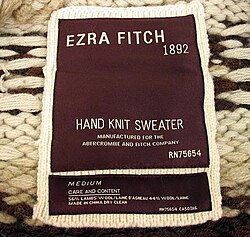
Product Positioning and Market Challenges
Industry analysts, including Women's Wear Daily, described the company's aesthetic as "neo-preppy" with an "edgy tone." During the 2000s, A&F maintained some of the highest price points in the youth-clothing sector. This rigidity became a liability during the late-2000s recession; the company suffered financially because it refused to offer discounts, fearing that doing so would "cheapen" its near-luxury image. Despite this, revenue rose 13% by September 2010.
In a move toward broader sports integration, Abercrombie & Fitch partnered with the National Football League in 2026, becoming the league's first official fashion partner.
Controversies and Public Backlash
The brand's provocative approach frequently led to public outcry and boycotts due to offensive or sexualized merchandise.
Cultural and Social Insensitivity
- Racial Stereotypes: In 2002, the company apologized and discontinued a shirt featuring a derogatory depiction of 19th-century Chinese immigrants.
- Regional Stereotypes: In 2004, the brand faced criticism from West Virginia Governor Bob Wise for a shirt that played on incestuous tropes regarding rural America.
- Gender Stereotypes: A 2004 shirt mocking male gymnasts as "losers" led to a boycott by USA Gymnastics president Bob Colarossi.
Sexualization of Youth Apparel
The company faced multiple "Girlcotts" and protests over sexualized clothing. In 2002, parents protested thong underwear for young girls featuring phrases like "Eye Candy." In 2005, the Women and Girls Foundation of Southwest Pennsylvania protested shirts with messages such as "Who needs brains when you have these?" (referring to breasts). In 2009, the American Family Association criticized "humor tees" that promoted a "sex-as-recreation" lifestyle.
Brand Protection and Exclusivity
To maintain its premium status, Abercrombie & Fitch launched a global brand protection program in 2006 to combat the extensive counterfeiting of its products. The company also took aggressive steps to control who represented its image. In 2011, the company offered Mike "The Situation" Sorrentino and other Jersey Shore cast members payment to stop wearing the brand, citing concerns that the association would damage its image.
The "Cool Kids" Controversy
In 2013, a 2006 interview with Mike Jeffries resurfaced, sparking widespread backlash. Jeffries had stated that the company specifically targeted "cool, good-looking people" and admitted, "Are we exclusionary? Absolutely." Following public condemnation from figures like Ellen DeGener쩡es and Kirstie Alley, Jeffries issued a statement regretting his choice of words and asserting that the company opposed all forms of discrimination.
Key Facts
- Core Aesthetic: Defined as "neo-preppy" with an edgy, sexualized tone.
- Pricing Strategy: Utilized "near-luxury" pricing to maintain an upscale image.
- Signature Scent: Used the fragrance "Fierce" as a sensory marketing tool.
- NFL Partnership: Became the NFL's first official fashion partner in 2026.
- Brand Philosophy: Previously operated on a philosophy of intentional exclusion to attract "cool" demographics.
| Category | Previous Approach | Key Outcome/Impact |
|---|---|---|
| Marketing | Provocative, partially nude imagery | High brand awareness; frequent controversy |
| Pricing | Near-luxury / No discounts | Financial hit during late-2000s recession |
| Demographic | Exclusionary ("Cool kids") | Significant public backlash in 2013 |
| Product Line | Neo-preppy apparel & fragrances | Established "Casual Luxury" identity |
Frequently Asked Questions
What was "Casual Luxury"?
Casual Luxury was a trademarked, fictional dictionary term used by Abercrombie & Fitch to describe its use of premium materials like pima cotton and cashmere to create exclusive, body-conscious clothing.
How did the company use sensory marketing?
The company utilized sensory marketing by heavily spraying its signature fragrance, Fierce, throughout its retail stores to create a specific olfactory association with the brand.
Why did Abercrombie & Fitch struggle during the late-2000s recession?
The company suffered financially because it refused to lower prices or offer discounts, arguing that such moves would cheapen its near-luxury brand image.
What was the "Girlcott"?
The "Girlcott" was a protest launched in 2005 by the Women and Girls Foundation of Southwest Pennsylvania against T-shirts that featured messages degrading girls' intelligence or sexualizing them.
How did the company handle counterfeiting?
In 2006, the company established a brand protection program, collaborating with global law enforcement to eliminate the supply of illicit Abercrombie & Fitch products.