Abdullah Gül: The Political Journey of Turkey's 11th President
Abdullah Gül is a pivotal figure in modern Turkish history, having served as the 11th President of Turkey from 2007 to 2014. His career is marked by a transition from academic research in economics to the highest levels of state leadership, navigating the complex intersection of Islamic political thought and the secular foundations of the Turkish Republic.
Before ascending to the presidency, Gül held several critical roles, including a brief tenure as Prime Minister and a significant period as the Minister of Foreign Affairs. His leadership was instrumental during a period of intense political transformation in Turkey, particularly during the rise of the Justice and Development Party (AKP).
Key Facts
- Presidency: Served as the 11th President of Turkey from August 28, 2007, to August 28, 2014.
- Prime Ministership: Served as the 24th Prime Minister of Turkey for four months (November 2002 – March 2003).
- Diplomatic Role: Acted as Minister of Foreign Affairs and Deputy Prime Minister between 2003 and 2007.
- Education: Holds a PhD from Istanbul University and studied at the University of Exeter.
- Historic Milestone: He was the first Turkish president with a background in Islamic politics.
Early Life and Academic Foundation
Born on October 29, 1950, in Kayseri, central Anatolia, Abdullah Gül's birth coincided with the 26th anniversary of the Republic of Turkey. The son of Ahmet Hamdi Gül, a retired air force mechanic, and Adviye Satoğlu, Gül pursued a rigorous academic path in economics.
He studied Economics at Istanbul University and later spent two years (1976–1978) at the University of Exeter in the United Kingdom. Upon returning to Turkey, he taught at Sakarya University while conducting doctoral research on the economic relations between Turkey and other Muslim nations, eventually earning his PhD from Istanbul University in 1983.
Between 1983 and 1991, Gül expanded his professional experience internationally by working at the Islamic Development Bank (IDB) in Jeddah, Saudi Arabia. His academic contributions were later recognized with honorary doctorates from Amity University and the University of Dhaka.
Rise in Turkish Politics
Gül entered the Grand National Assembly in 1991 as a representative for Kayseri, initially affiliated with the Welfare Party (Refah Partisi). During the early 1990s, he became a controversial figure due to his critiques of the secular system established by Mustafa Kemal Atatürk, suggesting that the secular model had failed.
Following the landslide victory of the Justice and Development Party (AKP) in the November 2002 general election, Gül was appointed Prime Minister. This appointment was a strategic necessity, as the party leader, Recep Tayyip Erdoğan, was legally banned from holding office at the time.
Gül's government successfully passed legislation to lift Erdoğan's political ban. By March 14, 2003, Erdoğan took over as Prime Minister, and Gül transitioned into the dual roles of Deputy Prime Minister and Minister of Foreign Affairs.
Diplomatic Leadership and Foreign Affairs
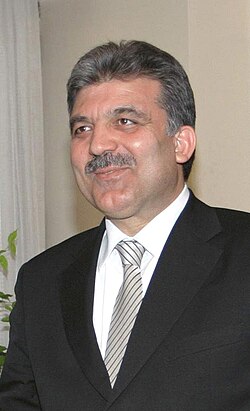
As Foreign Minister, Gül became a central figure in Turkey's international strategy. He focused heavily on securing an accession date for the European Union and worked to mend diplomatic ties with Syria. He also prioritized maintaining strong relationships with Turkic-speaking nations across the Caucasus and Central Asia.
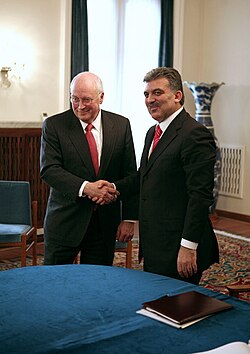
His diplomatic efforts included high-level engagements with global powers, such as meetings with U.S. President George W. Bush and Secretary of State Condoleezza Rice in January 2008.
The Presidency (2007–2014)
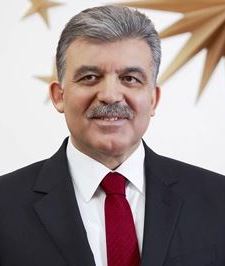
Gül's path to the presidency was fraught with tension. When Prime Minister Erdoğan announced Gül as the AKP candidate in April 2007, he faced fierce opposition from secularists and the Constitutional Court, who were concerned about his Islamist political roots.
The process reached a deadlock due to a parliamentary boycott, leading Gül to briefly withdraw his candidacy on May 6, 2007. However, following constitutional changes that allowed for the direct election of the president by the people, Gül returned to the race. He was eventually elected, becoming the first president in Turkish history with a background in Islamic politics.
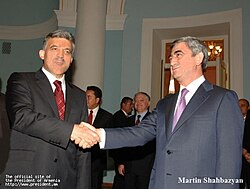
During his presidency, Gül continued to engage in high-stakes diplomacy, including a landmark visit to Armenia in September 2008 to meet President Serzh Sargsyan.
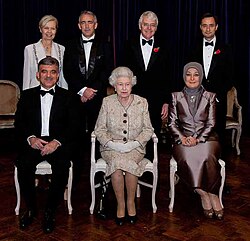
His tenure was marked by international recognition, including being awarded "Statesman of the Year" by Queen Elizabeth II in 2010.
Post-Presidency and Legacy
After completing his term on August 28, 2014, Gül stepped back from active domestic politics but remained involved in international finance and diplomacy. He currently serves as a member of the Advisory Panel for the President of the Islamic Development Bank.
| Role | Period | Key Focus/Context |
|---|---|---|
| Member of Parliament | 1991–2007 | Represented Kayseri; Welfare, Virtue, and AKP parties. |
| Prime Minister | 2002–2003 | Led government until Recep Tayyip Erdoğan's ban was lifted. |
| Foreign Minister | 2003–2007 | EU accession and relations with Turkic states. |
| President of Turkey | 2007–2014 | First president from an Islamic political background. |
Frequently Asked Questions
Why was Abdullah Gül appointed Prime Minister in 2002?
He was appointed because the AKP leader, Recep Tayyip Erdoğan, was legally banned from participating in politics at the time of the 2002 election victory.
What was the main controversy surrounding his presidency?
His candidacy faced strong opposition from secularists and the Constitutional Court due to his previous involvement with Islamist political parties.
Which international organizations has he been associated with?
Gül worked for the Islamic Development Bank (IDB) in Jeddah from 1983 to 1991 and currently serves on the IDB's Advisory Panel for the President.
What were his primary goals as Foreign Minister?
His primary goals included pursuing Turkey's accession to the European Union, improving relations with Syria, and strengthening ties with Central Asian and Caucasian Turkic-speaking countries.