The 2024 South Korean Martial Law Crisis: A Timeline of Political Turmoil
In a sudden and dramatic escalation of political tension, South Korea experienced a profound constitutional crisis in late 2024. What began as a late-night declaration of emergency martial law by President Yoon Suk Yeol rapidly transformed into a nationwide movement for accountability, leading to the eventual removal of the president from office and a complete restructuring of the nation's leadership.
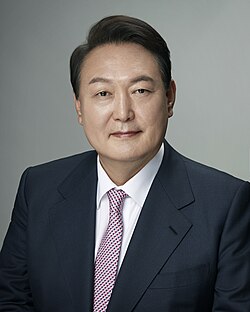
Key Facts
- Martial Law Duration: Declared on 3 December 2024; lifted on 4 December 2024.
- Primary Cause: Political friction regarding budget proposals, investigations into the First Lady, and conspiracy theories regarding election fraud.
- National Assembly Response: A unanimous 190–0 vote to end martial law.
- Political Outcome: President Yoon Suk Yeol was impeached and removed from office by the Constitutional Court on 4 April 2025.
- New Leadership: Lee Jae Myung was elected president in a snap election held on 3 June 2025.
Background and Motivations
The crisis was rooted in deep-seated political divisions within the South Korean government. Several factors contributed to the administration's decision to invoke martial law, including intense opposition to budget proposals and attempted impeachment proceedings against prosecutors involved in various scandals. Additionally, the administration faced criminal investigations launched by opposition parties against First Lady Kim Keon-hee, alongside claims of 2024 legislative election fraud conspiracies.
The stated goals of the martial law decree included the dissolution of the National Assembly and opposition parties, the implementation of rule by decree, the control of media and freedom of speech, and the arrest of political opponents.
The Night of the Declaration
On the night of 3 December 2024, President Yoon Suk Yeol declared emergency martial law. The decree, issued under the authority of the Martial Law Commander, Army General Park An-su, aimed to suppress "communist forces" and restore order. However, the implementation was met with immediate resistance from both political leaders and the public.
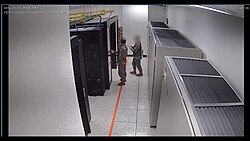
As the declaration took effect, plans were reportedly in motion for the mass detention of political figures and a media blackout, which included orders to cut water and power to various media outlets. Security forces also targeted the National Election Commission.
The National Assembly Standoff
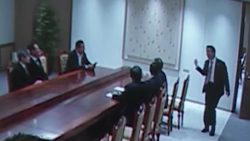
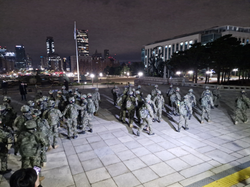
The National Assembly became the central battlefield of the crisis. As troops attempted to enter the building, National Assembly staff and aides used furniture to barricade the main entrances. Civilians also gathered in Yeouido to block military vehicles from approaching the legislative complex.
Despite the military presence, the National Assembly successfully convened. In a decisive moment for South Korean democracy, Speaker Woo Won-shik announced that the assembly had voted 190–0 to end the martial law order. Following this vote, President Yoon was forced to lift the decree.
The Aftermath: Protests and Impeachment
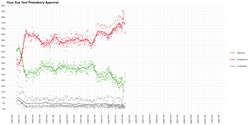
The lifting of martial law did not end the crisis; instead, it ignited a period of intense civil unrest and legal proceedings that lasted four months. Nationwide protests erupted, with demonstrations reaching a peak of approximately 1,000,000 participants demanding the resignation or impeachment of President Yoon.
Legal and Constitutional Consequences
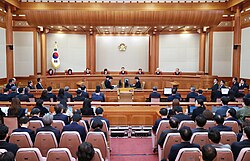
The Constitutional Court eventually reviewed the legality of the martial law declaration. The court found that the declaration lacked substantive requirements and violated several fundamental principles, including:
- Interference with the National Assembly's authority to overturn martial law.
- Violation of citizens' freedom to support political parties.
- Infringement on the separation of powers and judicial independence.
- Violation of basic political rights, such as the right to collective action.
On 4 April 2025, Acting Chief Justice Moon Hyung-bae read the verdict upholding the impeachment, officially removing Yoon Suk Yeol from office.
Summary of the 2024 Martial Law Crisis
| Category | Details |
|---|---|
| Timeline | 3 December 2024 – 4 April 2025 |
| Key Figures (Administration) | Yoon Suk Yeol, Kim Yong-hyun, Park An-su |
| Key Figures (Opposition) | Lee Jae Myung, Woo Won-shik |
| Maximum Protest Size | 1,000,000 people |
| Final Political Result | Impeachment of Yoon; Election of Lee Jae Myung |
Frequently Asked Questions
What were the primary reasons for the martial law declaration?
The declaration was driven by political opposition to budget proposals, investigations into the First Lady, and attempts to impeach prosecutors. The administration also cited the need to combat "communist forces."
How did the National Assembly respond to the military deployment?
The National Assembly resisted the deployment through physical barricades made of furniture and by convening a session to vote. The assembly voted unanimously (190–0) to lift the martial law order.
What was the outcome of the impeachment trial?
The Constitutional Court upheld the impeachment of President Yoon Suk Yeol, citing violations of the Constitution, including the infringement of the separation of powers and the rights of citizens.
Who became the President of South Korea following the crisis?
Following the removal of Yoon Suk Yeol, a snap presidential election was held on 3 June 2025, in which Lee Jae Myung was elected president.
How did the international community react?
The crisis drew significant international attention, with various diplomatic statements issued and concerns raised regarding the stability of the US-South Korea alliance and potential diplomatic isolation.