2006 UEFA Champions League Final: Barcelona's Dramatic Victory Over Arsenal
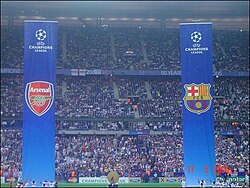
On May 17, 2006, the football world converged on the Stade de France in Saint-Denis, Paris, for one of the most memorable encounters in European football history. The 2006 UEFA Champions League final pitted the Spanish giants FC Barcelona against England's Arsenal in a clash of styles and ambitions.
Barcelona entered the match as the reigning La Liga champions and were widely regarded as the continent's most formidable side, boasting stars like Ronaldinho and Samuel Eto'o. For Arsenal, the match represented a historic milestone: they were the first club from London to reach the final of Europe's primary cup competition.
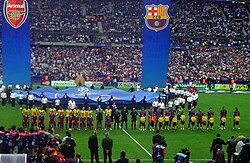
Key Facts
- Final Score: Barcelona 2–1 Arsenal
- Date: May 17, 2006
- Venue: Stade de France, Saint-Denis, France
- Attendance: 79,610
- Man of the Match: Samuel Eto'o (Barcelona)
- Key Turning Point: Early red card for Arsenal goalkeeper Jens Lehmann
The Road to Saint-Denis
Both teams arrived at the final undefeated in their respective campaigns. Arsenal had displayed an extraordinary defensive record, going 919 minutes without conceding a goal—a record at the time—after their group stage match against Ajax. Barcelona, conversely, were an offensive powerhouse, scoring 114 goals across all competitions leading up to the final.
The choice of the Stade de France as the venue was symbolic, marking the 50th anniversary of the first European Cup final held in Paris in 1956. The match also introduced a brand new trophy, as Liverpool had earned the right to keep the previous one after winning their fifth title the year prior.
Match Analysis: A Tale of Two Halves
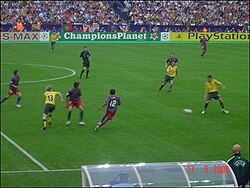
The match began with a shock that fundamentally altered the tactical landscape. Arsenal goalkeeper Jens Lehmann was sent off early in the game, forcing the English side to play with ten men for the vast majority of the match. Despite this numerical disadvantage, Arsenal's resilience shone through in the first half.
First Half Resilience
Arsenal managed to control periods of the game and took a deserved lead in the 37th minute when Sol Campbell found the back of the net. Barcelona struggled to break through the disciplined Arsenal defense, heading into the tunnel trailing 1–0.
The Second Half Turnaround
The momentum shifted significantly after the hour mark when Barcelona introduced Henrik Larsson. The veteran striker proved to be the catalyst for the comeback, providing the assists for both of Barcelona's goals.
The pressure finally told in the 76th minute when Samuel Eto'o equalized. Just four minutes later, in the 80th minute, Juliano Belletti scored the decisive goal to secure a 2–1 victory for the Spanish side. Barcelona's dominance was reflected in their ball possession, which reached 69% in the second half.
Match Summary and Statistics
| Statistic | Barcelona | Arsenal |
|---|---|---|
| Final Score | 2 | 1 |
| Total Shots | 20 | 8 |
| Shots on Target | 9 | 5 |
| Ball Possession | 64% | 36% |
| Yellow Cards | 2 | 1 |
| Red Cards | 0 | 1 |
Post-Match Reactions and Aftermath
The aftermath of the game was dominated by discussions regarding referee Terje Hauge's decision to send off Lehmann. Arsenal manager Arsène Wenger noted that playing with ten men against a team as proficient in possession as Barcelona was a monumental task. Thierry Henry also expressed frustration with the officiating, claiming he was "kicked all over the place."
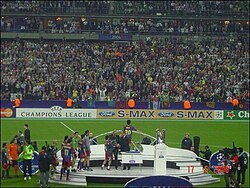
For Barcelona, the victory marked their second European Cup triumph. The win propelled them into the UEFA Super Cup and the FIFA Club World Cup. For the players, it was a moment of personal triumph; Giovanni van Bronckhorst celebrated winning against his former club, and Henrik Larsson ended his tenure with the club on a high note.
Frequently Asked Questions
Who was the Man of the Match in the 2006 final?
Samuel Eto'o was named Man of the Match after scoring the equalizing goal for Barcelona.
Why was a new trophy used for the 2006 final?
A new trophy was created because Liverpool had won the competition for the fifth time in 2005, which entitled them to keep the original trophy.
How did Arsenal perform defensively before the final?
Arsenal had a remarkable run, conceding only two goals in 12 matches and setting a record of 919 minutes without conceding a goal.
What was the significance of Arsenal's appearance in the final?
It was the first time Arsenal had ever appeared in a European Cup final, making them the first London-based club to reach the final.
Who provided the assists for Barcelona's goals?
Henrik Larsson, who came on as a substitute, provided the assists for both Samuel Eto'o and Juliano Belletti.