1970 FIFA World Cup Mexico: Brazil's Third Triumph
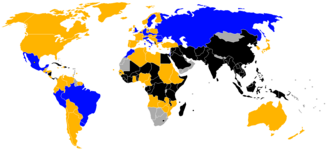
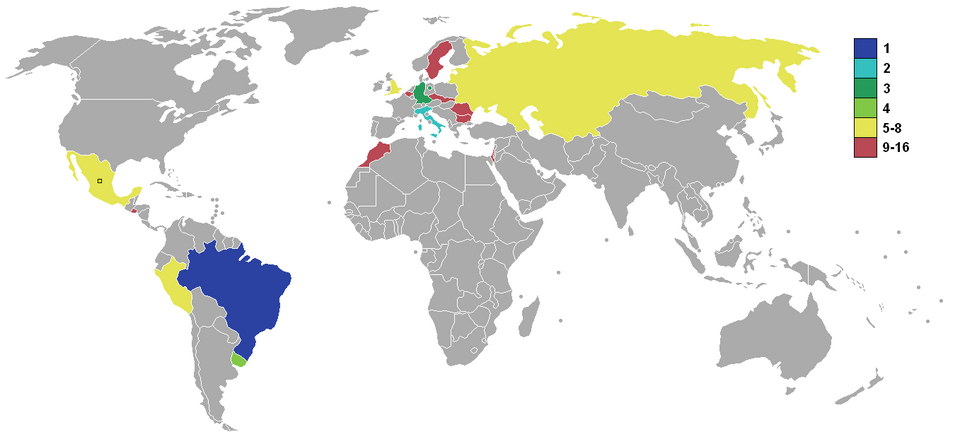
The 1970 FIFA World Cup, hosted by Mexico from May 31 to June 21, remains one of the most iconic tournaments in football history. Featuring 16 teams from five confederations, the event was a showcase of athletic brilliance and tactical evolution, culminating in Brazil securing their third world title.
The tournament was played across five host cities, with the legendary Estadio Azteca serving as the centerpiece. This era marked a significant moment in sports history, blending the passion of Mexican hospitality with the world's greatest footballing talents.
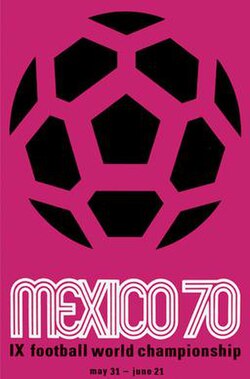
Key Facts
- Champion: Brazil (their 3rd title)
- Runner-up: Italy
- Top Scorer: Gerd Müller (10 goals)
- Best Player: Pelé
- Total Attendance: 1,603,975 spectators
- Total Goals: 95 goals scored across 32 matches
Tournament Organization and Venues
Mexico provided a diverse range of venues to accommodate the 16 qualified nations. The stadiums varied significantly in size, from the massive Estadio Azteca to the more intimate Estadio Nou Camp.
| City | Stadium | Capacity |
|---|---|---|
| Mexico City | Estadio Azteca | 107,247 |
| Guadalajara | Estadio Jalisco | 71,100 |
| Puebla City | Estadio Cuauhtémoc | 35,563 |
| Toluca | Estadio Luis Dosal | 26,900 |
| León | Estadio Nou Camp | 23,609 |
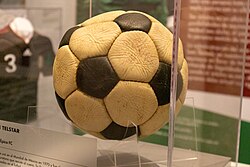
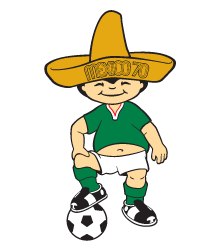
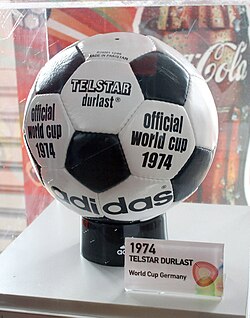
The tournament also introduced memorable branding and equipment, including the official mascot, Juanito, and the Adidas Telstar football, designed for better visibility on television screens.
The Road to the Final
The competition began with a group stage where teams were divided into four groups. A key change in this tournament was the use of goal difference (goals scored minus goals conceded) as the primary tie-breaker, replacing the previous system of goal average.
Group Stage Highlights
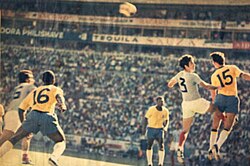
Brazil dominated Group 3, winning all three matches, including a notable 1–0 victory over the defending champions, England. West Germany also showed immense strength in Group 4, led by the prolific scoring of Gerd Müller.
The Knockout Phase
The quarter-finals saw high drama, including West Germany's hard-fought 3–2 victory over England after extra time (a.e.t.). Brazil cruised through their quarter-final against Peru with a 4–2 win, while Italy overcame Mexico 4–1.
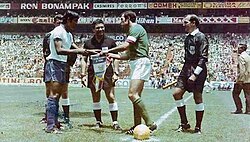
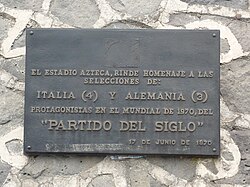
In the semi-finals, Brazil defeated Uruguay 3–1. Italy secured their place in the final after a grueling match against West Germany, winning 4–3 after extra time in front of over 100,000 fans.
The Grand Finale and Legacy
The final took place on June 21 in Mexico City. Brazil delivered a masterclass in attacking football, defeating Italy 4–1. Goals from Pelé, Gérson, Jairzinho, and Carlos Alberto sealed the victory, allowing Brazil to keep the Jules Rimet Trophy permanently.
The tournament's legacy is defined by the brilliance of Pelé, who was retrospectively awarded the Golden Ball, and the efficiency of Gerd Müller, who finished as the top scorer with 10 goals. The event is often remembered as one of the most beautiful displays of football ever played.
Frequently Asked Questions
Who won the 1970 FIFA World Cup?
Brazil won the tournament, defeating Italy 4–1 in the final to claim their third world title.
Who was the top scorer of the tournament?
West Germany's Gerd Müller was the top scorer, netting a total of 10 goals.
Which stadium had the highest attendance?
The Estadio Azteca in Mexico City was the largest venue, with a capacity of 107,247.
What was the tie-breaking rule for the group stage?
The tournament used the greater number of points first, followed by goal difference, and finally a drawing of lots if necessary.
Who was named the best player of the tournament?
Pelé was recognized as the best player and was retrospectively awarded the Golden Ball.