1966 FIFA World Cup: England's Historic Triumph
The 1966 FIFA World Cup remains one of the most iconic tournaments in football history. Hosted by England from July 11 to July 30, the event saw 16 teams from four confederations compete for the prestigious Jules Rimet Cup. It was a tournament defined by high drama, legendary performances, and a crowning achievement for the host nation.
Across eight venues in seven host cities, the tournament captivated a massive audience, with a total attendance of 1,563,135 spectators. The competition progressed from a rigorous group stage to a high-stakes knockout phase, culminating in a final that is still debated by football fans today.
Key Facts
- Champions: England (their first title)
- Runners-up: West Germany
- Third Place: Portugal
- Fourth Place: Soviet Union
- Top Scorer: Eusébio (Portugal) with 9 goals
- Total Goals: 89 goals scored across 32 matches (2.78 per match)
- Average Attendance: 48,848 per match
Tournament Organization and Venues
The tournament was spread across England's most storied cities, utilizing stadiums with varying capacities to accommodate the global influx of fans. The primary hub was London, featuring the massive Wembley Stadium and White City Stadium.
| City | Stadium | Capacity |
|---|---|---|
| London | Wembley Stadium | 98,600 |
| London | White City Stadium | 76,567 |
| Manchester | Old Trafford | 58,000 |
| Birmingham | Villa Park | 52,000 |
| Liverpool | Goodison Park | 50,151 |
| Sheffield | Hillsborough Stadium | 42,730 |
| Sunderland | Roker Park | 40,310 |
| Middlesbrough | Ayresome Park | 40,000 |
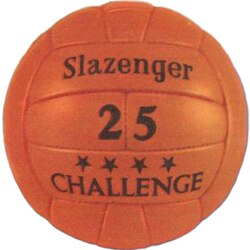
The official match ball for the tournament was produced by Slazenger, providing the physical tool for the athletes to carve their names into history.
The Road to the Final
Group Stage Dynamics
The 16 qualified teams were divided into four groups. England, as hosts, led Group 1, advancing after victories over Mexico and France. West Germany dominated Group 2, while Portugal emerged as a powerhouse in Group 3, led by the prolific scoring of Eusébio. The Soviet Union topped Group 4, though the group was notable for North Korea's surprising performance, including a victory over Italy.
The Knockout Phase
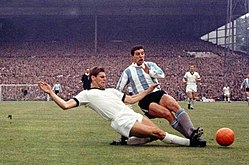
The quarter-finals saw England edge past Argentina 1–0 thanks to a goal by Geoff Hurst. West Germany cruised through with a 4–0 win over Uruguay, while the Soviet Union defeated Hungary 2–1. In one of the most exciting matches of the tournament, Portugal overcame North Korea 5–3.
In the semi-finals, West Germany defeated the Soviet Union 2–1, and England secured their place in the final by beating Portugal 2–1, with Bobby Charlton scoring twice.
The Grand Final
On July 30, 1966, England faced West Germany at Wembley Stadium in front of 96,924 fans. The match was a tense affair that stretched into extra time (a.e.t.), the period of additional play used to break a deadlock in knockout matches.
England eventually secured a 4–2 victory. Geoff Hurst became the hero of the day, scoring a hat-trick (three goals), with Martin Peters adding a fourth. West Germany's goals were scored by Helmut Haller and Wolfgang Weber. This victory marked England's first and, to date, only World Cup title.
Frequently Asked Questions
Who was the top scorer of the 1966 World Cup?
The top scorer was Eusébio of Portugal, who scored a total of 9 goals during the tournament.
Which stadium hosted the final match?
The final match was held at Wembley Stadium in London, with an attendance of 96,924.
How many teams participated in the 1966 tournament?
A total of 16 teams from four different confederations participated in the tournament.
What was the final score of the championship match?
England defeated West Germany 4–2 after extra time to win the title.
Which team finished in third place?
Portugal finished in third place after defeating the Soviet Union 2–1 in the third-place play-off.