1935 South American Championship: Uruguay's Seventh Title
The 1935 South American Championship stands as a unique chapter in the history of continental football. Held from January 6 to 27, 1935, in Lima, Peru, this thirteenth edition of the tournament served a dual purpose: celebrating the fourth centenary of the founding of Lima and acting as a qualification pathway for the 1936 Summer Olympics.
The event was designated as a Campeonato extraordinario (Extraordinary Championship), meaning it was held outside the usual schedule and did not have a trophy in dispute. Despite these distinctions, the competition featured some of the region's most powerhouse teams, though Brazil, Bolivia, and Paraguay did not participate.
Overcoming Diplomatic Tension
The road to the 1935 tournament was fraught with tension. For six years, the championship had been dormant following a diplomatic rift between Argentina and Uruguay. This conflict stemmed from the 1930 FIFA World Cup final, where Uruguay defeated Argentina 4–2. Argentina had broken off football relations with Uruguay, alleging they had faced heavy pressure and aggression during that tournament.
By 1935, these tensions subsided enough to allow the tournament to proceed, reuniting the rivals on the pitch in Peru.
Tournament Format and Venue
The competition was hosted at a single venue, the Estadio Nacional in Lima, which boasted a capacity of 40,000 spectators. The format was a straightforward round-robin where each of the four participating teams played three matches.
Points were awarded based on a traditional system: two points for a win, one point for a draw, and no points for a loss.
Key Facts
- Champion: Uruguay, securing their 7th title.
- Host City: Lima, Peru.
- Top Scorer: Herminio Masantonio with 4 goals.
- Total Goals: 18 goals scored across 6 matches (average of 3 per match).
- Olympic Link: Used as a qualifier for the 1936 Summer Olympics.
The Road to Victory
Uruguay dominated the tournament with a clinical performance. Their campaign was highlighted by a decisive 3–0 victory over Argentina in the final match on January 27, with goals from H. Castro, Taboada, and Ciocca. This result cemented their position at the top of the table.
Argentina started strong with a 4–1 victory over Chile and another 4–1 win against Peru, but their loss to Uruguay ultimately cost them the championship.
Final Standings
The final rankings reflected the dominance of the Uruguayan side, while Chile struggled to find their footing, finishing without a single win.
| Team | Played | Won | Drawn | Lost | GF | GA | GD | Points |
|---|---|---|---|---|---|---|---|---|
| Uruguay | 3 | 2 | 0 | 1 | 6 | 1 | +5 | 6 |
| Argentina | 3 | 2 | 0 | 1 | 8 | 5 | +3 | 4 |
| Peru | 3 | 1 | 0 | 2 | 5 | 8 | -3 | 2 |
| Chile | 3 | 0 | 0 | 3 | 7 | 12 | -5 | 0 |
Top Performers
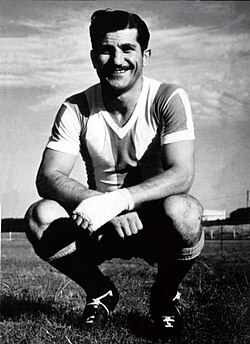
The tournament saw several standout individual performances. Herminio Masantonio of Argentina emerged as the top scorer with 4 goals, including a hat-trick against Peru. Uruguay's Aníbal Ciocca followed closely with 3 goals, playing a pivotal role in his team's championship run.
Frequently Asked Questions
Why was the 1935 tournament called an "Extraordinary Championship"?
It was classified as a Campeonato extraordinario because it was held outside the regular tournament cycle and did not have a trophy in dispute.
Which teams participated in the 1935 South American Championship?
The four participating teams were Uruguay, Argentina, Peru, and Chile.
How did the 1930 World Cup affect this tournament?
The 1930 World Cup final caused a diplomatic rift between Argentina and Uruguay, leading Argentina to break off football relations, which contributed to a six-year gap before the tournament resumed in 1935.
Who was the top goal scorer of the tournament?
Herminio Masantonio was the top scorer, netting a total of 4 goals.
What was the significance of the location and timing?
The tournament was held in Lima, Peru, to coincide with the fourth centenary celebration of the city's founding.