1928 Summer Olympics Football: The Prelude to the World Cup
The football tournament at the 1928 Summer Olympics in Amsterdam stands as a pivotal moment in sporting history. More than just a competition for gold, it served as the final Olympic football tournament before the creation of the FIFA World Cup in 1930. The event was characterized by a clash of philosophies regarding amateurism—the requirement that athletes receive no payment—and the rising tide of professionalism in the sport.
At the time, the Olympic tournament was widely regarded as the de facto World Championship. With 17 teams from five confederations competing, it boasted greater participation than the inaugural 1930 World Cup. However, this prestige created a dilemma for FIFA, as the Olympic movement's strict amateur rules clashed with the reality of professional football.
Key Facts
- Host City: Amsterdam, Netherlands
- Dates: 27 May – 13 June 1928
- Champions: Uruguay (their 2nd Olympic title)
- Top Scorer: Domingo Tarasconi of Argentina (11 goals)
- Total Goals: 128 goals across 22 matches (5.82 per match)
- Legacy: Led directly to the decision to create the FIFA World Cup in 1930
The Struggle Between Amateurism and Professionalism
The 1928 tournament was overshadowed by a diplomatic crisis. FIFA attempted to appease nations by allowing broken time payments—compensation for wages lost while playing—to help professional players maintain a technical amateur status. This compromise was rejected by the four "home" associations of the United Kingdom, who viewed these payments as a violation of amateur principles.
On 17 February 1928, the British associations unanimously voted to withdraw from FIFA. This fracture convinced Henri Delaunay, president of the French Football Federation, that football had outgrown the Olympic framework. He argued that the best players from professional nations could no longer be represented under Olympic rules. Consequently, on 26 May 1928, the FIFA congress presided over by Jules Rimet voted to establish a separate World Cup tournament for 1930.
Tournament Venues and Participation
The competition was hosted in Amsterdam across two primary venues: the Olympic Stadium and Het Nederlandsch Sportpark (Oude Stadion), with capacities of 33,005 and 29,787 respectively.
The tournament saw a high level of competitiveness, particularly among the European sides. Italy, coached by Augusto Rangone, entered as a powerhouse, having been defeated only twice in three years. Meanwhile, South American giants Uruguay and Argentina were considered the strongest teams in the field, though they shared a fierce rivalry marked by previous tense encounters.
The Road to the Gold Medal
Uruguay began their campaign by defeating the host Netherlands 2–0. Their dominance continued through the bracket, including a 4–1 victory over Germany and a hard-fought 3–2 semi-final win against Italy.
Argentina mirrored this success, starting with a crushing 11–2 victory over the United States and later defeating Egypt 6–0 in the semi-finals. Egypt's journey to the semi-finals was a highlight of the tournament, having advanced past Portugal and Turkey.
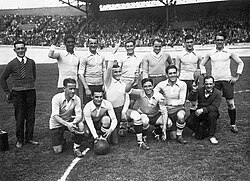
The final between Uruguay and Argentina was a highly anticipated event, drawing massive interest from across Europe. The first match ended in a 1–1 draw after extra time, necessitating a replay. In the deciding match, Uruguay secured a 2–1 victory, with Héctor Scarone scoring the winning goal to claim the gold medal.
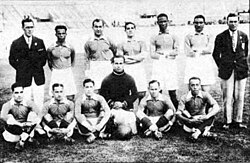
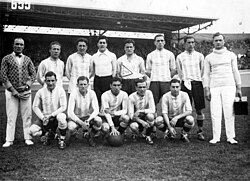
Argentina took home the silver medal, while Italy secured the bronze after a dominant 11–3 victory over Egypt in the third-place match.
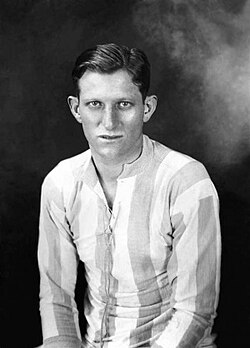
The tournament's standout individual performer was Argentina's Domingo Tarasconi, who finished as the top scorer with an impressive 11 goals.
Tournament Summary
| Position | Nation | Achievement |
|---|---|---|
| 1st | Uruguay | Gold Medal (Champions) |
| 2nd | Argentina | Silver Medal |
| 3rd | Italy | Bronze Medal |
| 4th | Egypt | Fourth Place |
Frequently Asked Questions
Why is the 1928 Olympic tournament controversial?
There is an ongoing debate among historians and fans as to whether the gold medals from the 1924 and 1928 Olympics should be viewed as equivalent to winning a FIFA World Cup, given that they were the premier international competitions of the time.
Who was the top scorer of the 1928 tournament?
Domingo Tarasconi of Argentina was the top scorer, netting a total of 11 goals during the competition.
How did the 1928 Olympics lead to the first World Cup?
The conflict over amateurism and the withdrawal of the British associations convinced FIFA that a separate, professional-friendly international tournament was necessary, leading to the vote to create the World Cup in 1930.
Which teams won the medals in 1928?
Uruguay won the gold medal, Argentina won the silver medal, and Italy won the bronze medal.
What were "broken time payments"?
Broken time payments were subsidies provided to players to cover the loss of wages and expenses incurred while participating in international competitions, a compromise intended to bridge the gap between amateur and professional status.