1926 South American Championship: Uruguay's Sixth Continental Triumph
The 1926 South American Championship, known in Spanish as the Campeonato Sudamericano 1926, marked the 10th international association football competition for the members of the Confederación Sudamericana de Fútbol (CONMEBOL). Hosted by Chile, the tournament brought together the region's elite teams in a display of early 20th-century footballing prowess.
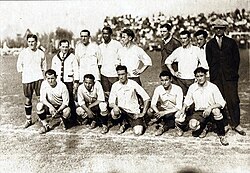
Running from 12 October to 3 November 1926, the event was centered in Santiago at the Estadio Sport de Ñuñoa. While Argentina entered as the defending champions, the tournament ultimately became a showcase for the dominance of Uruguay, who secured their sixth title in the competition's history.
Key Facts
- Champion: Uruguay (6th title)
- Host Country: Chile
- Venue: Estadio Sport de Ñuñoa, Santiago (Capacity: 20,000)
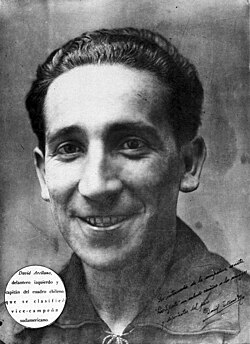
- Top Scorer: David Arellano (7 goals)
- Total Goals: 55 goals across 10 matches (5.5 per match)
- Participating Teams: Argentina, Bolivia, Chile, Paraguay, and Uruguay
Historical Background
The roots of the South American Championship trace back to 1910, when the Asociación del Fútbol Argentino (AFA) organized the Copa Centenario Revolución de Mayo to celebrate the 100th anniversary of the May Revolution. This precursor involved Argentina, Chile, and Uruguay.
Six years later, the AFA organized another tournament to mark the centenary of the Argentine Declaration of Independence. This event expanded to include Brazil and officially birthed the South American Championship. On 9 July 1916, the four participating associations founded CONMEBOL, the governing body for football in South America.
Heading into the 1926 edition, Argentina held the title after their 1925 victory. However, Uruguay remained the most successful nation in the tournament's history, having won five of the first nine editions. Notably, Brazil withdrew before the 1926 competition began, leaving five of the six CONMEBOL members to compete.
Tournament Format and Venue
The competition utilized a round-robin format, a system where every participating team plays every other team exactly once. The final standings were determined by the total number of points accumulated throughout the matches.
All matches were hosted at the Estadio Sport de Ñuñoa in Santiago, a venue with a capacity of 20,000 spectators, providing a centralized atmosphere for the continental clash.
Competition Summary
The tournament opened on 12 October with a dominant performance by the hosts. Chile defeated Bolivia 7–1, fueled by four goals from David Arellano. The defending champions, Argentina, also started strong with a 5–0 victory over Bolivia on 16 October.
Uruguay signaled their intentions early with a 3–1 win over Chile on 17 October. Argentina continued their momentum on 20 October, defeating Paraguay 8–0, with Gabino Sosa scoring four times. By 23 October, after Paraguay beat Bolivia 6–1, Argentina sat atop the table with four points.
The tide shifted on 24 October when Uruguay defeated Argentina 2–0, leveling the top of the table. Uruguay then surged ahead on 28 October with a 6–0 rout of Bolivia, a match highlighted by Héctor Scarone's five goals.
Following a 1–1 draw between Chile and Argentina on 31 October, Uruguay officially clinched the title on 1 November. They secured their fourth consecutive win with a 6–1 victory over Paraguay, featuring four goals from Héctor Castro.
The tournament concluded on 3 November with Chile defeating Paraguay 5–1, a match where David Arellano scored a hat-trick to cement his status as the tournament's leading marksman.
Final Standings
| Pos | Team | Pld | W | D | L | GF | GA | GD | Pts |
|---|---|---|---|---|---|---|---|---|---|
| 1 | Uruguay | 4 | 3 | 1 | 0 | 17 | 2 | +15 | 8 |
| 2 | Argentina | 4 | 2 | 1 | 1 | 14 | 3 | +11 | 5 |
| 3 | Chile | 4 | 2 | 1 | 1 | 14 | 6 | +8 | 5 |
| 4 | Paraguay | 4 | 1 | 0 | 3 | 8 | 20 | -12 | 2 |
| 5 | Bolivia | 4 | 0 | 0 | 4 | 2 | 24 | -22 | 0 |
Frequently Asked Questions
Who won the 1926 South American Championship?
Uruguay won the tournament, marking their sixth title in the history of the competition.
Who was the top scorer of the tournament?
David Arellano of Chile was the top scorer, netting a total of 7 goals.
Where were the matches played?
All matches took place at the Estadio Sport de Ñuñoa in Santiago, Chile.
Which team withdrew from the competition?
Brazil withdrew prior to the start of the tournament, leaving five teams to compete.
What was the average number of goals per match?
With 55 goals scored across 10 matches, the tournament averaged 5.5 goals per game.