1920 Olympic Football Tournament: Belgium's Controversial Gold
The 1920 Summer Olympics in Antwerp, Belgium, marked a pivotal moment for international football. As the fifth time association football appeared on the Olympic schedule, the tournament expanded to 15 nations and saw the historic debut of a non-European team, Egypt. However, the event was shaped as much by the geopolitical tensions following World War I as it was by the action on the pitch.
Because these were the first Games after the Great War, the Central Powers—Germany, Austria, Hungary, Bulgaria, and Turkey—were not invited. Additionally, the tournament faced diplomatic friction involving the UK Home Nations and FIFA, resulting in a Great Britain team composed entirely of English amateurs to maintain the Olympic amateur status.
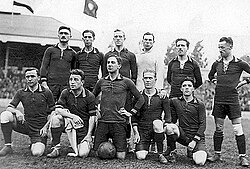
Key Facts
- Host City: Antwerp, Belgium
- Champion: Belgium (1st Olympic title)
- Top Scorer: Herbert Carlsson (Sweden) with 7 goals
- Total Goals: 70 goals across 17 matches (4.12 per match)
- Total Attendance: 150,600 spectators
- Notable Upset: Norway defeated the defending champions, Great Britain, 3–1 in the first round.
Tournament Structure and Progression
The competition was organized on a knockout basis. While 15 teams entered, Switzerland withdrew just before the first round, granting France a 2–0 walkover victory. The hosts, Belgium, received a first-round bye, advancing directly to the quarter-finals.
The tournament saw the emergence of Czechoslovakia, participating in their first-ever international competition. They surged through the bracket, defeating the Kingdom of SCS, Norway, and France to reach the final.
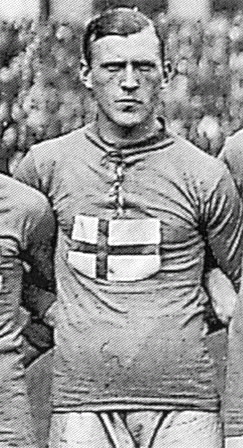
The Controversial Final
The gold medal match between Belgium and Czechoslovakia remains one of the most infamous in football history. In the 39th minute, with Belgium leading 2–0, the Czechoslovak team walked off the pitch to protest the officiating of English referee John Lewis and his linesmen. The tension peaked after Czechoslovak left-back Karel Steiner was ejected for assaulting Belgian striker Robert Coppée.
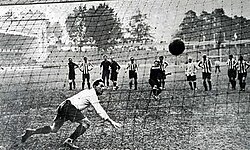
Czechoslovakia's protests included claims of biased officiating and the provocative presence of Belgian soldiers in the crowd. The tournament organizers dismissed the protest and ejected Czechoslovakia from the competition, awarding the gold medal to Belgium.
Determining Silver and Bronze
To decide the remaining medals, the tournament utilized a variation of the Bergvall System—a complex repechage format designed to ensure the best teams were ranked correctly even after early knockout losses.
Due to Czechoslovakia's ejection and Belgium's initial bye, the original semi-final format was scrapped. Instead, the beaten quarter-finalists (Italy, Norway, Spain, and Sweden) played off. Spain emerged victorious from this group, eventually facing the Netherlands—who had been beaten by Belgium in the semi-finals—for the silver and bronze medals. Spain won the final match 3–1 to secure the silver.
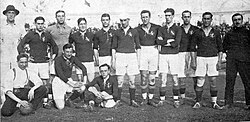
Tournament Summary
| Position | Team | Matches Played | Goals For | Goals Against | Result |
|---|---|---|---|---|---|
| 1st | Belgium | 3 | 8 | 1 | Gold Medal |
| 2nd | Spain | 5 | 9 | 5 | Silver Medal |
| 3rd | Netherlands | 4 | 9 | 10 | Bronze Medal |
| 4th | Italy | 4 | 5 | 7 | Eliminated in Playoffs |
| DSQ | Czechoslovakia | 4 | 15 | 3 | Ejected |
Frequently Asked Questions
Why was the 1920 Olympic final abandoned?
The final was abandoned in the 39th minute when the Czechoslovakia team walked off the pitch to protest the officiating of the English referee and linesmen, as well as the behavior of Belgian soldiers in the crowd.
Who was the top scorer of the tournament?
Herbert Carlsson of Sweden was the top scorer, netting a total of 7 goals.
What was the Bergvall System?
The Bergvall System was a tournament format used to determine silver and bronze medals by allowing teams that had been knocked out by the eventual gold medalists to play off for the remaining positions.
Which non-European country participated for the first time?
Egypt was the first non-European nation to participate in the Olympic football tournament in 1920.
Why were certain European countries not invited?
Countries that were part of the Central Powers during World War I—specifically Germany, Austria, Hungary, Bulgaria, and Turkey—were excluded from the 1920 Games.