Złoty Banknotes: A Comprehensive History of Polish Currency
The history of the złoty, Poland's national currency, is mirrored in the evolution of its banknotes. From early treasury notes to the modern series used today, these documents reflect the political shifts, economic challenges, and resilience of the Polish state over more than two centuries.
The First Era of Złoty Banknotes
The issuance of paper currency in Poland began in 1794 with treasury notes. These early notes were available in a wide range of denominations, including 5 and 10 groszy, as well as 1, 4, 5, 10, 25, 50, 100, 500, and 1000 złotych. During the period of the Duchy of Warsaw, the currency landscape expanded to include notes for 1, 2, and 5 talarów.
By 1824, the Bank Kassowy Królestwa Polskiego introduced notes for 10, 50, and 100 złotych. This was followed by the Bank Polski, which issued notes in 1830 and 1831 for 1, 5, 50, and 100 złotych. During the insurrection of 1831, assignats—paper money issued by a government during a crisis—were produced in denominations of 200 and 500 złotych. However, by 1841, the Bank Polski shifted its issuance to notes denominated in roubles.
The Second Series and Mid-Century Transitions
Following the restoration of independence, the Ministry of Finance and the Bank Polski overhauled the currency system in 1924. The Ministry issued notes for 10, 20, and 50 groszy, alongside provisional notes (overprints on old, bisected notes) for 1 and 5 groszy. Simultaneously, the Bank Polski introduced a comprehensive range of złotych notes from 1 to 1000.
Throughout the late 1920s and 1930s, denominations shifted. The Ministry of Finance issued 2- and 5-złoty notes in 1925, though these were eventually replaced by silver coins. The Bank Polski continued to issue 5, 10, 20, and 50-złoty notes, with the 100-złoty note returning in 1932. By 1938, the Ministry of Finance had introduced 1 złoty notes.
The onset of World War II brought further changes. In 1939, the General Government overprinted 100-złoty notes. By 1940, the Bank Emisyjny w Polsce was established, issuing notes ranging from 1 to 500 złotych. Following liberation, the Narodowy Bank Polski (NBP) introduced notes dated 1944 for 50 grosz and denominations from 1 to 500 złotych, adding the 1000-złoty note in 1945.
The Third Series and the Inflation Crisis
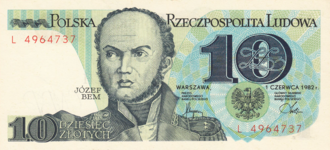
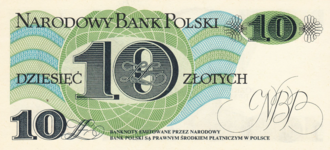
In 1950, a new series of notes (dated 1948) was introduced for 2, 5, 10, 20, 50, 100, and 500 złotych. As the economy evolved, higher denominations were added: 1000 złotych in 1962, 200 złotych in 1976, 2000 złotych in 1977, and 5000 złotych in 1982.
The late 1980s and early 1990s were marked by severe inflation, necessitating a rapid increase in banknote values. This period saw the introduction of massive denominations: 10,000 (1987), 20,000, 50,000, and 200,000 (1989), 100,000 and 500,000 (1990), 1,000,000 (1991), and 2,000,000 złotych (1992).
Most of these high-value notes remained valid until the end of 1996, with the exception of the 200,000-złoty note. While they could be exchanged at the NBP or authorized banks until December 31, 2010, they are no longer legal tender.
Current Banknotes
In 1995, Poland introduced the current series of banknotes, which are dated 1994. This streamlined series consists of five denominations: 10, 20, 50, 100, and 200 złotych.
Key Facts
- First Issuance: Treasury notes appeared in 1794 in denominations from 5 groszy to 1000 złotych.
- War-Time Currency: The Bank Emisyjny w Polsce operated from 1940, issuing notes up to 500 złotych.
- Hyperinflation Peak: The highest denomination issued during the inflation crisis of the early 1990s was 2,000,000 złotych.
- Modern Series: The current banknotes, introduced in 1995, range from 10 to 200 złotych.
- Exchange Deadline: High-inflation notes ceased to be exchangeable at the NBP after December 31, 2010.
| Era/Series | Key Issuing Body | Notable Denominations | Time Period |
|---|---|---|---|
| First Series | Treasury / Bank Polski | 5 groszy to 1000 złotych | 1794 – 1841 |
| Second Series | Ministry of Finance / Bank Polski | 1 grosz to 1000 złotych | 1924 – 1945 |
| Third Series | Narodowy Bank Polski | 2 złotych to 2,000,000 złotych | 1950 – 1996 |
| Current Series | Narodowy Bank Polski | 10 to 200 złotych | 1995 – Present |
Frequently Asked Questions
What were assignats in the context of Polish currency?
Assignats were specific types of paper money issued in denominations of 200 and 500 złotych during the insurrection of 1831.
When did the Bank Polski start issuing notes in roubles?
The Bank Polski began issuing notes denominated in roubles in 1841.
What was the highest denomination banknote ever issued in Poland?
The highest denomination was the 2,000,000 złotych note, introduced in 1992 during a period of high inflation.
Can the high-denomination notes from the 1990s still be used?
No, they are no longer legal tender. The deadline to exchange these notes at the National Bank of Poland was December 31, 2010.
Which denominations are available in the current banknote series?
The current series, introduced in 1995 and dated 1994, includes notes for 10, 20, 50, 100, and 200 złotych.