Zinc Finger Motifs: The Molecular Architecture of Genetic Regulation
In the complex machinery of the cell, the ability to precisely control which genes are turned on or off is vital for life. At the heart of this regulatory process are zinc fingers—small, specialized protein structural motifs that use metal ions to stabilize their shape and facilitate critical biological interactions. These motifs act as modular tools, allowing proteins to recognize and bind to specific sequences of DNA, RNA, or other molecules with remarkable precision.
The term was originally coined to describe the finger-like appearance of a hypothesized structure in the transcription factor IIIA from the African clawed frog (Xenopus laevis). Since its discovery in 1983, scientists have realized that zinc fingers are far more diverse than initially thought, encompassing a wide variety of structures found throughout eukaryotic cells.
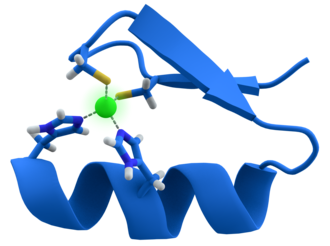
Key Facts
- Definition: A small protein structural motif stabilized by the coordination of one or more zinc ions (Zn).
- Function: Primarily acts as an interaction module to bind DNA, RNA, proteins, or small molecules.
- Prevalence: Found in approximately 3% of the human genome.
- Discovery: First reported in Xenopus laevis TFIIIA in 1983.
- Applications: Used in genome engineering through zinc finger nucleases and engineered transcription factors.
Structural Diversity and Classification
Unlike many other highly standardized protein structures, such as the Greek key or β hairpin, zinc fingers are categorized into several distinct families. A protein's classification is determined by its unique three-dimensional architecture, its primary amino acid sequence, or the specific ligands (atoms or molecules that bind to a central metal atom) that coordinate the zinc ion.
While the structures vary, their primary purpose remains consistent: providing a mechanism for binding specificity. By altering the structural arrangement, a protein can be tuned to target a specific genetic sequence.
Common Zinc Finger Fold Groups
| Fold Group | Representative Structure | Ligand Placement |
|---|---|---|
| Cys2His2 | Gag knuckle / Treble clef | Two Cysteines, Two Histidines |
| Zinc ribbon | TFIIB zinc-binding | Variable |
| Zn2/Cys6 | TAZ2 domain-like | Binuclear cluster |
The Mechanics of DNA Binding
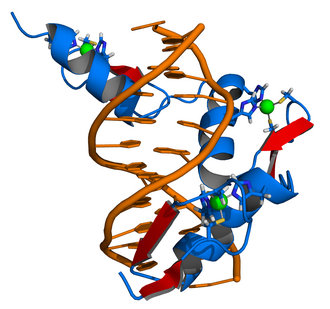
The crystal structures of zinc finger-DNA complexes, solved in 1991 and 1993, provided a breakthrough in our understanding of how these motifs interact with genetic material. Unlike many other DNA-binding proteins that rely on the 2-fold symmetry of the double helix, zinc fingers often link together linearly in tandem. This modular arrangement allows them to wrap around and bind to nucleic acid sequences of varying lengths.
A common target for these motifs is the GC box, a specific DNA sequence. Because these fingers are modular, they are ideally suited for bioengineering; researchers can combine different fingers to target almost any specific DNA sequence with high affinity.
Applications in Research and Therapeutics
The ability to engineer zinc fingers to recognize specific DNA sequences has revolutionized biotechnology. One of the most significant advancements is the development of zinc finger nucleases (ZFNs)—engineered proteins designed to cut DNA at precise locations, enabling targeted genome editing.
Much of this engineering research is based on the murine transcription factor Zif268. Zif268 contains three individual zinc finger motifs that work together to bind a 9 base pair (bp) sequence. By using methods such as modular assembly or bacterial selection systems, scientists can create custom arrays of these fingers to serve as artificial transcription factors or therapeutic tools.
Frequently Asked Questions
What is the role of the zinc ion in these motifs?
The zinc ion is essential for the structural integrity of the motif. It coordinates with specific amino acid residues (such as cysteine and histidine) to stabilize the protein's fold, allowing it to maintain the correct shape for molecular binding.
How do zinc fingers differ from other DNA-binding proteins?
While many proteins bind to the symmetrical structure of the DNA double helix, zinc fingers typically bind in a linear, tandem fashion, allowing them to recognize specific, non-symmetrical sequences of varying lengths.
What are zinc finger nucleases?
Zinc finger nucleases are engineered proteins used for genome editing. They combine the DNA-binding specificity of zinc finger motifs with a nuclease (an enzyme that cuts DNA) to target and modify specific genetic sequences.
Why are zinc fingers considered "modular"?
They are considered modular because individual zinc finger units can be linked together in different combinations. This allows researchers to "program" the protein to recognize different DNA or RNA sequences by simply changing the order or type of fingers used.
Where are zinc fingers found in humans?
Zinc fingers are ubiquitous in human biology and are estimated to be present in approximately 3% of the genes within the human genome.