Zigbee Wireless Protocol: A Comprehensive Overview of Low-Power IoT Connectivity
In the rapidly evolving landscape of the Internet of Things (IoT), efficient communication between small, battery-operated devices is essential. Zigbee is a specialized wireless protocol designed to meet these exact needs. Based on the IEEE 802.15.4 standard, Zigbee provides a suite of high-level communication protocols used to create personal area networks (PANs). These networks are ideal for applications requiring low power consumption, low data rates, and close-proximity connectivity.
Whether it is managing smart home lighting, collecting data from medical devices, or controlling industrial sensors, Zigbee offers a robust framework for small-scale wireless projects that prioritize long battery life and secure networking.
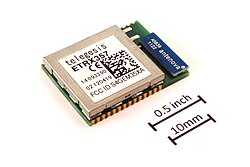
Key Facts
- Standard: Based on IEEE 802.15.4.
- Developer: Connectivity Standards Alliance (formerly Zigbee Alliance).
- Frequencies: Operates on 2.4 GHz, 868 MHz, and 915 MHz bands.
- Range: Typically 10 to 100 meters (33 to 328 ft) line-of-sight.
- Data Rate: Up to 250 kbit/s.
- Security: Utilizes 128-bit symmetric encryption keys.
Technical Specifications and Frequency Bands
Zigbee operates within the Industrial, Scientific, and Medical (ISM) radio bands. The specific frequency used often depends on the geographic region and the intended application:
- 2.4 GHz Band: Used worldwide, primarily for lighting and home automation. It offers the highest data rate of approximately 250 kbit/s.
- Sub-GHz Bands: Often used for commercial utility metering and medical data collection. These include 915 MHz in North America and Australia, 868 MHz in Europe, and 779–787 MHz in China. Data rates in these bands range from 20 kbit/s to 40 kbit/s.
While the direct transmission distance is limited to 10–100 meters depending on environmental factors, Zigbee overcomes distance limitations through mesh networking. In a mesh topology, data is passed through intermediate devices (routers) to reach more distant nodes, effectively extending the network's reach.
| Feature | Specification/Detail |
|---|---|
| Standard Basis | IEEE 802.15.4 |
| Max Data Rate | 250 kbit/s (at 2.4 GHz) |
| Encryption | 128-bit symmetric keys |
| Network Topologies | Star, Tree, and Mesh |
| Primary Use Cases | Home automation, Industrial control, Medical data |
Network Architecture and Components
Zigbee builds upon the physical layer and media access control (MAC) defined by IEEE 802.15.4. To facilitate high-level communication, the Zigbee specification adds several critical layers and components:
- Network Layer: Manages how data is routed through the network.
- Application Layer: Handles the specific commands and data exchange for end-user functions.
- Zigbee Device Objects (ZDOs): Responsible for managing device roles, discovering new devices, and securing the network.
- Cluster Library: A set of standardized commands and attributes (such as Smart Energy or Home Automation) that allow different devices to understand one another.
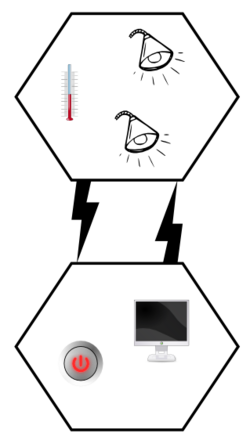
Device Roles and Topologies
Every Zigbee network requires one coordinator device to act as the central authority. The network can be organized into different structures:
- Star Networks: The coordinator serves as the central hub for all other nodes.
- Tree and Mesh Networks: These allow for the use of routers, which act as intermediate nodes to extend communication across larger areas.
Security and Evolution
Security is a cornerstone of the Zigbee protocol. It utilizes 128-bit symmetric encryption to protect the establishment and transport of cryptographic keys. While older versions of the protocol had vulnerabilities regarding encryption negotiation, the Zigbee 3.0 standard introduced significant improvements. These include the use of custom installation keys and mandatory network key randomization, which prevents unauthorized devices from intercepting traffic during the pairing process.
The Transition to Dotdot
In 2017, the Connectivity Standards Alliance introduced Dotdot, a new protocol designed to run over various network types using Internet Protocol (IP). Dotdot has since become the default application layer for most Zigbee devices, facilitating better interconnection with other standards like Thread.
Common Use Cases
Due to its low power and reliable mesh capabilities, Zigbee is widely deployed in several sectors:
- Home Automation: Smart lighting, thermostats, and security systems.
- Industrial Control: Monitoring and managing industrial processes.
- Medical Data Collection: Securely transmitting data from patient monitoring devices.
- Wireless Sensor Networks: Environmental monitoring and embedded sensing.
- Building Automation: Managing large-scale commercial building systems.
Frequently Asked Questions
What is the typical range of a Zigbee device?
The line-of-sight range is generally between 10 and 100 meters (33 to 328 ft). However, by using a mesh network of routers, the signal can be passed through multiple devices to cover much larger distances.
How does Zigbee save power?
Zigbee is designed for low-power, intermittent data transmissions. It supports "beacon-enabled" networks where nodes can sleep between periodic beacons, significantly extending battery life.
What is the difference between Zigbee and Zigbee Pro?
Zigbee Pro (finalized in 2007) is an advanced version that adds sub-GHz band support and improved routing options. While they can coexist, a Zigbee Pro device must act as a non-routing End Device when joining a legacy Zigbee network.
Is Zigbee secure for home use?
Yes, Zigbee uses 128-bit symmetric encryption. Modern implementations like Zigbee 3.0 have further enhanced security by requiring key randomization and providing options for custom installation keys to prevent interception during device pairing.
What is the maximum data speed of Zigbee?
The maximum raw data rate is 250 kbit/s in the 2.4 GHz band. Actual throughput is typically lower due to packet overhead and processing delays.