Zhejiang University: A Comprehensive History
Zhejiang University (ZJU) stands today as one of the most prestigious institutions of higher learning in Asia. Its journey from a late-Qing dynasty academy to a global research powerhouse is a reflection of China's own turbulent and transformative modern history. From surviving wartime evacuations to navigating political upheavals, the university has consistently evolved to meet the educational needs of the nation.
Key Facts
- Founded: 1897 as Qiushi Academy.
- Major Merger: In 1998, four major universities merged to create the modern ZJU.
- Wartime Resilience: Relocated multiple times during the Second Sino-Japanese War to avoid capture.
- Global Partnerships: Maintains joint institutes with the University of Edinburgh and the University of Illinois at Urbana-Champaign.
- Scale: Following its 1998 merger, it was considered the largest higher education institution in Asia.
The Early Years: 1897–1914
The roots of the university trace back to 1897, when Hangzhou's mayor, Lin Qi, established the Qiushi Academy. As China underwent significant educational reforms in 1902 and 1904, the institution evolved, becoming Chekiang University in 1902 and the Chekiang Higher Institute in 1903. Under the supervision of Elmer L. Mattox of Hangchow Presbyterian College, the Institute became a pioneer in international education, being the first provincial institution to send students to study abroad.
However, the transition to a republican government after the 1911 revolution brought controversy. These tensions led to a halt in student recruitment in 1912, and the Institute officially closed its doors in 1914.
The Era of National Chekiang University: 1928–1949
After a period of instability caused by warlord conflicts, the Kuomintang (KMT) took control of Hangzhou in 1927. They established the National Third Chungshan University by merging the Chekiang Industrial and Agricultural Colleges on the site of the original Qiushi Academy. By April 1, 1928, the school was renamed Chekiang University, and shortly thereafter became National Chekiang University (NCKU).
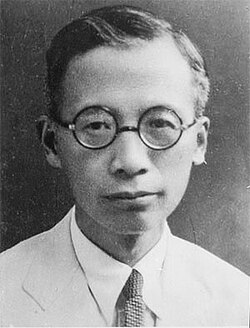
The university's leadership during this era was often caught between academic freedom and political pressure. While Jiang Menglin served as the first president, subsequent leaders like Shao Peizi faced funding cuts due to refusals to join the KMT. Stability returned under Chu Kochen, appointed in 1936, who leveraged strong financial backing to attract elite scholars from the Science Society of China and the Critical Review Group.
The outbreak of the Second Sino-Japanese War in 1937 forced the university into a nomadic existence. To escape the advancing Japanese army, NCKU moved from Hangzhou to Yishan, then Zunyi, and finally to Meitan in Guizhou Province. During this retreat, students performed the vital task of safeguarding the Complete Library of the Four Treasuries from the Wenlan Pavilion to prevent its capture.
Following Japan's surrender in 1945, the university returned to Hangzhou. This period also saw the establishment of its first medical school and a brief period of international cooperation, including a mission where NCKU professors took over the Japanese Imperial University in Taiwan.
Political Transformation and the Mao Era: 1949–1976
With the establishment of the People's Republic of China, the institution was renamed Zhejiang University (ZJU) in 1950, following a mandate to remove "National" from university titles. The 1950s saw a radical shift toward a Soviet-style education system, transforming ZJU into an engineering-focused university. This reorganization led to the spinning off of its agricultural and medical schools into independent colleges.
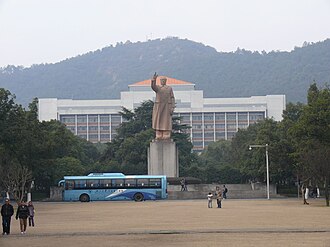
The university moved to the Yuquan campus in 1954, and by 1963, it was designated as one of the National Key Universities. However, the Cultural Revolution (1966–1976) brought the institution to a standstill. Political purges removed leadership, and the campus became a site of conflict between radical Red Guard factions.
Modernization and Expansion: 1976 to Present
The post-Cultural Revolution era marked a period of recovery and rapid growth. In 1980, ZJU transitioned to a co-funding model between the Ministry of Education and the Zhejiang provincial government. The late 1980s and early 1990s focused on innovation, with President Lu Yongxiang introducing the Advanced Honor Class of Engineering Education.
A pivotal moment occurred in 1998 when, following a recommendation from prominent scholars, ZJU merged with three other major universities. This created a massive institution with over 30,000 students and 10,000 staff, making it one of the largest in Asia at the time.
In the 21st century, ZJU has expanded its global footprint and physical presence. It established the Ocean College in 2012 and opened a new Haining campus in 2016, which hosts joint institutes with the University of Edinburgh and the University of Illinois at Urbana-Champaign. Recent expansions include a Ningbo campus (2020) and various institutes across Zhejiang province.
| Period | Institution Name | Key Characteristic |
|---|---|---|
| 1897–1914 | Qiushi Academy / Chekiang Higher Institute | College-preparatory and early provincial education. |
| 1928–1949 | National Chekiang University (NCKU) | National status; wartime relocation to Guizhou. |
| 1949–1976 | Zhejiang University (ZJU) | Soviet-style engineering focus; Cultural Revolution disruptions. |
| 1976–Present | Zhejiang University (Modern) | 1998 mega-merger; global research and multi-campus expansion. |
Frequently Asked Questions
What was the original name of Zhejiang University?
The university's primary predecessor was the Qiushi Academy, established in 1897 by Hangzhou's mayor, Lin Qi.
Why did the university move to Guizhou Province in the 1930s?
The university was forced to relocate during the Second Sino-Japanese War to escape the advancing Japanese army and protect its faculty, students, and historical collections.
What happened during the 1998 merger?
With the approval of the State Council, four major universities merged to form the new Zhejiang University, creating one of the largest higher education institutions in Asia with tens of thousands of students and staff.
Which international universities has ZJU partnered with for joint institutes?
ZJU has signed agreements to form joint institutes with the University of Edinburgh and the University of Illinois at Urbana-Champaign, primarily located at the Haining campus.
How has the university expanded its campus network recently?
Beyond its main sites, ZJU has established a Ningbo campus (2020), an Institute of Hainan in Sanya (2019), and several new institutes in cities such as Quzhou, Jinhua, and Wenzhou.