Zaporizhzhia: A History of Industrial Might and Conflict
Zaporizhzhia is a city defined by its strategic location on the Dnieper River and its evolution from a frontier military outpost to a global industrial powerhouse. From its origins as a defensive fortress to its role as a critical hub of Soviet engineering, the city has frequently found itself at the center of geopolitical struggles and devastating conflicts.
Foundations and Early Growth
The city was founded in 1770 with the construction of the Aleksandrovskaya Fortress. This fortification was a key component of the Dnieper Defence Line, designed to protect the Russian Empire's southern territories from Crimean Tatar invasions. Following the Treaty of Küçük Kaynarca in 1775, the Russian Empire absorbed the Crimean peninsula and the southern lands of the East European Plain.
With the shift in borders, the fortress lost its military purpose and evolved into a small rural town known as Alexandrovsk from 1806 until approximately 1930.
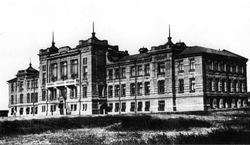
The turn of the 20th century brought a period of rapid transformation. The opening of the Kichkas Bridge—the first rail crossing of the Dnieper—catalyzed industrial growth. During World War I in 1916, the city's industrial profile expanded when the DEKA Stock Association relocated its aircraft engine manufacturing plant from Saint Petersburg to Zaporizhzhia.
Revolution and Civil War
Between 1917 and 1921, during the Russian Civil War and the Ukrainian War of Independence, Zaporizhzhia became a violent battleground. The Kichkas Bridge served as a vital strategic asset for the transfer of medical supplies, ammunition, and troops among competing forces, including the Red Army, the White armies of Wrangel and Denikin, Petliura's Ukrainian People's Army, and German-Austrian troops. Following these conflicts, the city was designated the capital of the Zaporizhzhia Governorate of Ukraine.
The Era of Soviet Industrialization
The 1920s and 1930s marked a period of massive state-led industrialization. The Soviet government established several landmark facilities, including the Dnieper Hydroelectric Station (DniproHES), the Zaporizhzhia Steel Plant, and the Dnieper Aluminium Plant.
A significant contribution came from the American United Engineering and Foundry Company, which constructed a strip mill modeled after the Ford River Rouge steel mill. This facility produced rolling steel strip with an annual capacity of 540,000 tonnes (600,000 short tons) of steel measuring 170 cm (66 inches) wide.
Zaporizhzhia in World War II
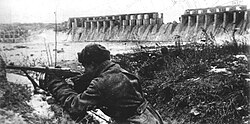
The outbreak of war between Nazi Germany and the USSR in June 1941 led to the evacuation of local industries to Siberia. On August 18, 1941, German forces from the 1st Panzergruppe seized the island of Khortytsia and reached the city's right bank.
In a desperate defensive move on August 18, 1941, the Red Army detonated a 120-by-10-metre hole in the Dnieper hydroelectric dam. The resulting flood wave swept toward Nikopol, killing between 20,000 and 100,000 people, including both civilians and soldiers. The city officially fell to German forces on October 3, 1941.
During the two-year occupation, the Germans executed over 35,000 people and deported 58,000 as forced laborers. Zaporizhzhia also served as the headquarters for Army Group South in February 1943, hosting visits from Adolf Hitler, who was briefed by Field Marshals Eric von Manstein and Wolfram Freiherr von Richthofen.
By August 1943, the Germans established the Panther-Wotan defence line. Although they held the city as a bridgehead, a surprise night attack by the Soviet Southwestern Front, led by Army General Rodion Malinovsky, reclaimed most of the city on October 13, 1943.
Modern Era and Recent Conflict
In the post-Soviet era, the city continued to develop, though some projects faced hurdles. Construction of the New Zaporizhzhia Dniper Bridge began in 2004 to reduce traffic near the Arch Bridge but was halted due to funding shortages.
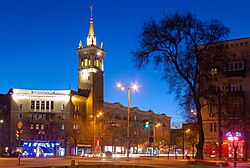
The 2014 Euromaidan protests saw the occupation of the regional state administration building by 4,500 protesters, accompanied by clashes between pro-Russian and Ukrainian activists. In 2016, the Verkhovna Rada (Ukraine's parliament) passed the Decommunisation Law. This led the city council to rename over 50 streets and remove Soviet-era monuments and names from factories and the DniproHES.
The 2022 Russian Invasion
Since the full-scale Russian invasion in 2022, Zaporizhzhia has been a target of ongoing attacks. While Russian forces occupied parts of the surrounding Oblast, they failed to capture the city itself. However, the proximity of Russian forces to the Zaporizhzhia Nuclear Power Plant in March 2022 sparked international fears of a nuclear meltdown.
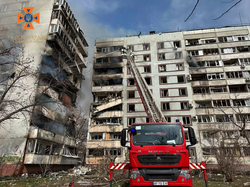
The city has suffered significant civilian casualties from missile strikes. On September 30, S-300 missiles struck a civilian convoy, killing at least 30 people. Further rocket attacks on October 9 targeted residential buildings, resulting in at least 17 deaths.
Key Facts
- Founded: 1770 as the Aleksandrovskaya Fortress.
- Industrial Milestone: The Kichkas Bridge was the first rail crossing of the Dnieper.
- WWII Tragedy: The 1941 dam breach caused 20,000 to 100,000 deaths.
- Steel Production: The American-built strip mill reached a capacity of 540,000 tonnes annually.
- Decommunisation: Over 50 streets were renamed following the 2016 law.
| Period/Date | Event | Significance |
|---|---|---|
| 1770 | Founding of Aleksandrovskaya Fortress | Defense against Crimean Tatar invasions |
| Early 1900s | Kichkas Bridge Opening | Initiated rapid industrial growth |
| 1920s-1930s | Soviet Industrialization | Construction of DniproHES and Steel Plants |
| 1941-1943 | Nazi German Occupation | Mass executions and forced labor |
| 2016 | Decommunisation Law | Removal of Soviet symbols and names |
| 2022-Present | Russian Invasion | Ongoing shelling and nuclear plant concerns |
Frequently Asked Questions
Why was the Aleksandrovskaya Fortress originally built?
It was constructed in 1770 as part of the Dnieper Defence Line to protect the southern territories of the Russian Empire from invasions by Crimean Tatars.
What was the impact of the Dnieper dam breach in 1941?
The Red Army blew a 120-by-10-metre hole in the dam to slow the German advance, creating a flood wave that killed between 20,000 and 100,000 residents and soldiers.
How did the United States contribute to Zaporizhzhia's industry?
The American United Engineering and Foundry Company built a rolling steel strip mill in the 1930s, similar to the Ford River Rouge mill, with a capacity of 540,000 tonnes per year.
What is the Decommunisation Law?
Approved by the Verkhovna Rada in 2016, this law led to the removal of Soviet leader monuments and the renaming of over 50 streets and administrative areas in Zaporizhzhia.
What happened during the 2022 invasion regarding the nuclear plant?
Russian forces approached the Zaporizhzhia Nuclear Power Plant on March 3, 2022, which raised global concerns regarding the possibility of a nuclear meltdown.