Yum China: The Evolution and Expansion of a Fast Food Giant
The landscape of quick-service restaurants in Asia has been profoundly shaped by the growth of Yum China. From its early beginnings as a regional arm of a global powerhouse to its current status as an independent entity, the company has successfully integrated international flavors with local tastes to dominate the Chinese market.
The Strategic Spinoff from Yum! Brands
For years, the operations in China were managed under the umbrella of the US-based Yum! Brands. However, to allow for more agile decision-making and a focused strategy tailored to the Chinese consumer, a major corporate restructuring took place. On October 25, 2015, Yum! Brands announced its intention to separate into two independent, publicly traded companies.
This strategic move resulted in the spinoff of Yum China, which officially took effect on November 1, 2016. This independence allowed the company to better navigate the unique regulatory and cultural environment of the region.
A Diverse Portfolio of Brands
While globally recognized for its massive footprint of Western-style fast food, Yum China manages a diverse array of subsidiary brands that cater to various dining preferences, ranging from coffee bars to traditional regional cuisines.
Global Powerhouses
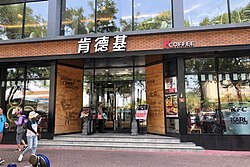
The company continues to operate the heavy hitters of the fast-food world, including KFC, Pizza Hut, and Taco Bell. These brands serve as the foundation of the company's massive scale across the country.
Local and Specialized Concepts
To diversify its offerings, Yum China has invested in several specialized and local brands:
- COFFii & JOY: A coffee bar concept launched in 2018.
- Huang Ji Huang: A casual dining franchise.
- East Dawning: A fast food franchise specializing in Jiangnan cuisine (traditional food from the Yangtze River Delta region).
- Little Sheep: A popular hot pot chain with a significant international presence.
Little Sheep, in particular, has expanded far beyond China's borders. It operates approximately 200 restaurants within China, 17 in Japan, 9 in Canada, and one in Jakarta, Indonesia. In the United States, it has locations across eleven states—primarily in California—though most of these have been rebranded as Happy Lamb.
Key Facts
- Independence Date: Yum China became a separate publicly traded company on November 1, 2016.
- KFC Dominance: With 11,648 units, KFC is the largest brand in the portfolio.
- Pizza Hut Scale: The company operates 3,724 Pizza Hut locations.
- Diverse Reach: The portfolio includes a mix of Western fast food, Jiangnan cuisine, and coffee bars.
- Global Footprint: Through Little Sheep, the company maintains a presence in the US, Japan, Canada, and Indonesia.
Operational Scale as of 2024
The sheer volume of Yum China's operations highlights its market penetration. The company manages thousands of outlets across multiple categories to ensure accessibility for millions of customers.
| Brand / Category | Number of Units |
|---|---|
| KFC | 11,648 |
| Pizza Hut | 3,724 |
| Other Brands (Little Sheep, East Dawning, Taco Bell, Huang Ji Huang, COFFii & Joy, Lavazza, Shaofaner) | 1,023 |
Frequently Asked Questions
When did Yum China become an independent company?
Yum China officially became an independent, publicly traded company on November 1, 2016, following a spinoff from Yum! Brands.
Which is the largest brand operated by Yum China?
KFC is the largest brand in the portfolio, with 11,648 units as of 2024.
What is East Dawning?
East Dawning is a fast food franchise operated by Yum China that specializes in Jiangnan cuisine.
Does Yum China operate restaurants outside of China?
Yes, primarily through the Little Sheep brand, which has locations in Japan, Canada, Indonesia, and the United States.
What happened to Little Sheep restaurants in the US?
Most of the Little Sheep locations in the eleven US states where they operate have been rebranded as Happy Lamb.