The Luminous Legacy of Yule Marble: Colorado's Architectural Treasure
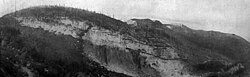
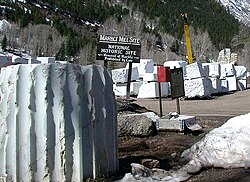
Deep within the West Elk Mountains of Colorado lies a geological marvel that has shaped the landscape of American monuments. Yule Marble, a rare and exquisite stone, is found exclusively in the Yule Creek Valley, just 2.8 miles southeast of the town of Marble, Colorado. While most marble is extracted from open pits at lower elevations, this precious material is quarried underground at a staggering 9,300 feet above sea level.
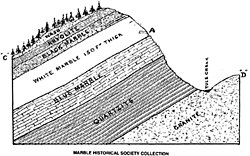
Discovered in 1873, Yule Marble is a metamorphosed Leadville Limestone. This means that through intense heat and pressure over millions of years, the original limestone transformed into the high-quality marble we see today. Its unique geological origins have produced a stone of unparalleled purity and beauty.
Unmatched Geological Characteristics
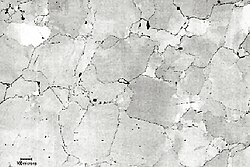
What sets Yule Marble apart from other stones is its extraordinary composition. It is 99.5% pure calcite, a mineral that provides the stone with its signature qualities. This high level of purity results in a homogeneous (uniform) appearance, a smooth texture, and a distinctive luminous surface that seems to glow when hit by light.
These aesthetic properties made it the premier choice for some of the most significant structures in the United States. Although it is more expensive than many other types of marble, its ability to hold detail and maintain its brilliance has made it indispensable for high-profile architectural projects.
A Record of Monumental Use
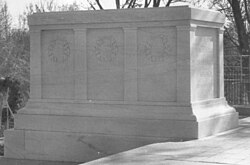
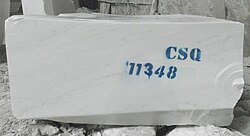
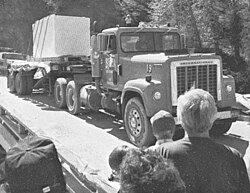
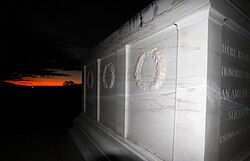
The scale of the Yule Marble deposits allows for the extraction of massive blocks, a necessity for grand monuments. For example, the Tomb of the Unknown Soldier at Arlington National Cemetery features a massive 56-long-ton (57 metric ton) die block quarried from this site.
Beyond Arlington, Yule Marble has been used in a vast array of buildings across the country, ranging from state capitols to private residences and religious institutions. Its presence can be found in:
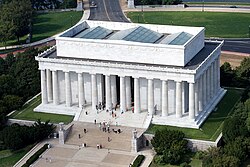
- Washington, D.C.: The Lincoln Memorial and the Washington Monument (Colorado Memorial Stone).
- California: The Hearst Mansion and various buildings in San Francisco and Los Angeles.
- Colorado: The State Capitol Building and the Denver Post Office.
- Utah: The Utah State Capitol.
The History of the Yule Creek Quarry
The history of Yule Marble is one of boom, bust, and revival. Following its discovery in 1873, the late 19th century saw various companies attempt to develop the claims. Early operators like the Colorado Marble and Mining Company and the Crystal Land and Development company struggled with capital and ultimately went out of business.
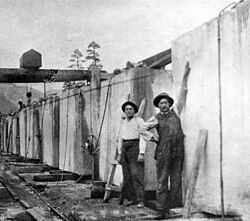
The most significant era of production began in 1905 with the Colorado-Yule Marble Company. This period saw a massive "boom" in activity, particularly between 1905 and 1916. During this time, the company supplied the massive column sections—known as drums—for the Lincoln Memorial. These individual blocks weighed approximately 26.25 tons each.
After a period of decline and a subsequent revival that lasted until 1941, the quarry entered a long "bust" period. It wasn't until 1988 that operations began to revive, eventually leading to the present-day management by Colorado Stone Quarries Inc.
Quarrying and Operations
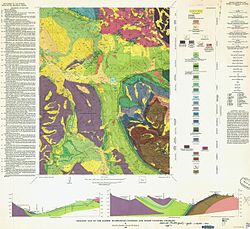
The quarrying process is a feat of engineering. Unlike surface mines, the Yule Creek operation utilizes an underground approach. The current quarry features an entry tunnel and a complex system of workings. The scale of the operation is evident in historical maps, showing massive marble veins stretching over a mile wide.
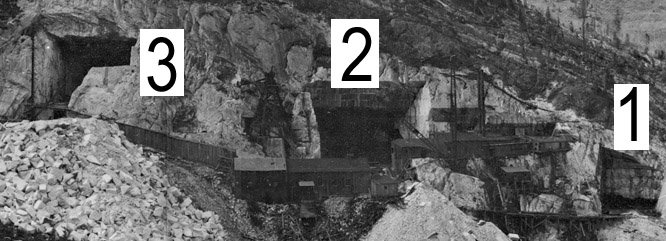
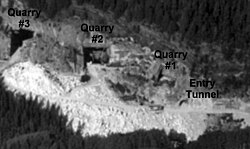
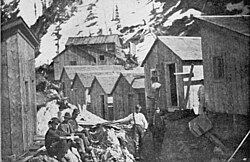
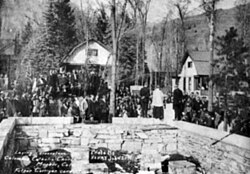
The town of Marble itself grew alongside the industry, serving as a hub for the workers who extracted this world-class stone. Even during the periods when large-scale commercial quarrying slowed, the legacy of the stone remained central to the local identity.
Summary of Yule Marble Specifications

| Component Type | Dimensions (Approx.) | Weight (Approx.) |
|---|---|---|
| Lincoln Memorial Column Drum | 8.33 ft x 8.33 ft x 4.5 ft | 26.25 tons |
| Tomb of the Unknown Soldier Die (Quarried) | 14 ft x 7.3 ft x 0.5 ft | 56 long-tons |
| Tomb of the Unknown Soldier Die (Finished) | 12.25 ft x 6.5 ft x 5.2 ft | 32.76 metric tons |
| Tomb of the Unknown Soldier Base | 13.8 ft x 7.9 ft x 1.9 ft | 16.88 metric tons |
Key Facts
- Purity: Yule Marble is 99.5% pure calcite.
- Location: Found only in the Yule Creek Valley, Colorado.
- Elevation: Quarried underground at 9,300 feet above sea level.
- State Status: It is the official state rock of Colorado.
- Famous Uses: Cladding for the Lincoln Memorial and the Tomb of the Unknown Soldier.
Frequently Asked Questions
What makes Yule Marble different from other marbles?
Yule Marble is distinguished by its extreme purity (99.5% calcite), its homogeneous appearance, and its unique luminous surface. Additionally, it is found in only one specific location in the world.
Where is Yule Marble quarried?
It is quarried in the Yule Creek Valley within the West Elk Mountains of Colorado, located about 2.8 miles southeast of the town of Marble.
Why was it used for the Lincoln Memorial?
Despite being more expensive than other marbles, it was selected for its ability to provide a smooth, luminous, and uniform exterior that could withstand the elements while maintaining its beauty.
Is Yule Marble still being quarried today?
Yes. After a period of inactivity between 1941 and 1988, the quarry saw a revival and is currently operated by Colorado Stone Quarries Inc.
How large can the blocks of Yule Marble be?
The deposits are large enough to allow for massive extractions, such as the 56-long-ton die block used for the Tomb of the Unknown Soldier.