Yugoslav Pop and Rock Music: A History of Sound and Rebellion
The musical landscape of the former Socialist Federal Republic of Yugoslavia (SFRY) was a vibrant tapestry of genres, blending Western influences with local sensibilities. Spanning the constituent republics of Slovenia, Croatia, Bosnia and Herzegovina, Montenegro, Macedonia, and Serbia (including Vojvodina and Kosovo), the pop and rock scene—often referred to as ex-YU—was a defining cultural force. Unlike many other socialist states, Yugoslavia's unique political position allowed for a rich exchange of ideas and sounds that shaped the region's identity for decades.
Key Facts
- Western Openness: As a founding member of the Non-Aligned Movement, Yugoslavia had greater freedom of travel and access to Western culture than other Eastern Bloc nations.
- Eurovision Pioneer: SFR Yugoslavia was the only communist country to participate in the Eurovision Song Contest, joining in 1961.
- Diverse Genres: The scene evolved from 1950s rock and roll to psychedelic rock, disco, punk, new wave, and the unique "Sarajevo school of pop rock."
- Global Reach: Yugoslav artists participated in international campaigns, most notably the YU Rock Misija for Live Aid in 1985.
The Foundations: 1950s and 1960s
The emergence of rock and roll in the 1950s was driven by the influence of American icons like Elvis Presley and Chuck Berry. Young musicians, who called themselves električari (electricians), began experimenting with electric instruments. Early pioneers included Belgrade guitarist Mile Lojpur and Zagreb's Karlo Metikoš, who later achieved international success in Paris as Matt Collins.
By the 1960s, the scene expanded rapidly. Early bands like Uragani, Siluete, and Zlatni Dečaci were initially inspired by Cliff Richard and The Shadows before shifting toward British rhythm and blues following the British Invasion. In Skopje, the group Bisbez became known as "The Macedonian Beatles."
One of the most influential groups of this era was Sarajevo's Indexi. Starting with Beatles-inspired sounds, they evolved into psychedelic rock, incorporating complex solos and classical elements. Member Kornelije Kovač eventually left to form the legendary Korni Grupa in Belgrade.
Coastal Sounds and the 1970s Boom
Along the Adriatic coast, a distinct Dalmatian pop sound emerged, blending pop with local folk elements. This style was championed by artists like Mišo Kovač and Oliver Dragojević, who rose to fame at the Split Festival with the hit "Ča će mi Copacabana."

The 1970s saw Yugoslavia become a destination for global superstars. The Rolling Stones performed in Zagreb in 1976, and Deep Purple played in Zagreb and Belgrade in 1975. Locally, the decade was marked by massive events, such as Bijelo Dugme's 1977 concert at Hajdučka česma, which drew approximately 80,000 fans.
Singer-Songwriters and the Disco Era
The era also fostered poetic singer-songwriters who prioritized lyrics over complex arrangements. Arsen Dedić and Đorđe Balašević became household names, while Jadranka Stojaković composed the main theme for the 1984 Winter Olympics in Sarajevo.
Simultaneously, the global disco craze hit Yugoslavia. Zdravko Čolić became the region's equivalent of John Travolta, filling stadiums in white suits and bell-bottoms. His popularity was so immense that he was offered a contract by a West German label, though he chose to remain focused on his home market.

Punk, New Wave, and the 1980s
In the late 1970s, Yugoslavia became the first socialist state to develop a punk rock scene. Influenced by the Sex Pistols and The Clash, bands like Pankrti (Slovenia) and Paraf (Croatia) led the charge. In Sarajevo, the New Primitives movement emerged from punk roots, featuring bands like Zabranjeno Pušenje.
As the 1980s progressed, the energy shifted toward New Wave and Post-Punk. Bands like Idoli, Prljavo Kazalište, and Film achieved mainstream success, while others like Disciplina Kičme blended punk, funk, and jazz fusion, eventually appearing on MTV.
YU Rock Misija and Live Aid
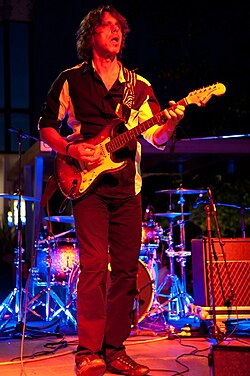
In 1985, the Yugoslav music elite united for the famine relief campaign organized by Bob Geldof. Under the name YU Rock Misija, a massive collective of artists recorded the song "Za million godina." The project culminated in an eight-hour stadium concert in Belgrade and a video appearance on the large screens at Wembley Stadium during the Live Aid finale.
Regional Schools and Diverse Genres
The Sarajevo school of pop rock was a powerhouse of talent, evolving from the 1960s work of Indexi to the 1980s success of Plavi Orkestar and Dino Merlin. Beyond pop and rock, the 1980s saw the rise of rap and breakdance, with acts like The Master Scratch Band releasing music through the Jugoton label.
| Era/Genre | Key Characteristics | Notable Artists/Bands |
|---|---|---|
| 1950s Rock & Roll | Electric music, Rockabilly influence | Mile Lojpur, Karlo Metikoš |
| 1960s Beat/Psych | British Invasion, Psychedelia | Indexi, Korni Grupa, Bisbez |
| 1970s Pop/Disco | Stadium pop, Dalmatian folk-pop | Zdravko Čolić, Oliver Dragojević |
| Late 70s/80s Punk | DIY culture, Social rebellion | Pankrti, Paraf, Zabranjeno Pušenje |
| 1980s New Wave | Art-rock, Synthpop, Mainstream rock | Idoli, Azra, Disciplina Kičme |
The End of an Era
The unified Yugoslav music scene effectively ceased to exist with the breakup of the country in the early 1990s. This transition occurred shortly after the group Riva won the Eurovision Song Contest in 1989 and the 1990 contest was hosted in Zagreb. Despite the political fragmentation, the legacy of the ex-YU music scene continues to influence artists across the successor states.
Frequently Asked Questions
What was the "ex-YU" music scene?
It refers to the pop and rock music produced within the Socialist Federal Republic of Yugoslavia, generally covering the period from the 1960s until the country's breakup in the 1990s.
Why was Yugoslavia more open to Western music than other socialist states?
Because Yugoslavia was a founding member of the Non-Aligned Movement, it maintained a more independent foreign policy, allowing citizens greater freedom of travel and easier access to Western cultural imports.
What was YU Rock Misija?
YU Rock Misija was the Yugoslav response to the Band Aid and Live Aid famine relief campaigns in 1985, bringing together the country's top musicians to record "Za million godina."
What characterized the Sarajevo school of pop rock?
It was a regional movement that began in the 1960s with groups like Indexi and evolved through the 1980s with artists like Plavi Orkestar, blending melodic pop with rock sensibilities.
Which record labels were prominent in Yugoslavia?
Some of the most significant labels included Jugoton, PGP-RTB, Suzy, and ZKP RTLJ.