YTN: South Korea's Pioneer 24-Hour News Network
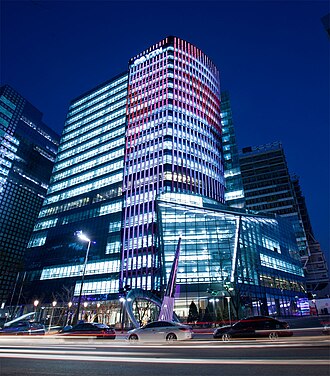
YTN is a landmark in the South Korean media landscape, serving as the nation's first 24-hour news channel. Since its inception, it has provided continuous coverage of domestic and international events, evolving from a subsidiary of a news agency into a diversified media group. Today, it operates from its state-of-the-art headquarters, YTN Newsquare, located in the Digital Media City (DMC) area of Sangam-dong, Seoul.
Key Facts
- Founded: September 14, 1993; began broadcasting March 1, 1995.
- Status: First 24-hour news channel in South Korea.
- Headquarters: 76 Sangam-san-ro, Sangam-dong, Mapo District, Seoul.
- Current CEO: Kim Baek.
- Technical Format: MPEG4 1080i.
- Ownership: Privatized in 2024 with Eugene Group as the main shareholder.
The Evolution of YTN
YTN was originally established as Yonhap Television News, operating as a subsidiary of the Yonhap News Agency. It officially launched regular broadcasts on March 1, 1995, coinciding with the start of cable television in South Korea. To emphasize its role as a round-the-clock news source, the network intentionally selected channel number 24.
In its early years, YTN aimed to be the "Korean CNN," offering a robust schedule of news bulletins and in-depth analysis. To avoid direct competition with major networks like KBS and MBC, it launched Channel 24 Spotlight at 9:00 PM. The network also integrated global perspectives through World 24 and Asia, Asian, utilizing footage from international giants such as CNN, BBC, NHK, and Reuters.
Infrastructure and Expansion
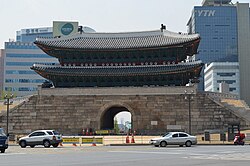
The network's physical presence has shifted over the decades to accommodate growth. In 1999, YTN acquired the Seoul Tower, later merging with it in 2000 to create an integrated broadcast transmission tower. In 2004, the network moved to the YTN tower near Namdaemun (Sungnyemun). The most recent major move occurred on April 7, 2014, when the company relocated to the YTN Newsquare in the DMC area, a move accompanied by a total logo redesign and the slogan "Exclusive Tomorrow."
Diversification of Services
Beyond its primary news channel, YTN has expanded into specialized broadcasting to cover various niches:
- YTN Science: The first dedicated science channel in Korea.
- YTN2: A 24-hour service focusing on weather, disaster information, and health tips.
- YTN News FM: A 24-hour all-news radio station (HLQV-FM 94.5 MHz in Seoul).
- YTN World: An international broadcaster sharing Korean news, culture, and business globally.
- YTN Korean: A specialized service for overseas Koreans via the internet.
Programming and Content Strategy
YTN's programming is a blend of live rolling news, breaking coverage, and expert commentary. The network utilizes two main studios for most of its daily broadcasts. In 2017, it expanded its weekday offerings with Midnight News, Morning News, and News Talk.
The evening schedule typically features commentary programs where experts discuss current Korean and global issues, followed by a summary of the day's main news and a preview of tomorrow's headlines. Overnight, the network maintains a live presence with 20-minute news updates on the hour.
Corporate Overview
The ownership structure of YTN has seen significant shifts, moving from its origins with Yonhap to a privatized model. As of 2024, the Eugene Group serves as the primary shareholder.
| Category | Details |
|---|---|
| Ownership (Key Shareholders) | Eugene Group (Main), KEPCO KDN (21.43%), Korea Ginseng Corp (19.95%), Mirae Asset Life Insurance (14.98%), Korea Racing Authority (9.52%), Woori Bank (7.40%) |
| Broadcast Format | MPEG4 1080i |
| Key Slogans | "Always First", "Exclusive Tomorrow", "Yes! Top News!" |
| Launch Date | March 1, 1995 |
Controversies and Challenges
Throughout its history, YTN has faced several challenges. In 2001, the network dealt with internal strife and accusations of pro-government bias following comments by then-president Baek In-ho. More recently, the 2024 privatization process drew criticism from various sectors.
The network has also faced scrutiny over journalistic accuracy. This includes accusations of photo manipulation following the MV Sewol sinking and a 2018 incident where misinformation regarding a search and seizure of politician Kim Gyeong-soo's office led to sanctions from the Election Broadcasting Deliberation Commission. Additionally, a reporter was arrested in Singapore in 2018 for illegally filming US military facilities, and the network faced backlash from Vietnamese netizens in 2020 over its reporting on quarantine camps in Da Nang.
Frequently Asked Questions
What does YTN stand for?
YTN originally stood for Yonhap Television News, reflecting its early status as a subsidiary of the Yonhap News Agency. After separating from the agency in 1998, the network used backronyms like "Yesterday, Tomorrow and Now" and "Your True Network."
When did YTN start broadcasting?
YTN began test transmissions on February 15, 1995, and officially started regular broadcasts on March 1, 1995.
Where is YTN's headquarters located?
The headquarters, known as YTN Newsquare, is located at 76 Sangam-san-ro, Sangam-dong, Mapo District, Seoul, South Korea.
Does YTN provide services in English or for international audiences?
Yes, YTN operates YTN World, an international broadcaster that spreads Korean news and content regarding culture, business, and the IT industry to a global audience.
Is YTN a government-owned entity?
No, YTN was privatized in 2024, with the Eugene Group becoming the main shareholder.