Yellow Coach Bus Models: The Evolution of Early American Transit
The history of American public transportation was profoundly shaped by the innovation of Yellow Coach. From its early days of alphabetical model designations to the sophisticated engineering of the 700-series and beyond, Yellow Coach pioneered the designs that would define the modern bus. By integrating advanced propulsion systems and passenger-centric layouts, the company transitioned from basic transit vehicles to the streamlined icons of intercity travel.
The Letter Series (1923–1936)
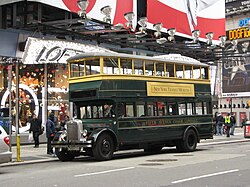
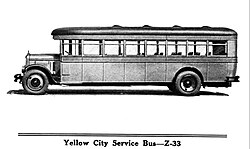
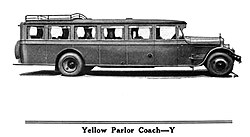
Yellow Coach began its model designation system by working backward through the alphabet. The early lineup focused on versatility, offering four primary types: the Z-type (single or double-deck), the Y-type coach, and the X-type bus. These vehicles served a variety of roles, from urban transit to specialized sightseeing.
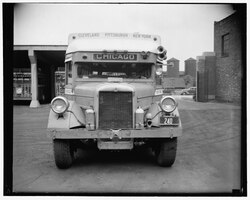
The Z-models were particularly diverse, ranging from the Z-29 transit bus to the Z-A-199, a three-axle front-entrance double-decker. Some models, such as the Z-230-W-8, utilized gas-electric propulsion, while the Z-250 was specifically developed as a parlor coach for Greyhound Lines.
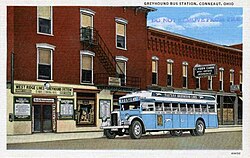
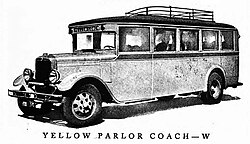
Other notable letter series included the Y-models (1924–1932), the X-models (1924–1928)—which included the GM variant X-17 multi-row sedan—and the W-models (1928–1935). The V-series (1930–1936) and U-series (1928–1935) further expanded the company's reach into parlor and transit markets.
The Revolutionary 700-Series (1931–1939)
In 1931, Yellow Coach introduced the 700-series, marking a pivotal shift in automotive engineering by mounting the engine in the rear. This rear-engine configuration reduced mechanical losses and eliminated the need for a long drive shaft and exhaust pipe running beneath the passengers. While some operators initially preferred front engines for easier maintenance and reduced passenger-cabin noise, the rear-engine design eventually became the industry standard.
The series evolved further in 1934 when Dwight Austin joined the company. He introduced the V-drive (a transverse engine with a "V" angle drive), which remained a General Motors standard until the 1980s. This era also saw the introduction of several modern staples: diesel engines, air conditioning, unibody construction, flat fronts, and high passenger floors with underfloor luggage storage.
Urban Transit: Models 718 and 728
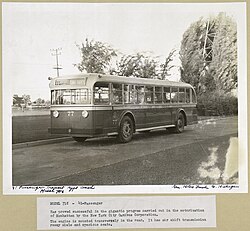
The 700-series produced some of the most successful urban transit buses of the era. The Model 718, with 426 units sold to operators in New York and Los Angeles, was the most popular transit bus of the early 1930s. It was followed by the Model 728, which saw 1,189 units produced across nine different variants.
Intercity Travel: The Greyhound Super Coach
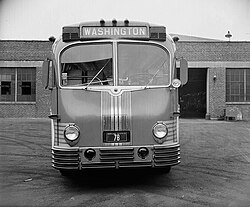
For Greyhound Lines, Yellow Coach developed the Model 719 in 1936, featuring streamlined styling and a high floor. This evolved into the Model 743 in 1937, which added diesel power and air conditioning. Branded as the Super Coach, all 1,256 units of the Model 743 were purchased by Greyhound and its affiliates.
Transition to T-Series and P-Series (1938–1944)
By 1938, the company began transitioning toward a more systematic naming convention. The 1200-series served as a bridge before the introduction of the T-series and P-series in 1940. These new designations provided a code for the vehicle's specifications:
- T-Series: Transit buses. The code indicated fuel (D for diesel, G for gasoline), transmission (E for electric or mechanical), and length.
- P-Series: Parlor coaches designed for intercity comfort. These were 96-inch wide rear-engine vehicles. The code indicated fuel, air conditioning (A), and whether it was a Greyhound-only model (G).
The P-series included the famous "Silversides" (PD-3701), a diesel-powered coach that epitomized the streamlined era of American travel.
Key Facts
- Rear-Engine Innovation: Yellow Coach introduced rear-engine designs in 1931, decades before they were perfected in Europe.
- The V-Drive: Developed by Dwight Austin, the V-drive configuration was a GM standard for nearly 50 years.
- Greyhound Partnership: The Model 743 "Super Coach" was produced exclusively for Greyhound Lines.
- Standardization: The T and P series introduced a logical coding system for fuel, size, and purpose.
- GM Merger: General Motors fully acquired Yellow Coach in 1944, continuing the designs until the "New Look" models arrived in 1959.
| Era/Series | Timeline | Primary Focus | Key Innovation |
|---|---|---|---|
| Letter Series | 1923–1936 | Diverse Transit/Coaches | Alphabetical model variety |
| 700-Series | 1931–1939 | Urban & Intercity | Rear-engine & V-drive |
| 1200-Series | 1938–1940 | Transitionary | Bridge to coded naming |
| T & P Series | 1939–1944 | Standardized Transit/Parlor | Coded specifications |
Frequently Asked Questions
What was the significance of the rear-engine design in the 700-series?
The rear-engine design reduced mechanical losses and noise while eliminating the heavy drive shaft and exhaust system that previously ran between the front engine and the rear axle.
What was the "Super Coach"?
The Super Coach was the branding used by Greyhound Lines for the Model 719 and the subsequent Model 743, which featured diesel engines, air conditioning, and streamlined styling.
How did the P-series naming convention work?
The "P" stood for parlor coach. The following letters indicated fuel (D for diesel, G for gasoline) and features (A for air conditioning, G for Greyhound-specific), followed by the length and version number.
When did Yellow Coach become part of General Motors?
General Motors completed its acquisition and merger of Yellow Coach in 1944, though Yellow Coach designs continued to be produced under GM and GMC brands until 1969.
What was the V-drive system?
The V-drive was an innovative rear-drive system featuring a transverse engine and a "V" angle drive, developed by Dwight Austin in 1934.