Yangban: The Aristocratic Ruling Class of Joseon Dynasty Korea
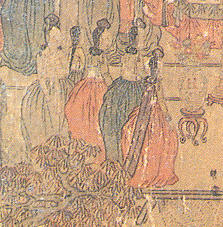
During the Joseon period, the social and political landscape of Korea was defined by a distinct ruling class known as the yangban. These individuals were not merely nobles by birth, but were primarily highly educated civil officials and military officers who embodied the Confucian ideal of the "scholarly official." As the administrators of Korea's traditional agrarian bureaucracy, the yangban held significant influence over the nation's governance until the end of the dynasty in 1897.
The term yangban literally translates to "two branches," referring to the two administrative divisions: munban (civil administrators) and muban (martial office holders). While the term gained prominence during the Joseon period, it eventually evolved from a description of specific government roles into a broader social designation for landed aristocrats and their descendants.
Key Facts
- Definition: The traditional ruling class of aristocrats in dynastic Korea.
- Composition: Primarily composed of civil (munban) and military (muban) officials.
- Social Mobility: Theoretically based on merit through the gwageo (state-sponsored civil service exams).
- Core Ideology: Deeply rooted in Confucianism and scholarly pursuits.
- Status Evolution: Shifted from merit-based bureaucracy to a de facto hereditary status over time.
The Meritocracy of the Gwageo Exams
Unlike many European or Japanese aristocracies where titles were strictly hereditary, the position of a yangban was legally tied to merit. Candidates had to pass the gwageo, a series of rigorous state-sponsored civil service exams. These examinations tested a candidate's mastery of history, poetry, and the Confucian classics.
In theory, any social class—excluding the nobi (slaves), baekjeong (untouchables), and children of concubines—could sit for these exams. However, in practice, the path to becoming a yangban was heavily restricted by economic reality. The years of intensive study required to pass the exams meant that only the wealthy upper classes possessed the financial resources and leisure time necessary to compete, effectively creating a semi-hereditary meritocracy.
Social Hierarchy and the Shift to Hereditary Status
The Korean social structure was strictly stratified. Below the yangban were the chungin (intermediate class), the sangmin (common people), and the ch'ŏnmin (lowborn people, including slaves and various specialized laborers). The prosperity and leisure of the yangban class were largely supported by the labor of the sangmin, who were often bound to the land as indentured servants.
Over time, the legal distinction between official position and social status blurred. Due to economic hardships caused by 16th-century wars and the Little Ice Age, the government began issuing Gongmyeongcheop, which allowed for the purchase of government positions. This led to a collapse of the original caste system. Consequently, status became less about holding an active office and more about lineage and genealogy, documented in local records like the hyangan.
Summary of Korean Social Classes
| Class Name | Hanja | Description |
|---|---|---|
| Yangban | 兩班 | Noble/Ruling class (officials and aristocrats) |
| Chungin | 中人 | Intermediate class |
| Sangmin | 常民 | Common people |
| Ch'ŏnmin | 賤民 | Lowborn people (nobi, kisaeng, etc.) |
Yangban Fashion and Symbolism
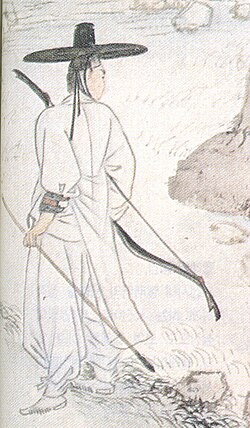
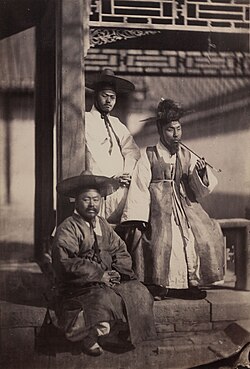
Clothing and accessories served as a visible language of rank and Confucian adherence. For men, hair was styled in an egg-shaped top bun, secured with a hairpin known as a binyeo. A headband called a mang-geon was used to tie the hair, and the material and size of the kwan-ja (ear-side buttons) helped observers assess a man's specific rank.
Hats, specifically the cylindrical gat, were essential components of the yangban wardrobe. These were often adorned with decorative strings and beads. Footwear also signaled status; while commoners wore straw shoes or wooden clogs, the elite wore high-cut or low-ankle leather shoes known as hwa or hye.
Color was another significant indicator of wealth. Deep red garments were exceptionally luxurious because the dyeing process required massive amounts of madder plants. A single set of red clothing could cost more than four times the value of white cloth, making it a color reserved almost exclusively for the highest echelons of society.
The Legacy of the Yangban
The legal status of the yangban was officially abolished in 1894 during the Gwangmu Reform. During the subsequent Japanese colonial period, some members of the class transitioned into new industries like textiles, chemicals, and shipbuilding, maintaining influence through economic accumulation.
In modern Korea, while the legal class system is long gone, the legacy of the yangban persists in social networks. In South Korea, elite connections often follow patterns of shared education, hometowns, and family backgrounds. In North Korea, a de facto elite class has emerged based on military and party alliances.
Frequently Asked Questions
How did a person become a member of the yangban class?
Ideally, a person became a yangban by passing the gwageo, the state-sponsored civil service exams. However, as the dynasty progressed, status became increasingly hereditary through family lineage and the ability to purchase positions.
What was the difference between munban and muban?
The term yangban refers to both branches of administration: munban refers to civil administrators, while muban refers to military or martial office holders.
Was the yangban class strictly meritocratic?
While the exam system was designed to reward merit, it functioned as a semi-hereditary system because only wealthy families could afford the years of uninterrupted study required to pass the difficult exams.
What happened to the yangban during the 20th century?
The legal status of the yangban was abolished in 1894. During the Japanese colonial era, some maintained power through economic ventures, but their exclusive political and social dominance was permanently eroded.
How is the term "yangban" used in modern Korea?
Today, the term is rarely used to describe actual lineage. In South Korea, it can be used as a compliment or an insult, sometimes referring to an older, stubborn man, or metaphorically describing well-connected elites.