XY Sex-Determination Systems in Animals and Plants
The XY sex-determination system is a biological mechanism used by a diverse array of organisms to determine the sex of an individual. This system is found across various kingdoms of life, including many mammals (such as humans), specific insects like Drosophila, certain snakes, fish like guppies, and various plant species including the Ginkgo tree.
At its core, this system relies on a pair of sex chromosomes to establish the karyotypic sex (the sex determined by the chromosomes). In most XY systems, females possess two identical sex chromosomes (XX) and are referred to as the homogametic sex. Males typically possess two different sex chromosomes (XY), making them the heterogametic sex. In humans, the presence of the Y chromosome triggers male development; without it, the individual typically develops as female. Crucially, most species using this system require at least one X chromosome for survival.
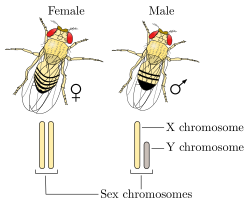
Key Facts
- Homogametic sex: Individuals with two identical sex chromosomes (XX), typically females.
- Heterogametic sex: Individuals with two different sex chromosomes (XY), typically males.
- SRY Gene: The primary trigger for testis development in mammals.
- FOXL2 Gene: An active "pro-female" gene required to maintain ovary cells.
- Plant Diversity: XY systems have evolved independently in over 175 unique plant families.
Mechanisms Across Species
Mammals and Humans
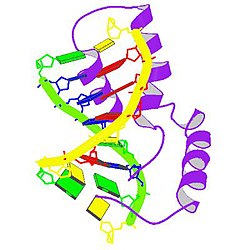
In mammals, the process of sexual differentiation is driven by specific genetic triggers. In the 1930s, Alfred Jost discovered that testosterone is essential for the development of the Wolffian duct in male rabbits. In humans, the SRY gene (sex-determining region of the Y chromosome) triggers the transformation of undifferentiated gonads into testes. If SRY is absent, the SOX9 gene can sometimes induce testis development independently. In the absence of both, the pathway leads to the development of ovaries.

Recent research has shifted the understanding of female development. Rather than being a "default" pathway, ovary development is an active process regulated by the FOXL2 gene. This gene prevents adult ovary cells from transforming into testis-like cells.
Other Animals
While common in mammals, XY systems have also evolved convergently in other groups, such as certain species of turtles within the Chelidae and Staurotypinae families. Other insects utilize different variations, such as the haplo-diploid system (found in Hymenoptera), where females are diploid and males are haploid, or the X0 system, where males have only one X chromosome and no Y.
Plants
In the plant kingdom, XY determination is found in both angiosperms (flowering plants) and gymnosperms. While fewer than 5% of dioecious (separate male and female plants) angiosperms use the XY system, this still accounts for approximately 13,000 species. This system has evolved independently hundreds to thousands of times across 175 families, including economically vital crops like grapes, asparagus, kiwifruit, and date palms.
Gymnosperms show a higher prevalence of dioecy, with about 65% of species exhibiting this trait. XY systems are noted in families such as Ginkgoaceae, Cycadaceae, Zamiaceae, Gnetaceae, and Podocarpaceae.
Historical Discovery of XY Systems
The chromosomal basis of sex was discovered independently in 1905 by Nettie Stevens, who studied beetles, and Edmund Beecher Wilson, who studied hemiptera. They established that males possess XY chromosomes while females possess XX.


By the 1920s, Theophilus Painter confirmed that this system applied to humans and other mammals, noting that the determining chromosome is carried by the spermatozoa. In 1959, research into Turner syndrome (X0) and Klinefelter syndrome (XXY) solidified the consensus that the presence or absence of the Y chromosome, rather than the number of X chromosomes, determines maleness in humans. This eventually led to the discovery of the SRY gene in 1990 by Peter Goodfellow's team.
Summary of Sex-Determination Systems
| System | Female Karyotype | Male Karyotype | Example Organisms |
|---|---|---|---|
| XY System | XX (Homogametic) | XY (Heterogametic) | Humans, Drosophila, Ginkgo tree |
| X0 System | XX | X (Haploid for sex chromosome) | Certain insects |
| Haplo-diploid | Diploid (Pairs) | Haploid (Single copy) | Hymenoptera (Bees, Ants) |
Frequently Asked Questions
What is the difference between homogametic and heterogametic sexes?
The homogametic sex produces gametes with the same sex chromosome (e.g., XX females), while the heterogametic sex produces gametes with different sex chromosomes (e.g., XY males).
Does the Y chromosome always determine maleness?
In most XY systems, such as in humans, the Y chromosome (specifically the SRY gene) triggers male development. However, in some cases, the SOX9 gene can induce testis development even without SRY.
Is female development a default process?
Historically it was viewed as a default, but modern research shows it is an active process. The FOXL2 gene is essential for the development and maintenance of ovaries.
How common is the XY system in plants?
It is relatively rare in angiosperms (less than 5% of dioecious species) but common in gymnosperms, where approximately 65% are dioecious. It has evolved independently across hundreds of plant families.
Who first discovered the XY sex-determination system?
Nettie Stevens and Edmund Beecher Wilson are credited with independently discovering the XY system in insects in 1905.