Xbox One: The Evolution of Microsoft's Eighth-Generation Console
The Xbox One family represents a significant era in Microsoft's gaming history, marking the transition into the eighth generation of home video game consoles. Since its initial launch in November 2013, the platform has undergone several major hardware revisions, evolving from a multimedia-focused device into a high-performance gaming powerhouse. With over 58 million units shipped, the Xbox One ecosystem has left a lasting impact on the industry.

Key Facts

- Developer/Manufacturer: Microsoft (Manufactured by Flextronics and Foxconn).
- Launch Date: November 22, 2013 (North America/EU/AU/SA).
- Total Units Shipped: Over 58 million.
- Hardware Generations: Original Xbox One, Xbox One S, and Xbox One X.
- Backward Compatibility: Supports select original Xbox and Xbox 360 titles.
- Best-Selling Game: Grand Theft Auto V (10.98 million copies).
The Hardware Journey: From Original to Xbox One X
The Xbox One lifecycle is defined by three distinct hardware iterations, each designed to meet different consumer needs, ranging from budget-friendly multimedia to enthusiast-grade 4K gaming.
The Original Xbox One
Released in late 2013, the original model was designed as a connected device. It featured an 8-core AMD APU (Accelerated Processing Unit)—a chip that combines a CPU and a GPU on a single die—running at 1.75 GHz. The console utilized 8 GB of DDR3 memory, with 5 GB specifically allocated for games.

A notable feature of the original hardware was its ability to act as a multimedia hub, including an HDMI input that allowed users to use the console as a pass-through for TV set-top boxes.

The Xbox One S: A Slimmer Revision
In 2016, Microsoft introduced the Xbox One S. This revision featured a smaller, more compact casing and improved support for 4K UHD Blu-ray and 4K streaming. While it maintained a similar CPU architecture to the original, it offered slight improvements in graphics performance (1.4 TFLOPS) and utilized HDMI 2.0a.


The Xbox One X: High-Performance Gaming
For gamers seeking the highest possible fidelity, the Xbox One X was released in 2017. This model was a massive leap in power, featuring an evolved 2.3 GHz 8-core AMD Jaguar module and 12 GB of GDDR5 memory. With 6 TFLOPS of FP32 performance, it was specifically engineered for 4K gaming and high-resolution textures.


The internal architecture of the X model is significantly more complex, utilizing a custom SoC (System on a Chip) to manage its increased computational demands.

Technical Specifications Comparison
To understand the progression of the hardware, it is helpful to compare the core technical differences between the three primary models.
| Feature | Original Xbox One | Xbox One S | Xbox One X |
|---|---|---|---|
| CPU Architecture | 1.75 GHz 8-core AMD Jaguar | 1.75 GHz 8-core AMD Jaguar | 2.3 GHz 8-core Evolved Jaguar |
| Memory | 8 GB DDR3 | 8 GB DDR3 | 12 GB GDDR5 |
| Graphics Performance | 1.3 TFLOPS | 1.4 TFLOPS | 6 TFLOPS |
| Max Resolution | 1080p | 4K UHD | 4K UHD |
| Optical Drive | Blu-ray | UHD Blu-ray | UHD Blu-ray |
Peripherals and Input Methods
The Xbox One experience is driven by various input methods, most notably the Xbox Wireless Controller. For enthusiasts, the Xbox Elite Wireless Controller was released, offering unique analog sticks, a new D-pad, and adjustable paddles for enhanced precision.

The console also supported the Kinect sensor, a camera-based device used for motion tracking and voice commands. The upgraded Kinect 2.0 provided more accurate tracking than its predecessor, allowing for deeper immersion in motion-controlled titles.

Software, Services, and Backward Compatibility
Beyond the hardware, the Xbox One ecosystem is supported by Xbox Live (rebranded as part of the Xbox service ecosystem) and Xbox Game Pass. These services provide the online infrastructure and game libraries necessary for modern gaming.

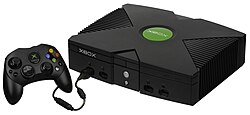
One of the most significant software achievements of the platform was the implementation of backward compatibility. Through software emulation, the Xbox One can play selected titles from the original Xbox and the Xbox 360, ensuring that players' previous libraries remain accessible.

The first Xbox video game confirmed to be compatible with the Xbox One was Crimson Skies: High Road to Revenge.
Frequently Asked Questions
What is the difference between the Xbox One S and Xbox One X?
The Xbox One S is a mid-range console focused on compact design and 4K multimedia support, while the Xbox One X is a high-performance model designed for 4K gaming with significantly higher GPU power and more memory.
Can I play Xbox 360 games on an Xbox One?
Yes, the Xbox One supports backward compatibility for selected Xbox 360 games through the use of software emulation.
What kind of storage options were available?
Storage varied by model: the original offered 500 GB or 1 TB HDDs; the Elite model featured a 1 TB SSHD (Solid State Hybrid Drive); the S model offered up to 2 TB; and the X model came with a 1 TB HDD.
Does the Xbox One support 4K resolution?
Only the Xbox One S and Xbox One X models support 4K UHD output; the original Xbox One is limited to 1080p resolution.
What was the best-selling game on the platform?
Grand Theft Auto V was the best-selling game on the Xbox One, with approximately 10.98 million units sold.