WVU College of Creative Arts and Media: A History of Evolution
The academic landscape of West Virginia University (WVU) has undergone significant transformations to keep pace with the evolving worlds of communication and the arts. Today, the College of Creative Arts and Media stands as a unified entity, merging decades of tradition in journalism, media studies, and the creative arts.
The Foundation of Journalism at WVU
The roots of media education at WVU trace back to 1920 with the arrival of Dr. Perley Isaac Reed. Initially assigned to teach English and Journalism within the College of the Arts and Sciences, Dr. Reed embarked on a mission to broaden the curriculum. He rapidly expanded the course offerings to include specialized subjects such as journalism history, editing, advertisement writing, and trade and industrial journalism.
To build institutional momentum, Dr. Reed leveraged his relationship with the West Virginia State Newspaper Council. By focusing on improving the press and its profitability, he utilized political influence to elevate the status of the program. These efforts resulted in the establishment of Journalism as a formal department in 1927, which eventually evolved into a full school in 1939.
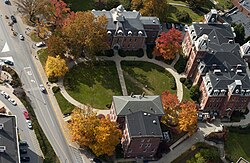
For many years, the school lacked a dedicated facility, operating out of a few rooms in Woodburn Hall. This changed in 1953 when Martin Hall was allocated to the school, and by 1954, the program had fully established its home there. While the school's tenure in the building began in the mid-century, Martin Hall had already been a fixture of the historic Woodburn Circle for decades.
The Rise of Creative Arts and Media Expansion
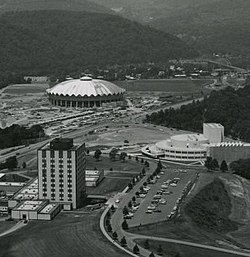
While journalism was maturing, WVU expanded its artistic offerings. In 1969, the College of Creative Arts was founded. This college served as an umbrella organization to house the schools of music, art and design, as well as theatre and dance.
As the media landscape shifted from traditional print to a broader digital and multimedia environment, the journalism school evolved. On February 21, 2014, the university announced a rebranding. On July 1, 2014, the Perley Isaac Reed School of Journalism officially became the Reed College of Media, reflecting a more comprehensive approach to modern communication.
The Modern Era: A Unified College
The most recent chapter in this history occurred in 2024. In a strategic move to integrate artistic expression with media expertise, West Virginia University merged the Reed College of Media and the College of Creative Arts. This merger created the current College of Creative Arts and Media.
Key Facts
- 1920: Dr. Perley Isaac Reed begins teaching English and Journalism at WVU.
- 1927: Journalism is officially established as a department.
- 1939: The program transitions from a department to a school.
- 1954: The school begins its long-term residency in Martin Hall.
- 1969: The College of Creative Arts is founded.
- 2014: The school is renamed the Reed College of Media.
- 2024: The Reed College of Media and the College of Creative Arts merge.
| Era/Year | Entity Name | Key Milestone |
|---|---|---|
| 1939 – 2014 | P.I. Reed School of Journalism | Established as a school; moved to Martin Hall (1954). |
| 1969 – 2024 | College of Creative Arts | Founded to house music, art, design, theatre, and dance. |
| 2014 – 2024 | Reed College of Media | Renamed to reflect broader media scope. |
| 2024 – Present | College of Creative Arts and Media | Merger of Creative Arts and Reed College of Media. |
Frequently Asked Questions
Who founded the journalism program at WVU?
The program was developed by Dr. Perley Isaac Reed, who joined the university in 1920 and expanded the curriculum to include various forms of professional journalism.
When did the journalism school move to Martin Hall?
Martin Hall was given to the journalism school in 1953, and the school has been located there since 1954.
What schools were originally part of the College of Creative Arts?
The College of Creative Arts, founded in 1969, housed the schools of music, art and design, and theatre and dance.
Why was the Reed School of Journalism renamed in 2014?
It was renamed the Reed College of Media on July 1, 2014, to better reflect the evolving nature of the media industry.
What is the current name of the merged institution?
As of 2024, the merged entity is known as the College of Creative Arts and Media.