Wrigley Field Los Angeles: The History of a Million Dollar Palace
Long before the modern era of massive sports complexes, Los Angeles was home to a venue known as the "Million Dollar Palace." Wrigley Field (California) was a landmark ballpark that served as a cultural and athletic hub for the city from 1925 until its demolition in 1969. While it shares a name with the famous Chicago stadium, the Los Angeles version carved out its own unique legacy as a home for minor league legends, Major League pioneers, and world-class entertainment.
Key Facts
- Opened: September 29, 1925
- Architect: Zachary Taylor Davis (who also designed Chicago's Wrigley Field)
- Primary Tenants: Los Angeles Angels (PCL) and Los Angeles Angels (MLB)
- Capacity: 22,000 at opening; 20,457 by 1961
- Notable Feature: Ivy-covered walls planted by 1940
- Demolished: 1969
The Vision of William Wrigley Jr.
The ballpark was the brainchild of William Wrigley Jr., the chewing gum magnate who owned both the Chicago Cubs and their farm team, the Los Angeles Angels of the Pacific Coast League (PCL). Built in South Los Angeles at a cost of $1.5 million, the stadium was designed by Zachary Taylor Davis. Wrigley viewed the park as a "semicivic enterprise" and a gift to the city, famously insisting that women be admitted to games for free.
The field was aligned northeast, situated 185 feet above sea level. To mirror the aesthetic of his Chicago stadium, Wrigley had ivy planted on the walls by 1940. The park also evolved technologically, adding lights in 1930—long before the Chicago counterpart adopted night games.
A Hub for Professional Baseball
The Minor League Era (1925–1957)
For over three decades, the park was a stronghold for the PCL. The Los Angeles Angels inaugurated the field on September 29, 1925, with a victory over the San Francisco Seals. The park also hosted the Hollywood Stars from 1926 to 1935 and again in 1938. During this era, the stadium saw future Hall of Famer Tommy Lasorda and other stars like Gene Mauch and Andy Pafko.
The Angels were dominant during this period, capturing PCL championships in 1926, 1933, 1934, 1947, and 1956. The era ended in 1957 when the Brooklyn Dodgers purchased the Angels franchise and territorial rights for $3 million as they prepared to move to Los Angeles.
The Major League Transition (1961)
In 1961, the American League expanded, and Gene Autry and Bob Reynolds were awarded a franchise: the Major League Baseball (MLB) Los Angeles Angels. For one historic season, Wrigley Field served as their home. The park proved to be a massive "hitters' park," where a record 248 home runs were hit—an MLB record that stood for over 30 years.
The 1961 season saw an average attendance of 7,500 per game, with the largest crowds gathering for matchups against the New York Yankees. The final home run in the stadium's history was hit by Steve Bilko on October 1, 1961.
Beyond Baseball: A Multi-Sport and Cultural Venue
Wrigley Field was far more than a baseball diamond. It was a versatile arena that hosted a wide array of sporting and cultural events:
- Boxing: The venue hosted six world title bouts, including fights featuring Joe Louis, Sugar Ray Robinson, and Floyd Patterson.
- Football: It was the site of the first NFL Pro Bowl on January 15, 1939, and hosted the Pepperdine Waves in 1948.
- Soccer: The park hosted international friendlies, including a 1959 match between England and the United States, and a 1960 World Cup qualifier between the U.S. and Mexico.
- Music: From 1945 to 1956, Leon Hefflin, Sr. produced the Cavalcade of Jazz, a massive outdoor event showcasing over 125 artists, including Count Basie.
Hollywood and the Silver Screen
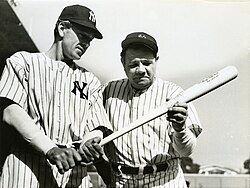
Due to its classic architecture, the ballpark became a favorite for filmmakers. It appeared in The Pride of the Yankees (1942) and Damn Yankees (1958). It also served as a location for the silent film Babe Comes Home (1927) and the film noir Armored Car Robbery (1950). In television, it provided the backdrop for the 1960 Home Run Derby series and an episode of The Twilight Zone titled "The Mighty Casey."
Demolition and Legacy
After the MLB Angels departed in 1961, the city-owned park hosted various events, including a significant civil rights rally featuring Martin Luther King Jr. on May 26, 1963. In 1968, the site was renamed the Gilbert Lindsay Community Center. Demolition began in January 1969.
Today, the site is occupied by the Kedren Community Mental Health Center and a city park. A small ball field in the northwest corner, used by the Wrigley Little League, continues to carry the name "Wrigley Field" as a nod to the site's storied past.
| Category | Details |
|---|---|
| Location | 425 E. 42nd Place, Los Angeles, CA |
| Architect | Zachary Taylor Davis |
| Construction Cost | $1.5 Million |
| Field Dimensions | LF: 340ft, CF: 412ft, RF: 339ft |
| MLB Tenant | Los Angeles Angels (1961) |
| PCL Tenants | LA Angels, Hollywood Stars |
Frequently Asked Questions
How is the Los Angeles Wrigley Field different from the one in Chicago?
While both were designed by Zachary Taylor Davis and owned/influenced by William Wrigley Jr., the Los Angeles park was smaller and primarily hosted minor league baseball before a brief stint with the MLB Angels. It was demolished in 1969, whereas the Chicago stadium remains active.
Which MLB team played there?
The Los Angeles Angels of Major League Baseball played their inaugural season at Wrigley Field in 1961 before moving to other venues.
What other sports were played at Wrigley Field?
The venue hosted professional boxing (including world title bouts), the first NFL Pro Bowl, college football for Pepperdine University, and international soccer matches.
What happened to the site after the stadium was demolished?
The site was converted into the Gilbert Lindsay Recreation Center. Today, it houses the Kedren Community Mental Health Center and a public park with a youth baseball diamond known as Wrigley Field.
Why was it called a "hitters' park"?
The stadium's dimensions and atmosphere encouraged high scoring. During the 1961 MLB season, a record 248 home runs were hit, averaging three per game.