Women's Studies: Theoretical Traditions and Research Methods
Women's studies emerged from a fundamental question: "Why are women not included?" As women increased their presence in higher education as both students and faculty, the male-centric nature of traditional curricula became apparent. Initially, faculty in departments like philosophy, English, and history began introducing courses focused on women, driven by the women's movement's belief that "the personal is political." This perspective shifted the academic focus toward sexual politics, societal roles, and the way personal experiences reflect broader power structures.
Since the 1970s, the field has adopted post-modern approaches to analyze gender and its intersections with race, class, ethnicity, sexuality, religion, age, and (dis)ability. Central to these theories is the concept of social constructionism—the idea that gender, sex, and sexuality are not intrinsic traits but are constructed by society. This shift has led scholars to examine language, subjectivity, and social hegemony to understand how individuals' lives are shaped.
Key Facts
- Core Objective: To address gender discrimination and analyze the conditions of women's lives.
- Theoretical Pillars: Includes feminist theory, intersectionality, standpoint theory, and transnational feminism.
- Methodology: Utilizes quantitative, qualitative, and mixed methods, emphasizing the relationship between the researcher and the subject.
- Pedagogy: Employs a triad model of research, theory, and praxis (action), often decentralizing the professor's authority.
- Key Concept: Intersectionality posits that oppression is a result of how power views combined factors (race, gender, class), not personal identity alone.
Core Theoretical Frameworks
Feminist Theory
Feminist theory is a body of writing dedicated to analyzing gender disparities and the lived experiences of women. Key contributors have expanded the field to include the experiences of women of color. For example, bell hooks, Alice Walker, and Patricia Hill Collins explored how race and gender mutually inform identity. Walker coined the term womanism to celebrate the culture and strength of Black women while struggling for liberation. Collins introduced the matrix of domination, which views race, class, and gender as interlocking systems of oppression. Additionally, Bracha Lichtenberg Ettinger introduced the matrixial gaze and matrixial space/time to explore the feminine unconscious through philosophy and psychoanalysis.
Intersectionality
Associated with the third wave of feminism and developed by Kimberlé Crenshaw, intersectionality is a framework for analyzing the complexity of human experience. It examines how various social and political identities—such as age, race, sexual orientation, and gender—overlap to create unique experiences of discrimination or privilege. Intersectionality argues that power hierarchies are maintained by how powerful individuals perceive the combination of these factors.
Standpoint Theory
Developed in the 1980s and rooted in Marxist thought, standpoint theory suggests that knowledge is socially situated. It argues that marginalized groups have historically been excluded from the production of knowledge. The theory posits that because societal decision-making has been constructed by and for men, those in power are often incapable of understanding the oppression faced by women. A primary example of this is found in political analysis, a field largely controlled by men.

Transnational Feminist Theory
Transnational feminism addresses the flow of economic, political, and social equality across national borders, responding specifically to imperialism, neoliberalism, and globalization. It challenges the way gender knowledge is circulated in academia and argues that gender equality is a global effort. Scholars in this field warn that ignoring the cultural and economic injustices caused by globalization can reinforce global gender inequalities.
Social Justice, Agency, and Materialism
Social Justice and Activism
Activism is a foundational element of women's studies. Social justice theory focuses on creating just communities on a societal level rather than an individual one. While students often engage in social justice projects to address root causes of workplace discrimination and domestic violence, some critics, such as Daphne Patai, argue that mandated activism can sometimes prioritize politics over education.
Agency and Materialism
Agency is the capacity to make free, individual choices. In feminist contexts, increasing agency is seen as a way to create autonomy and counteract historical hierarchical oppression. Complementing this is Materialist theory, which draws from 1960s and 70s feminist social work and Marxist history. Materialism examines the realistic material conditions of women's lives—specifically family, motherhood, and domesticity—and analyzes how gendering discourses promote marginalization.
Educational Approaches and Pedagogy
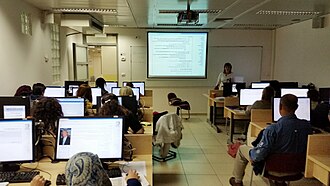
Women's studies typically employs a feminist pedagogy based on a triad of research, theory, and praxis. In these classrooms, the professor is not the sole source of knowledge; instead, students are encouraged to take an active role in "claiming" their education. Curricula cover diverse topics including queer theory, media literacy, reproductive justice, and women's health.
Many programs integrate community-based internships and service-learning to show how institutional privilege and oppression affect lives in real-time. This approach provides students with a toolkit to address power inequalities and effect social change upon graduation.
| Theory | Primary Focus | Key Concept/Contributor |
|---|---|---|
| Feminist Theory | Gender discrimination and women's experiences | Matrix of Domination (P. Hill Collins) |
| Intersectionality | Overlapping social identities and power | Kimberlé Crenshaw |
| Standpoint Theory | Socially situated knowledge and power | Marxist influence / Marginalized perspectives |
| Transnational Feminism | Global equality and globalization | Cross-border social/economic flow |
| Materialism | Material conditions and social arrangements | Domesticity and Motherhood |
Frequently Asked Questions
What is the difference between feminist theory and intersectionality?
Feminist theory is a broad body of writing that analyzes gender discrimination and women's lives. Intersectionality is a specific theoretical framework within that field (associated with the third wave) that focuses on how multiple identities—like race, gender, and class—overlap to create unique systems of discrimination.
How does standpoint theory view the production of knowledge?
Standpoint theory argues that knowledge is socially situated and that those in power (historically men) cannot fully understand the perspectives of the oppressed. It suggests that marginalized groups provide a critical perspective that challenges dominant social "truths."
What is "womanism"?
Coined by Alice Walker, womanism is a term used to situate the experiences of Black women, celebrating their beauty, culture, and strength while focusing on their specific struggle for social change and liberation.
What is the goal of feminist pedagogy in the classroom?
Feminist pedagogy aims to decentralize the professor as the sole authority, encouraging students to take an active role in their own learning process through a combination of research, theory, and practical application (praxis).
How does transnational feminism respond to globalization?
It examines how globalization, neoliberalism, and imperialism affect the equality of women and men across borders, arguing that gender equality must be treated as a global effort to avoid reinforcing international inequalities.