Wisconsin Renewable Power Stations
Wisconsin is diversifying its energy portfolio by leveraging a wide array of renewable resources. From the harnessing of wind across its open plains to the utilization of organic waste and the steady flow of its river systems, the state employs a variety of technologies to generate sustainable electricity. Data provided by the U.S. Energy Information Administration and Renew Wisconsin highlights a robust infrastructure of biomass, hydroelectric, wind, and solar installations.
Key Facts
- Wind Energy: The Glacier Hills Wind Park is one of the state's largest wind installations with a capacity of 162 MW.
- Hydroelectric Power: WE Energies is a major operator, managing 13 facilities with a total capacity of 89 MW.
- Biomass Diversity: The state utilizes wood waste, biogas, and landfill gas, with the Wisconsin Rapids Pulp Mill reaching a capacity of 64.7 MW.
- Solar Growth: The Two Creeks Solar Park represents a significant leap in capacity, providing 150 MW AC.
Biomass and Refuse Energy
Wisconsin utilizes biomass—organic material from plants and animals—and refuse to generate power. This includes the use of biogas (gas produced by the breakdown of organic matter) and landfill gas, which captures methane emissions from waste sites to create electricity.
The state's biomass capacity is heavily supported by the paper and pulp industry, where wood waste is frequently used. For example, the Wisconsin Rapids Pulp Mill and the Mosinee Mill are among the highest-capacity biomass plants. Other facilities, such as the Ameresco Janesville and Berlin Landfill plants, focus specifically on landfill gas recovery.
| Facility Name | Fuel Type | Capacity (MW) | Year Opened |
|---|---|---|---|
| Wisconsin Rapids Pulp Mill | Wood/Wood Waste | 64.7 | 1968/1991 |
| Mosinee Mill | Wood/Wood Waste | 48.0 | 1951/1976 |
| Bay Front Plant | Wood/Wood Waste | 47.0 | 1952 |
| Rothschild Biomass Cogen | Wood/Wood Waste | 46.1 | 2013 |
| Manitowoc Power Plant | Wood/Wood Waste | 44.0 | 1955/1962 |
Hydroelectric Power
Hydroelectric power remains a foundational element of Wisconsin's renewable grid. These stations convert the kinetic energy of flowing water into electricity. The state features a mix of historic plants and modernized facilities.
Major utility providers play a significant role in this sector. WE Energies operates 13 facilities totaling 89 MW, while Alliant Energy manages two facilities with a maximum capacity of 31 MW. Notable high-capacity sites include the Jim Falls Hydro (59.8 MW) and Wissota Hydro (39.4 MW).
Wind Energy
Wind power has expanded rapidly across Wisconsin's landscape. These projects utilize large turbines to capture wind energy, often situated in counties with high wind potential.
The most significant contributors include the Glacier Hills Wind Park (162 MW), the Blue Sky Green Field Wind Energy Center (145 MW), and the Forward Wind Energy Center (129 MW). Newer additions, such as the Red Barn Wind Park opened in 2023, continue to increase the state's total wind capacity.
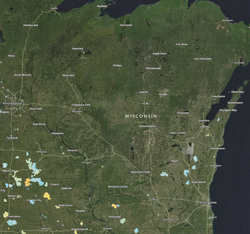
Solar Energy
Solar power in Wisconsin consists of photovoltaic arrays that convert sunlight directly into electricity. While many projects are smaller-scale community gardens, the state has seen the emergence of utility-scale solar parks.
The Two Creeks Solar Park is the most prominent installation with a capacity of 150 MW AC. Other notable projects include the Hodag Solar (7.5 MW) and the Strix Solar project, which is slated for 2025 with a 6 MW capacity.
Frequently Asked Questions
Which is the largest wind farm in Wisconsin?
The Glacier Hills Wind Park in Columbia County is the largest, with a capacity of 162 MW.
What types of fuel are used in Wisconsin's biomass plants?
Wisconsin biomass plants use wood and wood waste, biogas, and landfill gas. Some facilities, like the French Island Generating Plant, also incorporate refuse.
Who are the primary operators of hydroelectric power in the state?
WE Energies and Alliant Energy are primary operators, with WE Energies managing 13 facilities totaling 89 MW.
What is the highest capacity solar project in Wisconsin?
The Two Creeks Solar Park is the highest capacity solar project, providing 150 MW AC.
How is landfill gas used for power?
Landfill gas is captured from waste decomposition sites and processed to generate electricity, as seen in facilities like the Pheasant Run and Ridgeview landfills.