Wisconsin Municipalities: Population Trends and Largest Cities
Wisconsin's landscape is defined by a diverse array of incorporated entities—legal municipal bodies such as cities and villages that have a defined boundary and a local government. Understanding the population distribution across these municipalities provides a clear picture of the state's urban growth and shifting demographics over the last two decades.
Based on data from the 2000, 2010, and 2020 censuses, the state shows a distinct concentration of population in its major hubs, while several mid-sized cities and villages continue to experience steady growth.
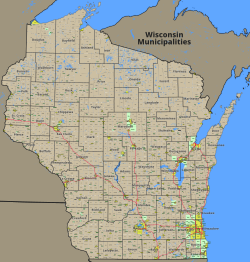
Key Facts
- Milwaukee remains the largest municipality in Wisconsin, though its population has seen a slight decline since 2000.
- Madison is the fastest-growing major city among the top three, increasing from 208,054 residents in 2000 to 269,840 in 2020.
- The list of largest municipalities includes only cities and villages; towns are excluded as they are not incorporated entities.
- There are 95 incorporated municipalities in Wisconsin with a population exceeding 10,000 inhabitants.
- Waukesha County and Milwaukee County host a high density of the state's most populous municipalities.
Analyzing Population Shifts (2000–2020)
The demographic data reveals a trend of growth in the state capital and surrounding areas. Madison has shown consistent upward momentum, while Milwaukee, the state's largest city, has experienced a gradual decrease from its 2000 peak of 596,974.
The Top Tier Cities
Beyond the two largest hubs, Green Bay, Kenosha, and Racine maintain their positions as significant urban centers. Green Bay has remained remarkably stable, hovering around the 100,000 mark for twenty years. Kenosha has seen a steady climb, nearly reaching the 100,000 threshold by 2020.
Growth in Villages and Smaller Cities
While cities dominate the top of the list, several villages have grown significantly. For example, Menomonee Falls and Mount Pleasant stand out as some of the largest villages in the state. Some smaller municipalities, such as Verona and Waunakee, have seen their populations nearly double or triple since 2000, reflecting a trend of suburban expansion.
Population Summary Table
| Rank | Municipality | Type | County | 2020 Population | 2010 Population | 2000 Population |
|---|---|---|---|---|---|---|
| 1 | Milwaukee | City | Milwaukee | 577,222 | 594,833 | 596,974 |
| 2 | Madison | City | Dane | 269,840 | 233,209 | 208,054 |
| 3 | Green Bay | City | Brown | 107,395 | 104,057 | 102,313 |
| 4 | Kenosha | City | Kenosha | 99,986 | 99,218 | 90,352 |
| 5 | Racine | City | Racine | 77,816 | 78,860 | 81,855 |
Frequently Asked Questions
Why are towns not included in the list of largest municipalities?
Towns are not included because they are not incorporated entities. In Wisconsin, only cities and villages are considered incorporated municipalities with their own specific local government structures.
Which city has seen the most significant growth among the top five?
Madison has seen the most significant growth, increasing its population by over 61,000 residents between the 2000 and 2020 censuses.
What is the difference between a city and a village in this context?
Both are incorporated entities, but they differ in their legal structure and governance. The data tracks both types as long as their population exceeds 10,000.
Which county contains the most high-population municipalities?
Milwaukee and Waukesha counties appear frequently in the rankings, hosting numerous cities and villages with populations over 10,000.
Has Milwaukee's population increased since 2000?
No, Milwaukee's population has decreased slightly, moving from 596,974 in 2000 to 577,222 in 2020.