Wisconsin Energy History: From Interurban Rail to WEC Energy Group
The evolution of energy production in Wisconsin is a story of constant innovation and strategic expansion. What began as a specialized service for rail transport has transformed into one of the region's most significant utility providers, pioneering fuel technologies and diversifying its energy portfolio over more than a century.
The journey started in 1896 with the formation of the Milwaukee Electric Railway and Light Company. Originally a subsidiary of the North American Company, its primary purpose was to provide interurban rail service—electric rail transport between cities—across a 12,000-square-mile area of southeastern Wisconsin. As the company grew, it began selling surplus electricity to local businesses and residents, laying the groundwork for a full-scale utility provider.
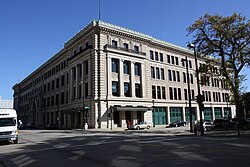
Pioneering Power Generation
In the early 20th century, the company became a global leader in efficiency. In 1919, experiments at the East Wells Power Plant (then known as the Oneida Street Station) demonstrated that pulverized coal—coal ground into a fine powder to increase combustion efficiency—could reduce production costs and conserve fuel.
This breakthrough led to the 1921 formation of the Wisconsin Electric Power Company, which built the Lakeside Power Plant in St. Francis, Wisconsin. Lakeside made history as the world's first power plant to burn pulverized coal exclusively. This commitment to efficiency continued at the Port Washington Power Plant, where the first 80-megawatt unit came online in 1935; by 1948, Port Washington was recognized as the most efficient coal-fueled plant globally.
Corporate Consolidation and Independence
The mid-20th century was marked by a series of mergers and a shift toward independence. In 1938, Milwaukee Electric Railway and Light merged into Wisconsin Electric. This was followed by the 1941 acquisition of the Wisconsin Gas & Electric Company and the Wisconsin Michigan Power Company. By 1946, Wisconsin Electric officially became an independent entity, severing its ties with the North American Company.
As demand for power grew, the company expanded its infrastructure. The Oak Creek Power Plant introduced its first 120-megawatt unit in 1953, eventually expanding to eight units by 1968. The company also ventured into nuclear energy in 1970 with the 908-megawatt Point Beach Nuclear Plant, which earned a worldwide reputation for its operational efficiency.
The Transition to WEC Energy Group
In 1987, the company reorganized as a holding company called Wisconsin Energy Corporation, managing subsidiaries including Wisconsin Electric, Wispark, Wisvest, and Witech. The following decades saw aggressive growth through acquisitions, including the Wisconsin Southern Gas Co. in 1994 and the Edison Sault Electric Company in 1998.
The turn of the millennium brought significant structural changes. In 2000, the acquisition of WICOR (holding company of Wisconsin Gas) created the largest electric and natural gas provider in the state. This era also saw the 2001 creation of the American Transmission Company, the first multi-state all-transmission utility in the U.S., to which Wisconsin Electric transferred its transmission lines.
In 2002, Wisconsin Electric and Wisconsin Gas began operating under the brand name We Energies. The company continued to evolve, selling the Point Beach Nuclear Plant in 2007 while retaining the right to its power output.
Modernization and Renewable Energy
In recent years, the company has shifted toward a more diverse energy mix. This includes the 2008 launch of the Blue Sky Green Field Wind Farm in Fond du Lac County and the subsequent development of the Glacier Hills Wind Park in Columbia County, which began operations in 2011.
Further diversification occurred in 2013 with the opening of a 50-megawatt biomass-based cogeneration facility in Rothschild, providing power to the grid and steam to the Domtar paper mill. The company's scale increased dramatically between 2014 and 2015 with the $9.1 billion acquisition of Integrys Energy Group, the parent company of Wisconsin Public Service, Peoples Gas, and North Shore Gas.
Key Facts
- First in the World: The Lakeside Power Plant was the first to use pulverized coal exclusively.
- Nuclear Power: The Point Beach Nuclear Plant began operation in 1970 with a 908-megawatt capacity.
- Major Acquisition: The 2015 purchase of Integrys Energy Group was valued at $9.1 billion.
- Renewable Shift: The Blue Sky Green Field Wind Farm utilizes 88 turbines across 10,600 acres.
- Transmission Innovation: Helped form the American Transmission Company in 2001, the first multi-state all-transmission utility in the U.S.
| Plant Name | Year | Key Feature/Capacity |
|---|---|---|
| Lakeside | 1921 | First exclusive pulverized coal plant |
| Port Washington | 1935 | World's most efficient coal plant (until 1948) |
| Oak Creek | 1953 | Initial 120-MW unit; later expanded to 615-MW units |
| Point Beach | 1970 | 908-MW Nuclear Plant |
| Pleasant Prairie | 1980 | First 580-MW unit |
Frequently Asked Questions
What was the original purpose of the Milwaukee Electric Railway and Light Company?
Founded in 1896, the company was originally created to provide interurban rail service across 12,000 square miles of southeastern Wisconsin.
When did the company start using the brand name We Energies?
Wisconsin Electric and Wisconsin Gas began doing business as We Energies in 2002.
What is the significance of the Lakeside Power Plant?
The Lakeside Power Plant, formed in 1921, was the first power plant in the world to burn pulverized coal exclusively.
How has the company integrated renewable energy?
The company has invested in wind energy through the Blue Sky Green Field Wind Farm (2008) and Glacier Hills Wind Park (2011), as well as a biomass cogeneration facility in Rothschild (2013).
What was the result of the Integrys Energy Group acquisition?
Completed in 2015 for $9.1 billion, this acquisition brought Wisconsin Public Service, Peoples Gas, and North Shore Gas under the company's umbrella.