Wilson (1944): The Ambitious Biopic of Woodrow Wilson
Released in 1944, Wilson is a sweeping American biographical film that chronicles the life and political career of Woodrow Wilson, the 28th president of the United States. Shot in vibrant Technicolor and directed by Henry King, the film serves as a cinematic study of leadership, idealism, and the complexities of international diplomacy during one of the most turbulent eras in global history.
The project was a passion piece for Darryl F. Zanuck, the head of 20th Century-Fox and an ardent admirer of the president. Zanuck personally oversaw the production to ensure the film captured the essence of Wilson's legacy. In a rare leading role, character actor Alexander Knox portrayed the president, delivering a performance that earned him an Academy Award nomination for Best Actor.
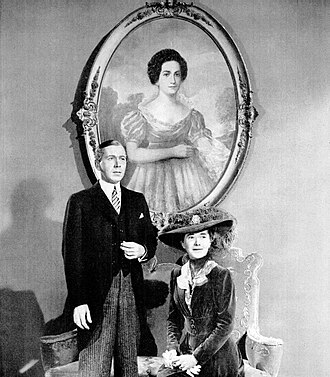
Key Facts
- Release Date: August 1, 1944
- Budget: $5.2 million (the most expensive Fox film at the time)
- Accolades: Won 5 Academy Awards out of 10 nominations
- Running Time: 154 minutes
- Key Cast: Alexander Knox, Charles Coburn, Geraldine Fitzgerald, and Vincent Price
- Distribution: 20th Century-Fox
Plot Overview
The narrative begins in 1909, with Woodrow Wilson serving as the president of Princeton University. A scholar of the democratic process, Wilson is persuaded by the local Democratic Party political machine to run for governor of New Jersey. After winning in 1910, he establishes his independence from party interests by championing progressive causes.
By 1912, a split in the Republican Party creates a political opening, allowing Wilson to win the U.S. presidency. Once in office, he implements a series of progressive programs known as The New Freedom. The film then transitions into the global crisis of World War I, which broke out in 1914. While Wilson initially strives to maintain American neutrality, he faces personal tragedy with the death of his first wife, Ellen, from Bright's disease (a historical term for kidney inflammation).
Following the sinking of the RMS Lusitania in 1915, Wilson meets and marries Edith Bolling Galt. After winning reelection in 1916, the United States eventually enters the war. Following the Allied victory in 1918, Wilson travels to France for the Paris Peace Conference with the goal of establishing the League of Nations—an international organization intended to prevent future conflicts.
The film concludes with Wilson's struggle against domestic opposition, led by Senator Henry Cabot Lodge, and his own failing health. After suffering a stroke, Wilson is shielded from the public by Edith. The movie ends with the election of Warren G. Harding, who opposed the League of Nations, leaving Wilson to lament his failure while remaining hopeful for the future of international cooperation.
Production and Development
From Fiction to Biopic
Interestingly, Wilson was not originally intended to be a biography. It began as a historical drama centered on a fictional American family during the Progressive Era. Screenwriter Lamar Trotti eventually rewrote the project into a biopic. To ensure accuracy, the production consulted journalist Ray Stannard Baker and the president's daughter, Eleanor Wilson McAdoo.
Casting and Filming
The casting process saw several changes; Ronald Colman and Frank Conroy were considered for the lead before Knox was selected. The production was plagued by some misfortune, including the death of actor Dwight Frye from a heart attack shortly before filming and the illness of cinematographer Ernest Palmer, who was replaced by Leon Shamroy.
To achieve a high level of authenticity, 20th Century-Fox spent a significant portion of the $5.2 million budget on detailed recreations of the White House, including the Oval Office and the Lincoln Bedroom. Filming took place across various locations, including the Shrine Auditorium in Los Angeles and on-location in Trenton, New Jersey.
Reception and Legacy
Box Office Struggle
Despite its artistic ambitions, Wilson was a commercial failure, reportedly losing $2 million for the studio. Several factors contributed to this "bomb":
- Military Ban: The U.S. Department of War prohibited the film on military bases to avoid influencing the November 1944 elections.
- Pricing Strategy: Due to the high budget, Fox demanded high rental fees and ticket prices (up to $1.10), which alienated audiences accustomed to 25-cent admissions.
Critical Response
Critics were divided. While many praised the film, others found it tedious. Manny Farber of The New Republic compared it to a "sterile post-card album," and James Agee of The Nation felt the film oversimplified a complex character. Even political figures had mixed reactions; while President Franklin D. Roosevelt screened it for guests, British Prime Minister Winston Churchill reportedly left the screening early to go to bed.
Awards and Preservation
The film was a critical success at the 17th Academy Awards, winning five Oscars, including Best Writing (Original Screenplay), Best Cinematography (Color), Best Art Direction, Best Film Editing, and Best Sound. The film was later preserved by the Academy Film Archive in 2006.
| Category | Details |
|---|---|
| Director | Henry King |
| Writer | Lamar Trotti |
| Budget | $5.2 Million |
| Box Office (US/Canada) | $3.103 Million (Rentals) |
| Academy Awards Won | 5 |
| Preservation Year | 2006 |
Frequently Asked Questions
Why was the movie Wilson considered a box office failure?
The film failed commercially primarily due to its massive budget and an aggressive pricing strategy that forced theaters to charge higher-than-average admission fees. Additionally, the U.S. Department of War banned the film on military bases to prevent political influence during the 1944 elections.
Who played the role of Woodrow Wilson?
The role was played by Alexander Knox, a character actor who received an Academy Award nomination for Best Actor for his performance.
What awards did the film win?
The film won five Academy Awards: Best Writing (Original Screenplay), Best Cinematography (Color), Best Art Direction-Interior Decoration (Color), Best Film Editing, and Best Sound (Recording).
How did Winston Churchill react to the film?
Winston Churchill was not a fan of the production and reportedly excused himself in the middle of the screening to go to bed.
What was the original concept for the movie?
Before becoming a biopic, the film was originally planned as a historical drama about a fictional American family living during the Progressive Era.