William Wallace: The Guardian of Scotland and the Fight for Independence
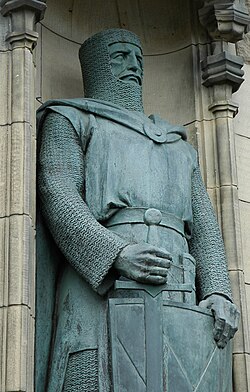
Sir William Wallace remains one of the most iconic figures in Scottish history, a knight and military leader who rose from the lesser nobility to lead a nation in its struggle for sovereignty. As a central figure in the First War of Scottish Independence, Wallace's tactical brilliance and unwavering defiance against English rule cemented his legacy as a symbol of national liberty.
His journey from an obscure background to the position of Guardian of Scotland is a testament to the political volatility of the late 13th century, a period marked by succession crises and foreign intervention.

Key Facts
- Role: Guardian of Scotland (1297–1298).
- Major Victory: Led the Scottish army to a decisive win at the Battle of Stirling Bridge in 1297.
- Major Defeat: Suffered a critical loss at the Battle of Falkirk in 1298.
- Death: Executed for high treason in London on 23 August 1305.
- Legacy: A primary leader in the First War of Scottish Independence.
Early Life and Mysterious Origins
Very little is definitively known about the early life of William Wallace. He was a member of the lesser nobility, but historical records regarding his parentage are conflicting. A personal seal found on a 1297 letter to the city of Lübeck identifies his father as Alan Wallace. Some historians suggest this Alan was a crown tenant in Ayrshire, while others point to Elderslie in Renfrewshire as his birthplace, based on later poetic accounts by Blind Harry.
Regardless of his exact origins, the Wallace family held estates in various regions, including Riccarton, Tarbolton, and East Lothian, serving as vassals to James Stewart, the 5th High Steward of Scotland.
The Political Crisis: The Great Cause
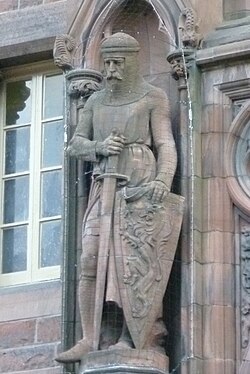
Wallace's rise coincided with a period of extreme instability. Following the death of King Alexander III in 1286 and the subsequent death of his granddaughter, Margaret, the Maid of Norway, in 1290, Scotland was left without a clear heir. This vacuum led to the Great Cause, where thirteen contenders claimed the throne, most notably John Balliol and Robert Bruce.
King Edward I of England intervened in the dispute, eventually forcing John Balliol to abdicate in 1296. Edward's subsequent invasion, which included the storming of Berwick-upon-Tweed, signaled the beginning of a brutal campaign to bring Scotland under English control.
Military Career and the Battle of Stirling Bridge
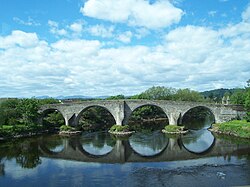
William Wallace emerged as a leader of the resistance, most famously partnering with Andrew Moray. On 11 September 1297, they achieved a stunning victory at the Battle of Stirling Bridge. Despite being vastly outnumbered, the Scots utilized the geography of the narrow bridge to their advantage.
As the English army crossed the river, the Scots waited until a portion of the force was exposed before attacking. They employed schiltrons—dense formations of infantry armed with long spears—to push the English infantry back into their own advancing cavalry. The resulting chaos led to the collapse of the bridge and a rout of the English forces. Following this victory, Wallace was appointed Guardian of Scotland.
The Battle of Falkirk and Decline
The triumph at Stirling Bridge was short-lived. In April 1298, King Edward I launched a second invasion with a massive force of foot soldiers and cavalry. Wallace attempted to avoid a pitched battle, using guerrilla tactics to harass the English and wait for their supplies to dwindle.
However, in July 1298, the two forces met at the Battle of Falkirk. Unlike the constrained environment of Stirling Bridge, the open terrain favored the English cavalry. Wallace's forces were defeated, ending his tenure as Guardian and forcing him back into the shadows of the Scottish wilderness.
Capture and Execution
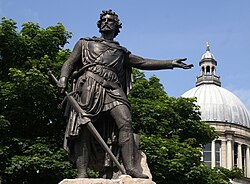
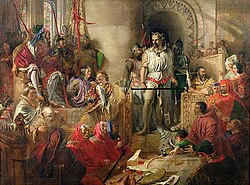
Wallace continued to resist English rule for several years until he was captured in Robroyston, near Glasgow, in August 1305. He was handed over to King Edward I and put on trial in Westminster Hall for high treason and crimes against English civilians.
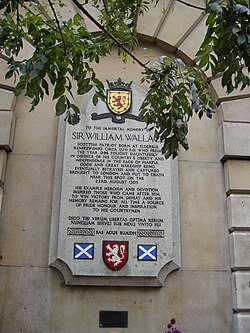
On 23 August 1305, Wallace was subjected to one of the most brutal forms of execution: he was hanged, drawn, and quartered. This process involved being strangled by hanging, emasculated, eviscerated, and finally beheaded. His head was displayed on a spike atop London Bridge, while his limbs were sent to Newcastle, Berwick, Stirling, and Perth as a warning to other rebels.
Summary of William Wallace's Life
| Category | Details |
|---|---|
| Born | c. 1270, Scotland |
| Died | 23 August 1305, Smithfield, London |
| Primary Title | Guardian of Scotland (1297–1298) |
| Key Ally | Andrew Moray |
| Major Conflict | First War of Scottish Independence |
| Cause of Death | Execution for high treason |
Frequently Asked Questions
Who was the Guardian of Scotland?
The Guardian of Scotland was a title given to the leader of the government during the interregnum (the period between monarchs). William Wallace held this position from 1297 to 1298 following his victory at Stirling Bridge.
What was a schiltron?
A schiltron was a tactical infantry formation consisting of a dense group of soldiers armed with long spears, designed to repel cavalry charges.
How did Wallace win the Battle of Stirling Bridge?
Wallace and Andrew Moray used the narrowness of the bridge to trap the English army. By allowing only a small number of English troops to cross before attacking, they neutralized the English numerical advantage and forced the army into a bottleneck.
What happened to Wallace after his trial?
After being found guilty of high treason, Wallace was executed at Smithfield in London. He was hanged, drawn, and quartered, and his body parts were displayed across different cities in England and Scotland.
Is there evidence of Wallace's birthplace?
There is no definitive contemporary record. Tradition and later poetry suggest Elderslie in Renfrewshire, while some historians point to Ayrshire based on records of his father, Alan Wallace.