William Henry Smyth: The Naval Career of 'Mediterranean Smyth'
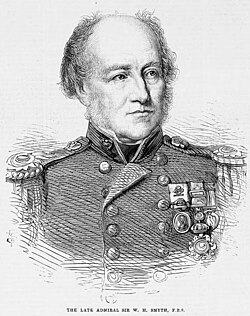
The history of maritime navigation was shaped by individuals who combined military duty with scientific rigor. Among these figures was William Henry Smyth, a man whose journey began in poverty and culminated in the rank of Admiral. Known to history as "Mediterranean Smyth," his meticulous hydrographic surveys—the science of measuring and describing the physical features of oceans and coastal areas—provided the Royal Navy with essential navigational tools that remained in use for over a century.
Early Life and Naval Beginnings
Smyth's maritime journey began in 1802 at the age of 14, when he ran away from home to serve as a cabin boy on a merchant ship. This vessel was soon commandeered by the Royal Navy, leading Smyth to enter service as an ordinary seaman. By 1804, he was aboard the Marquis Cornwallis, an East India Company ship chartered for an expedition against the Seychelles.
In March 1805, the Royal Navy purchased the Cornwallis, converting it into a 50-gun ship. Under the command of Captain Charles James Johnston, Smyth gained extensive experience across the waters of India, China, Australia, and the Pacific. He continued to serve under Johnston aboard the Powerful in February 1808, participating in the expedition to the Scheldt before the ship was paid off in October 1809.
Service in European Waters
Following his time on the Powerful, Smyth served aboard the 74-gun Milford along the coasts of France and Spain. His versatility was demonstrated between September 1810 and April 1811, when he was lent from the Milford to command the Spanish gunboat Mors aut Gloria during the defense of Cadiz. By July 1811, he had joined the Rodney off Toulon, continuing his service along the Spanish coast through 1812.
Rise Through the Ranks and Hydrographic Mastery
On March 25, 1813, at age 25, Smyth was promoted to lieutenant and assigned to the Sicilian flotilla. While fighting the French near Naples, he began conducting unofficial hydrographic surveying and antiquarian research. His contributions to the defense of Sicily earned him the Order of Saint Ferdinand and of Merit from King Ferdinand I of the Two Sicilies, a decoration he was permitted to wear by the Prince Regent.
Promoted to Commander on September 18, 1815, Smyth took command of the brig Scylla. He spent the following years surveying the coasts of Sicily, Italy, and Africa. In 1817, his scientific work became official with his appointment to the Aid (later renamed Adventure). Notably, the Adventure later accompanied the Beagle on its first voyage, with Smyth's half-brother, Augustus Earle, serving as the official artist.
The Legacy of 'Mediterranean Smyth'
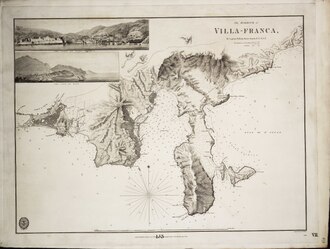
Smyth's exhaustive surveys of the Italian, Sicilian, Greek, and African coasts resulted in a vast collection of charts. These maps were so accurate and comprehensive that the Royal Navy utilized them until the mid-20th century. His collaboration with Neapolitan and Austrian authorities in the Adriatic also led to the publication of the Carta di Cabottaggio del Mare Adriatico between 1822 and 1824.
Scientific Pursuits and Final Promotions
Beyond navigation, Smyth developed a passion for astronomy after meeting Giuseppe Piazzi in Palermo in 1817. This influence was so profound that Smyth named his second son Piazzi, who eventually became a noted astronomer himself. Smyth documented his findings in several publications, including a 1824 memoir on the resources and hydrography of Sicily and its islands, and a 1828 sketch of Sardinia.
In recognition of his monumental contributions to Mediterranean surveying, the Royal Geographical Society awarded him the Founder's Medal in 1854.
Smyth was promoted to Post-Captain on February 7, 1824. After paying off the Adventure in November of that year, he ceased active sea service to focus on literary and scientific endeavors. Though he retired on half-pay in 1846, he continued to rise through the ranks on the retired list: Rear-Admiral in 1853, Vice-Admiral in 1858, and finally Admiral in 1863 at the age of 75.
Key Facts
- Nickname: Known as "Mediterranean Smyth" for his extensive charting of the region.
- Major Work: Co-authored the Carta di Cabottaggio del Mare Adriatico (1822–24).
- Naval Rank: Rose from ordinary seaman to Admiral.
- Honors: Recipient of the Order of Saint Ferdinand and of Merit and the Royal Geographical Society's Founder's Medal.
- Longevity of Work: His charts were used by the Royal Navy until the mid-20th century.
| Year | Rank/Role | Key Vessel/Assignment | Notable Achievement |
|---|---|---|---|
| 1802 | Ordinary Seaman | Merchant ship / Royal Navy | Entered naval service at age 14 |
| 1805 | Seaman | HMS Cornwallis | Service in Indian, Chinese, and Pacific waters |
| 1813 | Lieutenant | Sicilian flotilla | Defended Sicily; awarded Order of Saint Ferdinand |
| 1815 | Commander | HMS Scylla | Surveyed Sicily, Italy, and Africa |
| 1817 | Commander | HMS Aid (Adventure) | Created long-term Royal Navy charts |
| 1824 | Post-Captain | HMS Adventure | End of active sea service |
| 1863 | Admiral | Retired List | Final promotion at age 75 |
Frequently Asked Questions
Why was William Henry Smyth called "Mediterranean Smyth"?
He earned this nickname due to his extensive and highly accurate hydrographic surveys of the Italian, Sicilian, Greek, and African coasts, which provided the Royal Navy with essential navigational charts.
What was the significance of the Carta di Cabottaggio del Mare Adriatico?
Published between 1822 and 1824, this work was the result of Smyth's collaborative hydrographic operations in the Adriatic Sea, working alongside Austrian and Neapolitan authorities.
How did Smyth's naval career influence his interest in astronomy?
While stationed in Sicily in 1817, Smyth visited the observatory of Italian astronomer Giuseppe Piazzi in Palermo, which sparked a lifelong interest in the field.
Which famous voyage was associated with Smyth's vessel, the Adventure?
The Adventure accompanied the Beagle on its first voyage, during which Smyth's half-brother, Augustus Earle, served as the official artist.
What honors did Smyth receive for his scientific and military work?
He was awarded the Order of Saint Ferdinand and of Merit by King Ferdinand I of the Two Sicilies and the Founder's Medal from the Royal Geographical Society in 1854.