William Bertram Turrill: Pioneer of Botanical Taxonomy
William Bertram Turrill was a distinguished English botanist whose contributions to plant science bridged the gap between traditional observation and mathematical precision. Throughout his career, he became renowned for his rigorous approach to plant taxonomy—the science of naming, describing, and classifying organisms—and his deep expertise in the diverse flora of the Near East.
Key Facts
- Full Name: William Bertram Turrill FRS OBE FLS
- Lifespan: 14 June 1890 – 15 December 1961
- Primary Institution: Royal Botanic Gardens, Kew
- Major Contribution: Developed a mathematical classification system for leaf shapes.
- Top Honors: Linnean Medal (1958) and Fellow of the Royal Society (1958).
Early Life and Education
Born in Woodstock, Oxfordshire, to William Banbury and Thirza Mary Turrill, William Bertram Turrill developed a passion for nature during his childhood. He spent his early years exploring the natural landscapes of his hometown, including woods, fields, ponds, and watercourses. He received his early education at the Woodstock National School and later attended Chelsea Polytechnic.
Before fully dedicating himself to botany, Turrill served during the First World War. He was a member of the Royal Army Medical Corps of the British Army, where he was primarily stationed on the Macedonian front.
Professional Career and Innovations
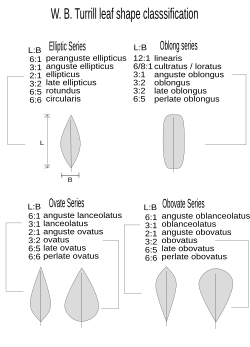
Turrill's professional legacy is closely tied to the Royal Botanic Gardens, Kew. During his tenure, he introduced several innovations to the field of botany. Most notably, he created a mathematical classification of leaf shapes, applying quantitative analysis to morphological descriptions to bring greater objectivity to plant identification.
His work was characterized by an experimental and genetical approach to the problems facing British plant species. Beyond his domestic research, he was recognized as an exceptional authority on the floras of the Near East, contributing significantly to the global understanding of plant distribution and variation.
Honors, Awards, and Legacy
In recognition of his scientific achievements, Turrill received several prestigious accolades. In 1955, he was awarded the Order of the British Empire (OBE). In 1958, he received the gold medal of the Linnean Society and was elected a Fellow of the Royal Society (FRS).
In the world of botanical nomenclature, Turrill is recognized by the standard author abbreviation Turrill, which is used when citing botanical names he authored. His impact on the field is further immortalized through several plant species named in his honor, including Veronica turrilliana, Symplocos turrilliana, Cryptocarya turrilliana, Astragalus turrillii, and Cyperus turrillii.
| Category | Details |
|---|---|
| Born | 14 June 1890, Woodstock, Oxfordshire |
| Died | 15 December 1961, Surrey |
| Education | Woodstock National School; Chelsea Polytechnic |
| Key Institution | Royal Botanic Gardens, Kew |
| Major Awards | Linnean Medal, OBE, FRS |
| Spouse | Florence Homan (m. 1918) |
Frequently Asked Questions
What was William Bertram Turrill's most significant innovation?
Turrill is best known for developing a mathematical classification system for leaf shapes, which allowed for a more precise and quantitative way to categorize plant morphology.
Which botanical institutions was he associated with?
He worked at the Royal Botanic Gardens, Kew, where he conducted much of his influential research and innovation.
What awards did Turrill receive for his work?
He was awarded the Order of the British Empire in 1955, the gold medal of the Linnean Society in 1958, and was elected a Fellow of the Royal Society in March 1958.
How is he recognized in botanical citations?
In botanical nomenclature, he is identified by the standard author abbreviation "Turrill" when citing plant names he described or classified.
Which plant species are named after him?
Several species bear his name, including Veronica turrilliana, Symplocos turrilliana, Cryptocarya turrilliana, Astragalus turrillii, and Cyperus turrillii.