Wick: The Historic Royal Burgh of Caithness
Perched in the far north of Scotland, Wick (known in Scottish Gaelic as Inbhir Ùige and in Scots as Week) is a town and royal burgh of significant historical and maritime importance. Straddling the River Wick and extending along the shores of Wick Bay, this settlement in Caithness serves as a testament to Scotland's industrial evolution, from ancient strongholds to the bustling heights of the herring boom.
As of the 2022 census, the Wick locality had a population of 6,913. While its population has seen a slight decrease since 2011, the town remains a vital hub within the Highland council area.
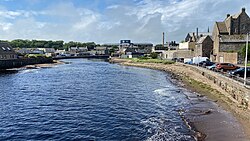
Key Facts
- Location: Caithness, Highland council area, Scotland.
- Population: 6,913 (2022 Census).
- Claim to Fame: Home to Ebenezer Place, the world's shortest street.
- Industry: Historically dominated by the herring fishing and curing trade.
- Geography: Situated on the River Wick and Wick Bay.
A Journey Through History
Early Foundations and Medieval Era
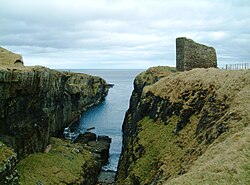
Wick's early history is marked by its strategic northern position. The Castle of Old Wick, constructed in the 12th century, was likely the mainland stronghold of Harald Maddadsson during the Norwegian Earldom of Orkney. The site shows evidence of occupation even before the castle's construction. By the 14th century, the castle was owned by Sir Reginald de Cheyne, a supporter of Edward I.
The Rise of the Herring Industry
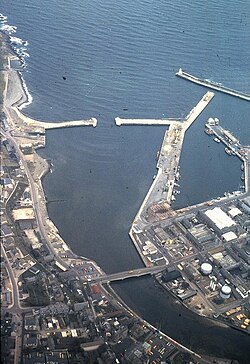
The late 18th century marked a turning point for Wick. As herring shoals moved away from Scotland's west coast, the British Fishery Society identified Wick as a prime location for the industry. Construction of Wick Harbour began in 1803 and was completed by 1811, transforming the town into a bustling port attracting ships from Wales, Shetland, the Isle of Man, and across the Scottish coast.
This economic surge led to the founding of Pulteneytown in 1808. This area was designed to house Scots displaced by the Highland Clearances—the forced displacement of people from the Highlands—who sought employment in the fishing and curing industries. By the 1840s, the harbour hosted over 1,000 herring boats.
Infrastructure and Growth
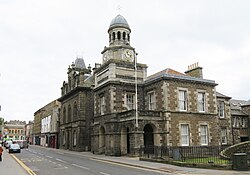
Improved connectivity fueled the town's expansion. A bridge was built in 1800, replacing a precarious eleven-pillar footbridge. The Highland Roads Act of 1803 extended the "Parliamentary" road from Inverness to Wick and Thurso by 1811, and by 1818, the mail coach service further integrated Wick with the south of Scotland.
War and Conflict
During World War II, Wick's strategic importance for the defense of Scapa Flow made it a target for air attacks. In May 1940, the town faced frequent bombing. The most devastating attack occurred on July 1, 1940, on Bank Row, resulting in 15 deaths, including eight children. This event is noted as the first daytime bombing in the United Kingdom.
Geography and Climate
Wick is characterized by its coastal landscape, featuring North Head, South Head, and the expansive Wick Bay. The climate is typical of the far north, with mild summers and cool winters. The average annual precipitation is approximately 792.7 mm, with the wettest months typically occurring in October and November.
| Metric | Winter (Jan) | Summer (Jul) | Annual Average |
|---|---|---|---|
| Mean Daily Max Temp (°C) | 6.4 | 16.2 | 11.0 |
| Mean Daily Min Temp (°C) | 1.6 | 10.1 | 5.4 |
| Average Precipitation (mm) | 72.4 | 61.6 | 792.7 |
| Sunshine Hours | 51.1 | 136.8 | 1,303.5 |
Economy and Local Industry
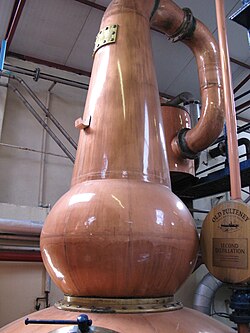
While fishing once defined the town, Wick has diversified its economic base. The Pulteney Distillery continues the tradition of Scottish spirits production.
The town also had a connection to the arts through Caithness Glass, established in 1961. Known for producing the trophy for the BBC's Mastermind, the company eventually moved its manufacturing to Perth between 1979 and 2004.
Landmarks and Culture
The World's Shortest Street
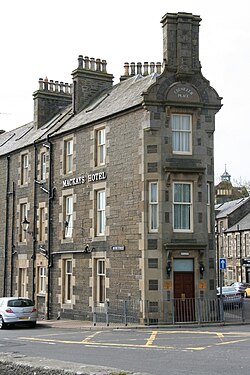
Wick holds a unique place in the Guinness Book of Records for Ebenezer Place. Measuring just 2.06 metres and containing a single door, it was officially recognized as the world's shortest street in 2006.
Heritage and Museums
The Wick Heritage Museum, run by the Wick Society, preserves the history of the herring boom. A highlight is the Johnston Collection, featuring approximately 50,000 images captured between 1863 and 1975, providing a visual record of the town's industrial peak.
Frequently Asked Questions
What is the significance of Pulteneytown?
Pulteneytown was founded in 1808 to provide housing and employment for people displaced by the Highland Clearances, specifically to support the growing herring fishing and curing industry.
Why is Ebenezer Place famous?
Ebenezer Place is recognized by the Guinness Book of Records as the world's shortest street, measuring only 2.06 metres in length.
What happened during the 1940 bombings?
Wick was targeted due to its role in defending Scapa Flow. The most serious attack occurred on July 1, 1940, on Bank Row, which was the first daytime bombing in the UK and resulted in 15 fatalities.
What was the role of the British Fishery Society in Wick?
The society turned toward Wick in the early 19th century after herring shoals moved away from the west coast, leading to the construction of Wick Harbour between 1803 and 1811.
What is the history of the Castle of Old Wick?
Built in the 12th century, it is believed to have been the mainland stronghold of Harald Maddadsson of the Norwegian Earldom of Orkney before being abandoned in the 18th century.