Welsh Development Agency: A Legacy of Economic Growth
The Welsh Development Agency (WDA) served as a cornerstone of economic strategy in Wales for three decades. Established to modernize the region's industrial landscape, the agency focused on attracting global investment, fostering entrepreneurship, and regenerating the physical environment. From its inception in the mid-1970s to its eventual merger into the Welsh Government, the WDA played a pivotal role in shaping the modern Welsh economy.
The Foundation of the WDA
The agency was created by the Welsh Development Agency Act 1975, an Act of Parliament passed by the United Kingdom Parliament. It received Royal Assent on November 12, 1975, and officially commenced on January 1, 1975. Under the leadership of the then Secretary of State for Wales, John Morris MP, the WDA was tasked with four primary objectives:
- Furthering the economic development of Wales.
- Promoting industrial efficiency and international competitiveness.
- Creating and safeguarding employment opportunities.
- Improving the environment while respecting existing amenities.
To achieve these goals, the WDA worked to increase the number of startup businesses and persuaded multinational corporations to open subsidiaries or relocate facilities to Wales. As part of its financial strategy, the WDA established Finance Wales, a public limited company that continues to provide funding to Welsh businesses today.
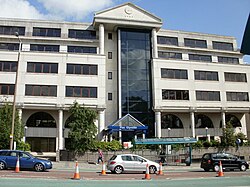
Operating with an annual budget of approximately £70 million, the WDA employed several hundred staff members. Its global reach was supported by a network of international offices, with its central operations based in Cardiff.
Governance and Institutional Evolution
Like many large public bodies, the WDA faced challenges. Following governance issues in the early 1990s, David Rowe-Beddoe (later Lord Rowe-Beddoe) was appointed Chairman in 1993. He initiated an inquiry led by Sir John Caines, resulting in the appointment of new executives in 1994, including a new Agency Secretary and Legal Director.
This period marked a shift toward greater transparency. Working with the National Audit Office and the Welsh Office under Sir Michael Scholar, the WDA became the first UK QUANGO (Quasi-Autonomous Non-Governmental Organisation) to implement a Code of Practice, ensuring the agency conformed to the Nolan Principles of public life. During this era, the agency reported to various Secretaries of State for Wales, including John Redwood, David Hunt, and William Hague.
Economic Impact and Major Achievements
By the late 1990s, the WDA had regained its status as a leading agency for job creation and inward investment in the UK. It successfully secured partnerships with global giants such as Ford, Bosch, Panasonic, Sony, Hoover, TRW, Toyota, British Airways, and General Electric. The agency also diversified the economy by attracting financial services firms, including Lloyds Bank and Legal & General, as well as establishing back-office call centers.
Beyond industrial growth, the WDA was instrumental in several landmark projects:
- Infrastructure and Culture: Contributed to the construction of the Millennium Stadium, the Millennium Centre, and the walkway for the 1999 Rugby World Cup.
- Environment: Reclaimed contaminated land and removed coal tips in South Wales, led by Gwyn Griffiths OBE.
- Tourism and Nature: Assisted in establishing the National Botanic Garden for Wales and the Llanelli Coastal Path.
- Major Events: Led the successful bid, alongside Sir Terry Matthews, to bring the Ryder Cup to the Celtic Manor Resort near Newport.
- Business Development: Partnered with South Glamorgan County Council to help establish Admiral Insurance plc, which eventually became a FTSE 100 company.
The agency's influence expanded further under the Government of Wales Act 1998, which merged several other public bodies into the WDA, including the Land Authority for Wales, the Development Board for Rural Wales, Technical Enterprise Councils, and the Cardiff Bay Development Corporation.
The Transition to the Welsh Government
The WDA's independent existence ended on April 1, 2006. In a decision made by First Minister Rhodri Morgan and AM Andrew Davies, the WDA was merged into the Welsh Government along with two other Arms Length Sponsored Public Bodies (ASPBs): ELWa and the Wales Tourist Board. At the time of the merger, Ieuan W Jones served as the Minister for the Economy and Transport.
| Feature | Details |
|---|---|
| Established | Welsh Development Agency Act 1975 |
| Annual Budget | Approximately £70 million |
| Key Focus Areas | Inward investment, job creation, environmental reclamation |
| Notable Successes | Ryder Cup bid, Millennium Stadium, Finance Wales |
| Dissolved/Merged | April 1, 2006 (Merged into Welsh Government) |
Key Facts
- Legal Origin: Created by the Welsh Development Agency Act 1975 (c. 70).
- Core Mission: Focused on economic development, industrial efficiency, and employment safeguarding.
- Governance Milestone: First UK QUANGO to adopt a formal Code of Practice.
- Investment Reach: Attracted major global brands including Sony, Toyota, and General Electric.
- Legacy Entity: Finance Wales was established by the WDA and continues to operate.
- Final Status: Repealed by the Legislation (Procedure, Publication and Repeals) (Wales) Act 2025.
Frequently Asked Questions
What was the primary purpose of the Welsh Development Agency?
The WDA was established to drive the economic development of Wales by promoting industrial efficiency, creating and protecting jobs, attracting multinational companies, and improving the regional environment.
Which major companies did the WDA help attract to Wales?
The agency secured investments from a wide array of global companies, including Ford, Bosch, Panasonic, Sony, Toyota, and General Electric, as well as financial institutions like Lloyds Bank.
What role did the WDA play in Welsh infrastructure?
The WDA contributed to the development of the Millennium Stadium, the Millennium Centre, the National Botanic Garden for Wales, and the reclamation of coal tips in South Wales.
When and why did the WDA cease to exist?
The WDA ceased to exist on April 1, 2006, when it was merged into the Welsh Government to streamline public bodies, a decision led by First Minister Rhodri Morgan and Andrew Davies.
What is the relationship between the WDA and Finance Wales?
Finance Wales is a public limited company that was set up by the WDA to provide funding and financial support to businesses within Wales.