Wayne Dyer: From Southampton Academy to Premier League Glory
The journey of a professional footballer is often marked by persistence, strategic moves, and moments of brilliance. For Wayne Dyer, this path led from the youth ranks of the South Coast to the pinnacle of English football. His career is a testament to the impact of finding the right environment to flourish, transitioning from a promising academy graduate to a key figure in a historic promotion and a Premier League champion.
The Early Years at Southampton
Dyer began his development at the Southampton F.C. Academy. As a teenager, he was part of the youth squad that reached the FA Youth Cup finals in 2005, though the team ultimately fell to Ipswich Town on aggregate. His transition to the senior squad began on December 26, 2005, when he debuted as a late substitute in a 2–0 victory over Crewe Alexandra.
To gain experience, Dyer spent a successful loan spell at Burnley in late 2005, scoring twice in five appearances. Upon returning to Southampton, he continued to integrate into the first team, eventually scoring his first league goal in September 2007 during a match against Watford. By this time, he had also found the net in League Cup fixtures against Yeovil Town and Southend United.
Despite his potential, Dyer's tenure at Southampton was marked by periods of instability. Following a contract dispute that saw him excluded from pre-season preparations, he signed a new three-year deal on July 24, 2008. However, unable to secure a regular starting spot under managers Jan Poortvliet and Mark Wotte, he was sent on loan to Sheffield United in September 2008 as part of a swap deal for Jordan Robertson.
During his time with the Blades, Dyer struggled for consistent minutes, appearing for less than thirty minutes over three months. He did, however, manage a goal on December 20 in a 2–2 draw against Crystal Palace.
Rise to Prominence with Swansea City
Dyer's career trajectory shifted significantly upon joining Swansea City. Initially arriving on loan for the remainder of the 2008–09 season, he made an immediate impact. He scored a crucial goal in an FA Cup victory over the then-holders Portsmouth and netted his first league goal for the club against Charlton Athletic.
His performances were so impressive that Swansea agreed to a permanent transfer fee of £400,000 in June 2009. Under the guidance of manager Brendan Rodgers, Dyer became a vital component of the squad. The 2010–11 season served as a career highlight; Dyer was named the Swansea City Supporters' Player of the Year after a stellar campaign.
The culmination of this period was the Football League Championship play-off final. Dyer provided two assists—one for Stephen Dobbie and one for Scott Sinclair—helping Swansea secure a 4–2 win over Reading. This victory was historic, as it made Swansea the first Welsh club to ever compete in the Premier League.
Premier League Success and Controversy
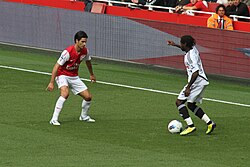
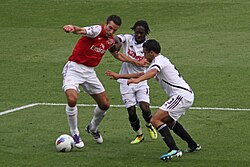
In the Premier League, Dyer continued to showcase his pace and technical ability. He scored his first top-flight goal against West Bromwich Albion in September 2011. His form peaked during a run that included goals against Aston Villa and Barnsley, as well as a goal in a 3–2 win over Arsenal. This particular match drew attention when Arsenal manager Arsène Wenger accused Dyer of diving to win a penalty.
While his offensive contributions were high, Dyer also faced disciplinary challenges. He received a three-match suspension following a red card for a foul on Jordi Gómez during a match against Wigan Athletic. Later, in September 2012, he was sent off against Everton after receiving two yellow cards in just 12 minutes of play.
Major Silverware and Retirement
The pinnacle of Dyer's time at Swansea came on February 24, 2013, in the League Cup final. Dyer scored the opening and third goals in a dominant 5–0 victory over Bradford City, earning him the Man of the Match award and helping the club secure its first major trophy.
Dyer committed his long-term future to the club by signing a four-year contract in August 2013. He eventually announced his retirement from professional football on July 30, 2021.
The Leicester City Loan and a Historic Title
In September 2015, Dyer joined Leicester City on a season-long loan. He made an immediate mark on his debut against Aston Villa, scoring the winning goal in the 89th minute to secure a 3–2 comeback victory. This spell proved historic, as Dyer was a member of the squad that won the Premier League title, the first top-flight championship in Leicester City's 132-year history.
Key Facts
- First Professional Club: Southampton F.C.
- Historic Achievement: Helped Swansea City become the first Welsh club in the Premier League.
- Major Trophy: Won the League Cup with Swansea City (2013) and the Premier League with Leicester City (2015-16).
- Individual Honor: Named Swansea City Supporters' Player of the Year for the 2010–11 season.
- Transfer Fee: Moved from Southampton to Swansea for £400,000 in 2009.
| Club | Period | Key Achievement |
|---|---|---|
| Southampton | 2005–2009 | Professional debut and early development |
| Swansea City | 2008–2015 | League Cup winner; Promotion to Premier League |
| Leicester City (Loan) | 2015–2016 | Premier League Champion |
Frequently Asked Questions
Which club did Wayne Dyer win the Premier League with?
Wayne Dyer won the Premier League title while on a season-long loan at Leicester City during the 2015–16 season.
What was Dyer's role in Swansea City's promotion to the Premier League?
Dyer played a pivotal role in the Championship play-off final against Reading, providing two assists in a 4–2 victory that earned Swansea promotion.
How many goals did Dyer score in the 2013 League Cup final?
Dyer scored two goals (the first and the third) in Swansea's 5–0 victory over Bradford City, earning him the Man of the Match award.
When did Wayne Dyer retire from professional football?
Wayne Dyer officially announced his retirement from professional football on July 30, 2021.
Which Welsh club was the first to play in the Premier League?
Swansea City became the first Welsh club to play in the Premier League following their promotion in 2011.