Wayback Machine: Preserving the Digital History of the Internet
In an era where digital content can vanish with a single click, the Wayback Machine serves as a vital digital time capsule. Operated by the non-profit Internet Archive, this service allows users to view historical versions of websites, effectively capturing the evolution of the World Wide Web. By snapshots of pages as they appeared in the past, it prevents the loss of information caused by link rot—the phenomenon where URLs cease to function or content is deleted.
Key Facts
- Founded: October 25, 2001.
- Owner: Internet Archive (a non-commercial entity).
- Service Area: Worldwide, excluding China and North Korea.
- Scale: Over 1 trillion web pages archived as of 2026 projections.
- Core Function: Provides a searchable archive of historical web snapshots.
The Evolution of Web Archiving
Since its inception over two decades ago, the Wayback Machine has grown from a modest project into a massive repository of human knowledge. To manage this immense scale, the service utilizes various programming languages, including HTML, CSS, JavaScript, Java, and Python. While the service is primarily used to look backward, the Internet Archive celebrated its 25th anniversary in May 2021 by introducing the "Wayforward Machine," a conceptual tool designed to let users "travel to the Internet in 2046."
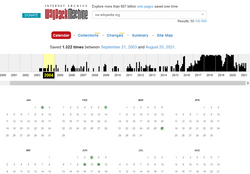
Growth in Data Storage
The sheer volume of data managed by the Wayback Machine is staggering. As web content expands, so does the archive's storage requirements. The following table illustrates the exponential growth in the number of archived pages over the years.
| Year | Pages Archived (Approximate) |
|---|---|
| 2004 | 30,000,000,000 |
| 2008 | 85,000,000,000 |
| 2012 | 150,000,000,000 |
| 2016 | 459,000,000,000 |
| 2020 | 405,000,000,000 |
| 2022 | 640,000,000,000 |
| 2024 | 866,000,000,000 |
| 2026 | 1,000,000,000,000 |
Legal and Policy Frameworks
Archiving the internet is not without complexity. The Wayback Machine operates under specific policies, such as the Oakland Archive Policy, which addresses how the service handles retroactive requests to remove content via robots.txt (a file used by websites to instruct web crawlers which pages not to visit). While robots.txt is standard for search engines, the Internet Archive has historically navigated the tension between respecting these instructions and maintaining an accurate historical record.
Legal Precedents and Challenges
The archive has been involved in various legal contexts, including:
- Civil Litigation: Used as evidence in cases such as Telewizja Polska USA, Inc. v. Echostar Satellite.
- Patent Law: Navigating the complexities of digital intellectual property.
- Censorship: Facing access restrictions in certain regions, such as Russia and China.
- Copyright and Content Removal: Managing requests regarding archived content and legal disputes involving various entities.
Frequently Asked Questions
Is the Wayback Machine a commercial service?
No, the Wayback Machine is a non-commercial service owned and operated by the Internet Archive.
Can I use the Wayback Machine for legal evidence?
Yes, snapshots from the Wayback Machine have been held admissible as evidence in various legal proceedings.
Why are some websites unavailable in the archive?
Availability can be limited by regional censorship (such as in China or North Korea), website exclusion policies, or technical limitations during the crawling process.
What is link rot?
Link rot refers to the process where web links no longer function, often because the original webpage has been moved or deleted. The Wayback Machine helps mitigate this by preserving older versions of those pages.
Does the Wayback Machine respect robots.txt?
The Internet Archive has historically navigated complex policies regarding robots.txt to balance the accuracy of the historical record with the preferences of website owners.