Washington Oak: The Ancient Witness of Princeton's History
Standing as a living monument in Princeton, New Jersey, the Washington Oak is a protected ancient white oak tree that overlooks the Princeton Battlefield State Park. More than just a botanical specimen, this tree serves as a tangible link to the birth of the United States, having survived centuries of conflict and urban development.
The tree's significance is formally recognized by both the International Society of Arboriculture and the Tree Care Industry Association, which confirm that the oak was already living during the signing of the United States Constitution in 1787.
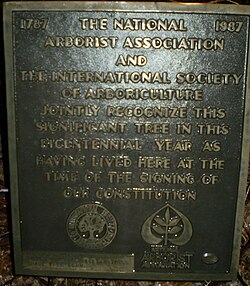
Key Facts
- Age: Over 275 years old.
- Species: White Oak.
- Location: Millett's Hill, Princeton, New Jersey, USA.
- Historical Era: Alive during the 1787 signing of the U.S. Constitution.
- Status: Protected ancient tree.
A Silent Witness to the Revolutionary War
The Washington Oak is situated on Millett's Hill, the site where the pivotal Battle of Princeton ignited in 1777. The landscape around the tree played a strategic role in the movements of both British and American forces during the conflict.
On the morning of January 3, British Lt. Colonel Charles Mawhood's regiment marched from Princeton via the Kings Highway (now Route 206) to reinforce troops in Trenton. Upon reaching the top of the hill, Mawhood's forces spotted General Mercer's troops massing across the Stony Brook. This sighting forced the British to reverse direction, recross the brook, and engage the Americans. Although Mercer's troops initially broke, General George Washington—the tree's namesake—successfully rallied his forces to secure a victory.
The "Second Battle of Princeton": Development and Preservation
In the late 20th century, the Washington Oak became the center of a fierce legal and political struggle known as the "second battle of Princeton." This dispute pitted a developer, the local Township, and the State against one another over land-use rights.
In 1983, Calton Homes purchased the 124-acre White Farm, which included the oak. The developer intended to build over 1,200 homes on the property. However, Township zoning laws limited the density to only 40 homes. Calton Homes sued the Township, arguing that these restrictions violated the Mount Laurel rulings—decisions by the New Jersey Supreme Court requiring municipalities to provide affordable housing for low- and middle-income families.
The conflict gained significant state-wide attention. In his 1989 State of the State address, Governor Thomas Kean remarked that the farm was threatened by "weapons the British never carried," suggesting that townhouses were poised to achieve a victory over the land that General Howe's British troops could not.
The Settlement and Legacy
A settlement was eventually reached in 1989. Calton Homes was permitted to develop 300 properties on 73 acres, while the Washington Oak and its surrounding meadow were preserved as open space. This compromise resulted in the "Washington Oaks at Princeton" community, which blends 60 low-to-moderate-income condominium units with 240 market-rate single-family homes, townhouses, and condominiums.
Washington Oak Summary
| Category | Details |
|---|---|
| Location | Millett's Hill, Princeton, NJ |
| Estimated Age | 275+ years |
| Key Historical Event | Battle of Princeton (1777) |
| Preservation Agreement | 1989 Settlement (Calton Homes/Township) |
| Current Status | Protected open space |
Frequently Asked Questions
How old is the Washington Oak?
The tree is over 275 years old and is recognized as having lived during the signing of the U.S. Constitution in 1787.
What is the historical significance of the tree's location?
The tree stands on Millett's Hill, where the Battle of Princeton began in 1777, specifically where British forces under Lt. Colonel Charles Mawhood encountered General Mercer's troops.
What were the Mount Laurel rulings?
The Mount Laurel rulings were New Jersey Supreme Court decisions that mandated municipalities to develop affordable housing for low- and middle-income families.
How was the tree saved from development?
The tree was preserved through a 1989 settlement between Calton Homes and the Township, which allowed for a reduced number of homes (300 instead of 1,200) in exchange for preserving the oak and its meadow as open space.
Who is the tree named after?
The tree is named after General George Washington, who rallied American troops to victory during the Battle of Princeton.