Wainuiomata Water Collection Area: A History of Infrastructure and Ecology
The Wainuiomata Water Collection Area serves as a vital intersection of urban utility and natural preservation. For over a century, this region has provided essential water resources to the growing population of Wellington, while simultaneously becoming a sanctuary for rare New Zealand flora and fauna.
The Evolution of Water Infrastructure
European settlers identified the region's potential as a reliable water source during the 19th century. To harness this resource, an earth dam was constructed in 1880, accompanied by a pipeline leading directly to Wellington. This development followed closely behind the completion of the country's first public water supply dam in Karori, which was finished two years prior.
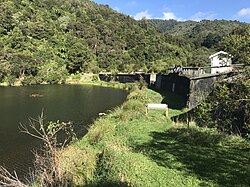
As demand grew, the infrastructure expanded. The Morton Dam was built between 1908 and 1911, and by 1924, a weir—a low dam built across a river to raise the water level—and a pipeline were established from the Ōrongorongo Catchment.
Modernization and Current Capacity
The original water system remained in use until the late 1980s, when it was decommissioned and emptied. In its place, a modern treatment plant was established. This facility draws water directly from weirs in both river catchments, producing up to 60 million litres per day. Today, this system provides approximately 15 percent of the total water used within the Wellington urban area.
Ecological Recovery and Biodiversity
Beyond its industrial utility, the area is deeply connected to the Remutaka Forest Park, where significant conservation efforts have taken place. In May 2006, the re-introduction of kiwi into the park led to some of these birds migrating into the water collection area. This was followed in September 2016 by the re-introduction of North Island robins.
To protect these species, active pest control is maintained. In October 2019, operations were conducted in the park, including the application of 1080 (sodium fluoroacetate) to reduce rat populations.
A Rare Botanical Discovery
In May 2025, the area gained scientific prominence with the discovery of a wild population of Dactylanthus taylorii. This parasitic flowering plant is classified as nationally vulnerable and was believed to be extinct in the Wellington Region for more than 100 years. A dedicated management plan is currently being developed to ensure the preservation of this rare population.
Key Facts
- Water Contribution: Supplies about 15% of Wellington's urban water needs.
- Daily Output: The modern treatment plant produces up to 60 million litres per day.
- Historic Milestones: First earth dam built in 1880; Morton Dam built 1908–1911.
- Rare Flora: Dactylanthus taylorii rediscovered in May 2025 after a century of presumed regional extinction.
- Wildlife: Home to migrated kiwi and re-introduced North Island robins.
| Year/Period | Event | Category |
|---|---|---|
| 1880 | Construction of first earth dam and pipeline | Infrastructure |
| 1908–1911 | Construction of Morton Dam | Infrastructure |
| 1924 | Ōrongorongo Catchment weir and pipeline built | Infrastructure |
| Late 1980s | Original system decommissioned; new plant built | Infrastructure |
| May 2006 | Kiwi re-introduced to Remutaka Forest Park | Ecology |
| September 2016 | North Island robins re-introduced to the park | Ecology |
| October 2019 | Pest control (1080) used to reduce rat numbers | Ecology |
| May 2025 | Discovery of Dactylanthus taylorii | Ecology |
Frequently Asked Questions
How much of Wellington's water comes from this area?
The current treatment plant provides approximately 15 percent of the water used in the Wellington urban area.
What is the daily capacity of the water treatment plant?
The plant is capable of producing up to 60 million litres of water per day.
What is Dactylanthus taylorii?
It is a nationally vulnerable parasitic flowering plant that was thought to be extinct in the Wellington Region for over a century until its discovery in May 2025.
Which bird species have been reintroduced to the nearby park?
Kiwi were reintroduced starting in May 2006, and North Island robins were reintroduced starting in September 2016.
When was the first water infrastructure established in the area?
The first earth dam and pipeline to Wellington were constructed in 1880.