Vinca: The Versatile Periwinkle of Science and Gardens
Commonly known as periwinkle, the genus Vinca represents a fascinating group of flowering plants that bridge the gap between ornamental beauty and critical medical science. Belonging to the family Apocynaceae, these plants are native to the Old World, spanning Europe, northwest Africa, and southwest Asia. While they are beloved by gardeners for their ability to carpet landscapes, they also hold a significant place in pharmacology due to their complex chemical makeup.
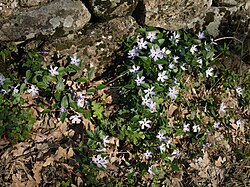
Key Facts
- Common Name: Periwinkle
- Family: Apocynaceae
- Growth Habit: Subshrubs or herbaceous plants with trailing stems
- Primary Uses: Ornamental groundcover and medicinal alkaloid source
- Most Widespread Species: Vinca minor
- Ecological Note: Some species can be invasive in non-native regions
Botanical Characteristics and Growth
Vinca species are characterized by their slender, trailing stems that can reach lengths of 1 to 2 meters. Although the stems can stretch quite far, the plant typically grows only 20 to 70 cm above the ground. A key survival mechanism is their ability to take root wherever the stems touch the soil, allowing the plant to spread rapidly across a surface.
The foliage consists of opposite, simple leaves that range from lanceolate to ovate in shape. Depending on the species, these leaves may be evergreen (remaining green year-round) or deciduous (dropping leaves in winter). For example, Vinca herbacea is a herbaceous species that dies back to its root system during the winter months.
Flowers and Fruit
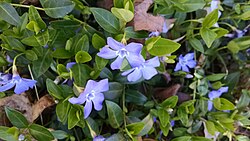
During the growing season, Vinca produces distinctive salverform flowers. This term describes a shape similar to Phlox, where the petals are joined at the base to form a tube, opening into a flat face. These flowers are typically 2.5 to 7 cm wide and are most commonly violet, though white varieties also occur. The plant's fruit consists of a pair of divergent follicles—dry fruits that split open at a single rupture site to release seeds.
Species and Global Distribution
The genus includes several accepted species, each with unique geographic footprints:
- Vinca difformis: Found in the Azores and the western and central Mediterranean.
- Vinca erecta: Native to Afghanistan, Kyrgyzstan, Tajikistan, and Uzbekistan.
- Vinca herbacea: Located in central, eastern, and southeastern Europe, as well as the Middle East.
- Vinca ispartensis and Vinca soneri: Species native to Turkey.
- Vinca major: A widespread species found in southern Europe, Turkey, and Syria, which has been introduced to many regions including North America, New Zealand, and parts of South America.
- Vinca minor: Native to central and southeastern Europe, it has established itself in Scandinavia, North America, and New Zealand.
Ecological Impact and Cultivation
In many parts of the world, Vinca major and Vinca minor are used extensively as ornamental groundcovers. Because they are low-growing and spread quickly, they are ideal for garden landscapes, container gardens, and even as maintenance-free covers for older cemeteries. Many cultivars exist, offering various colors and leaf patterns to suit different aesthetic needs.
However, this rapid spreading ability can be a double-edged sword. In regions where they are introduced, such as parts of Australia, New Zealand, Canada, and the United States (particularly coastal California), these species can become invasive. They may choke out native plant species and significantly alter local habitats.
Medicinal Importance: The Vinca Alkaloids
Beyond the garden, the genus Vinca is a vital source of alkaloids—naturally occurring organic compounds that often have potent biological effects. At least 86 different alkaloids have been extracted from plants within this genus.
These compounds have revolutionized modern medicine, particularly in oncology (the study and treatment of cancer). While the chemotherapy agent vincristine is extracted from the closely related Catharanthus roseus, other related compounds like vinblastine are used to treat various forms of cancer. Additionally, the nootropic agent vincamine is derived from Vinca minor. Newer semi-synthetic agents, such as vinorelbine, are also used in treating non-small-cell lung cancer and are prepared using natural precursors found in these plant families.
| Species | Common Habitat/Origin | Key Feature |
|---|---|---|
| Vinca minor | Europe, North America, New Zealand | Most widespread; used as groundcover |
| Vinca major | Southern Europe, North America, South America | Rapidly spreading; can be invasive |
| Vinca herbacea | Central/Eastern Europe, Middle East | Deciduous; dies back in winter |
| Vinca difformis | Azores, Mediterranean | Mediterranean native |
Frequently Asked Questions
What is the difference between Vinca major and Vinca minor?
Both are widely used as evergreen groundcovers, but they differ in their growth habits and specific geographic origins. Vinca major is known for its spreading ability and is found across a vast range of continents, while Vinca minor is the most widespread species in its native European range.
Can Vinca plants become invasive?
Yes. Because Vinca major and Vinca minor spread quickly by rooting where their stems touch the ground, they can become invasive in non-native regions like Australia, New Zealand, and parts of the United States, potentially displacing native vegetation.
What are the medicinal uses of the Vinca genus?
The genus is a source of various alkaloids. These include compounds used in chemotherapy to treat certain cancers, as well as the nootropic agent vincamine, which is derived from Vinca minor.
Are all Vinca plants evergreen?
No. While many species are evergreen, Vinca herbacea is a deciduous species that dies back to its root system during the winter.
What does the name 'Vinca' mean?
The name is derived from the Latin word vincire, which means "to bind" or "to fetter," likely referring to the plant's trailing and spreading growth habit.