Viking Longships: The Engineering Marvels of the Norse Age
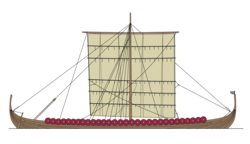
The history of the Viking Age is inseparable from the vessels that powered it. Longships (Old Norse: langskip) were the slender, fast, and formidable warships that allowed the Norse and surrounding Germanic tribes to dominate the seas from at least the 4th century AD. These vessels were not merely tools for transport; they were highly specialized machines designed for speed, raiding, exploration, and commerce.
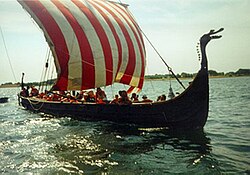
Often referred to as "dragonships" (Old Norse: drekaskip), these ships frequently featured decorative dragonheads at the bow and tails at the stern. This tradition gave the largest vessels, known as dreki, their fearsome reputation. Whether used for diplomatic missions or intense warfare, the longship remains one of the most distinct achievements of Scandinavian maritime engineering.
Key Facts
- Construction Method: Built using the clinker-built technique, where overlapping wooden planks are fastened together.
- Propulsion: Primarily powered by oars, with cloth sails (woven wool) added to later designs.
- Versatility: Used for warfare, fishing, trade, and long-distance exploration.
- Size Range: Vessels varied from approximately 6 to 25 meters in length.
- Historical Reach: Norse fleets made incursions as far as al-Andalus in the 9th and 10th centuries.
The Evolution of Norse Shipbuilding
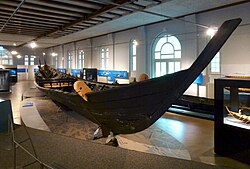
The design of the longship did not appear overnight; it was the result of centuries of technological refinement. A pivotal advancement occurred around 300 AD with the invention of clinker-building. This method is evidenced in archaeological finds like the Danish Nydam boat and the Swedish Björke boat from approximately 320 AD.
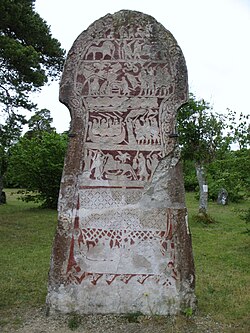
This construction style influenced naval engineering for centuries, even appearing in the 7th-century Sutton Hoo ship of the Anglo-Saxons. While the Norse perfected the design for their specific needs of raiding and rapid movement, the roots of these long, animal-headed naval ships can be traced back to Bronze Age petroglyphs in Sweden.
From Rowed to Sailed Vessels
Early iterations of these ships were primarily rowed. The Kvalsund ship, dating to the late 8th century, serves as a critical evolutionary link. Research using dendrochronology (the scientific method of dating wood by analyzing tree rings) suggests the timber for these vessels was felled around 780–800 AD, placing them at the very threshold of the Viking Age.
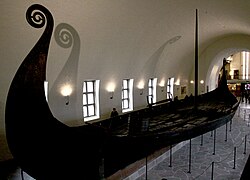
As technology progressed, the integration of masts and woven wool sails transformed the longship. The Oseberg ship (c. 800 AD) and the Gokstad ship (c. 890 AD) represent this transition toward more sophisticated, sail-capable vessels.
Classifying the Longships
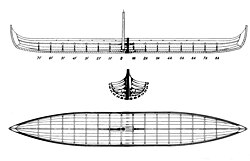
There was no single "Viking ship." Instead, the term "longship" described a category of vessels characterized by their length and rowing capacity. Historians and archaeologists classify them based on their size, construction, and the number of rowing positions.
Karve (karfi)
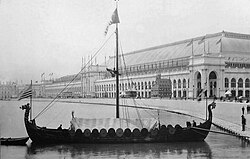
The karve was the smallest vessel categorized as a longship. A famous example is the Gokstad ship, a nearly 24-meter vessel with 16 rowing positions, capable of carrying 32 oarsmen.
Snekke (snekkja)
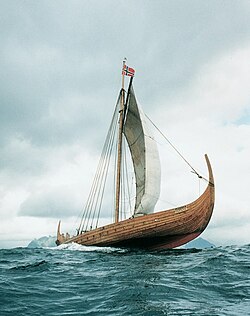
The snekke was a common type of ship used for various purposes. Reconstructions, such as the Skuldelev 5, help modern researchers understand the dimensions and capabilities of these versatile craft.
Skeid (skeið) and Dreki (dreki)
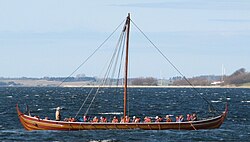
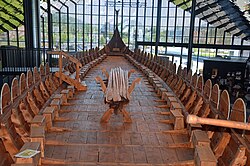
The skeid was a larger, more prestigious class of ship. According to historical sagas, a vessel required at least 13 pairs of oars to be a longship, and at least 25 pairs to be considered a "great-ship." The Skuldelev 2, a 30-meter warship built in Dublin around 1042, is a prime example of a high-ranking chieftain's vessel.
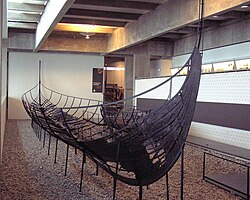
The largest and most imposing were the dreki (dragons). These were the pinnacle of Norse naval power, designed to carry large crews of warriors across open seas.
Summary of Notable Ship Types and Finds
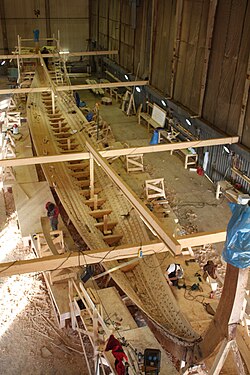
| Ship Type/Name | Approx. Date | Key Characteristics | Notable Find/Replica |
|---|---|---|---|
| Nydam Ship | c. 310–320 AD | Oaken, rowed only, no mast | Nydam ship, Germany |
| Kvalsund Ship | c. 780 AD | 18m long, 10 pairs of oars | Transitionary vessel |
| Oseberg Ship | c. 800 AD | Karve type | Oseberg ship |
| Gokstad Ship | c. 890 AD | 24m long, 16 rowing positions | Gokstad ship |
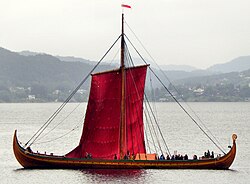
| Skuldelev 2 | c. 1042 AD | 30m long, 30 benches | Sea Stallion from Glendalough |
| Roskilde 6 | c. 1025 AD | Longest found (~37.4m) | Roskilde find |
Construction and Equipment
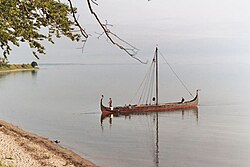
Longships were masterfully crafted from wood and equipped with specialized tools for maritime survival. The use of anchors was essential; for instance, the Gokstad ship featured an oaken anchor stock. While some iron components from ancient excavations have disintegrated due to rust, the structural remains provide vital clues to their design.
![Anchor from the Ladby ship. The construction of this anchor—made of Norwegian iron— has several advantages when anchored in deep waters or in rough seas.[115]](/images/71/90/7190c9deaf7548cd0d86b5083db96785e749493a3ba505ca63e767569bd39b13.jpg)
Navigation was another critical component of longship operation. While specific details on tools like the sunstone (a hypothesized tool for celestial navigation) remain a subject of study, the use of sun compasses and the ability to navigate rough seas like the Irish Sea demonstrate the advanced maritime knowledge of the Norse.
![Image from the Bayeux Tapestry showing Harold Godwinson's ship approaching a beach, probably in the Somme Estuary[124]](/images/f3/92/f3928945897dc0a3cf259c369b7fab2461c3945e136f1ef08886756660df1d81.jpg)
Frequently Asked Questions
What is the difference between a karve and a skeid?
A karve is the smallest type of longship, often used for smaller crews or different purposes, whereas a skeid is a larger, more powerful vessel typically used for warfare and commanded by high-ranking individuals.
How were Viking longships propelled?
They were propelled using a combination of oars and sails. While early vessels like the Nydam ship relied solely on oars, later longships utilized woven wool sails to travel longer distances more efficiently.
What does "clinker-built" mean?
Clinker-building is a construction method where the edges of hull planks overlap one another before being fastened together, creating a strong, flexible, and lightweight vessel.
Why were they called "dragonships"?
They earned this name because the bow and stern were often decorated with carved dragonheads (drekahofud), intended to intimidate enemies and reflect the prestige of the crew.
What is the largest Viking ship ever discovered?
The Roskilde 6 is the longest longship ever found, measuring approximately 37.4 meters (123 feet) in length.