Vieques History: From Indigenous Roots to Naval Conflict and Recovery
Vieques, a beautiful island off the coast of Puerto Rico, possesses a complex history marked by ancient migrations, colonial struggles, and a modern battle for environmental and human rights. From its earliest inhabitants to its role as a strategic military outpost, the island's journey reflects the broader geopolitical shifts of the Caribbean.
Pre-Columbian Era and Indigenous Peoples
Archaeological evidence indicates that Vieques was first settled by Indigenous peoples traveling from South America, likely between 3000 and 2000 BCE. These early inhabitants maintained a Stone Age culture, relying primarily on hunting, gathering, and fishing for survival.
One of the most significant archaeological finds is the "El Hombre de Puerto Ferro," a fragmented human skeleton discovered by Luis Chanlatte and Yvonne Narganes. Radiocarbon dating of shells found in the hearth where the skeleton was located suggests a burial date around 1900 BCE. The site is located near the south-central coast, approximately one kilometer northwest of the island's famous Bioluminescent Bay.
Centuries later, around 200 BCE, the Arawakan-speaking Saladoid (or Igneri) people arrived from present-day Venezuela. Known for their skilled pottery and stone carving, they eventually merged with groups from Cuba and Hispaniola to form the Taíno culture, which flourished until the arrival of Europeans in the late 15th century.
The Spanish Colonial Period
While Christopher Columbus landed in Puerto Rico in 1493, it remains uncertain if he personally visited Vieques. Regardless, the Spanish quickly claimed the island. The early 16th century saw Vieques become a hub for Taíno rebellion against European invaders, leading to a brutal Spanish crackdown that decimated the native population through death, imprisonment, and enslavement.
For nearly 300 years, the Spanish did not permanently colonize the island, leaving it as a lawless outpost frequented by pirates. During the 17th and 18th centuries, the Spanish successfully repelled various colonization attempts by the French, English, and Danish.
Permanent settlement began in the early 19th century. In 1811, Governor Don Salvador Meléndez sent military commander Juan Rosselló to begin the annexation process. By 1832, Frenchman Teófilo José Jaime María Le Guillou became Governor, establishing large plantations and bringing social order. Another governor, Francisco Saínz (1843–1852), founded Isabel Segunda, the island's main town. Vieques was formally annexed to Puerto Rico in 1854.
The late 19th century saw a shift in demographics as thousands of enslaved people of African descent were brought to work sugarcane plantations from mainland Puerto Rico and other Caribbean islands, including Saint Croix, Nevis, and Saint Kitts. Slavery was eventually abolished in Puerto Rico in 1873.
European Rivalries and Short-lived Occupations
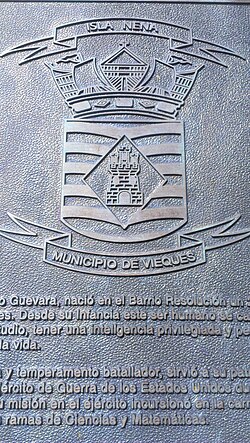
Beyond Spanish control, other European powers vied for the island. In 1698, the Company of Scotland Trading to Africa and The Indies took possession of the island. This Scottish sovereignty was brief, as the Danish West India Company—which had claimed the island in 1682—soon asserted control.
Between 1689 and 1693, the island was controlled by Brandenburg–Prussia and renamed Krabbeninsel (German for "crab island"), which is the origin of the English name "Crab Island." The German state eventually returned the island to Spain, as the small outpost was too difficult to defend.
United States Control and the Naval Era
Following the Spanish-American War, Puerto Rico and Vieques were ceded to the United States under the Treaty of Paris in 1898. By the 1920s and 30s, the local economy suffered as the sugar industry declined, forcing many residents to migrate for work.
In 1941, the U.S. Navy acquired nearly 80% of Vieques to extend the Roosevelt Roads Naval Station. Strategically located to defend the approaches to the Panama Canal, the base was viewed as the Atlantic counterpart to Pearl Harbor. This acquisition led to the final collapse of the sugar industry and the forced eviction of many agricultural workers who lacked formal land titles.
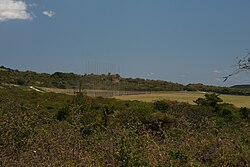
For over six decades, the Navy used the island for live munitions target practice, averaging 180 days of bombardment per year. Since 1972, depleted uranium (DU) munitions were used, with over 80 live bombs dropped daily for decades. This has led to long-term health concerns, with reports of higher cancer rates among the local population, particularly children.
Protests and the Navy's Departure
The environmental damage and land expropriation sparked intense local protests. The movement reached a turning point in 1999 after the death of David Sanes, a Navy civilian employee killed by a misfired jet bomb. This tragedy ignited a massive campaign of civil disobedience, with locals using fishing boats to block military exercises.
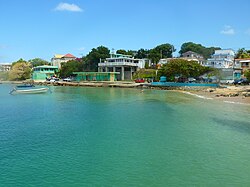
The struggle became a global cause, attracting support from figures such as Robert F. Kennedy Jr., Ricky Martin, and Nobel laureate Rigoberta Menchú. Under immense pressure, the U.S. Navy withdrew from Vieques in May 2003. Much of the land was designated a National Wildlife Refuge, and the island was added to the National Priorities List (NPL) for hazardous waste cleanup via the federal Superfund program.
A 2021 Government Accountability Office report estimated that 8 million potentially explosive items and 109,000 munitions (including bombs, rockets, and grenades) had been removed, with cleanup efforts expected to continue through 2032.
Hurricane Maria and the Path to Recovery
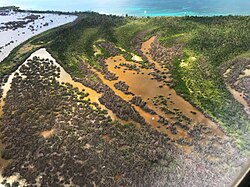
On September 20, 2017, Hurricane Maria devastated the island, crippling its tourism-based economy. While small hotels and Airbnbs have resumed operations, larger establishments like The W hotel remained closed for years.
The recovery of healthcare infrastructure has been particularly slow. The Susana Centeno Hospital remained shuttered for years, forcing expectant mothers and dialysis patients to travel to the mainland. The lack of medical facilities became a focal point of tragedy in 2020 with the death of 13-year-old Jaideliz Moreno Ventura, leading her family to sue the government for civil rights violations.
FEMA approved $39.5 million for the hospital's reconstruction in January 2020. Despite expectations that work would begin in 2022, bureaucratic delays and construction complications pushed the start to 2023. As of November 2024, construction remains incomplete.
Key Facts
- First Inhabitants: Indigenous peoples arrived between 3000 and 2000 BCE.
- Taíno Culture: Flourished from approximately 1000 CE until the late 15th century.
- Annexation: Formally annexed to Puerto Rico by Spain in 1854.
- Military Use: The U.S. Navy used the island for target practice for over 60 years, starting in 1941.
- Environmental Impact: Use of depleted uranium munitions since 1972.
- Navy Withdrawal: The U.S. Navy officially left the island in May 2003.
- Cleanup: Remediation of explosive hazards is projected to continue until 2032.
Summary of Vieques' Historical Eras
| Era | Approximate Period | Key Characteristics |
|---|---|---|
| Pre-Columbian | 3000 BCE – 1493 CE | Stone Age hunters, Saladoid people, and Taíno culture. |
| Spanish Colonial | 1493 – 1898 | Pirate outpost, plantation economy, and formal annexation (1854). |
| U.S. Territory | 1898 – 1941 | Transition to U.S. control and decline of the sugar industry. |
| U.S. Naval Era | 1941 – 2003 | Strategic base, live-fire bombing range, and civil protests. |
| Modern Recovery | 2003 – Present | Wildlife refuge designation, Superfund cleanup, and post-hurricane rebuilding. |
Frequently Asked Questions
Who was the "El Hombre de Puerto Ferro"?
He was an ancient inhabitant of Vieques whose fragmented skeleton was discovered in a large hearth. Radiocarbon dating of associated shells suggests he was buried around 1900 BCE.
Why was the U.S. Navy stationed on Vieques?
The Navy used the island as an extension of the Roosevelt Roads Naval Station due to its strategic location for defending the approaches to the Panama Canal and as a live-fire munitions testing ground.
What led to the departure of the U.S. Navy in 2003?
The Navy withdrew following decades of local discontent and a surge of civil disobedience triggered by the 1999 death of David Sanes, supported by a wide array of international celebrities and political leaders.
What is the current status of the island's environmental cleanup?
Vieques is on the National Priorities List (NPL) for hazardous waste. While millions of explosive items have been removed, the federal Superfund cleanup is expected to continue through 2032.
How has Hurricane Maria affected the island's healthcare?
The storm caused the closure of the Susana Centeno Hospital. Despite FEMA funding approved in 2020, bureaucratic and construction delays have left the hospital unfinished as of late 2024, causing significant hardship for residents.