Viennese Cuisine: A Rich Tapestry of Imperial Flavors
Viennese cuisine is the culinary heart of Vienna, Austria. While its influence extends across the country, it remains a distinct entity from other regional Austrian variations. Renowned globally for its golden-brown schnitzels and decadent pastries, the gastronomy of Vienna is far more than just a few famous dishes; it is a sophisticated blend of history, culture, and international influence.
Key Facts
- Imperial Roots: The cuisine is an eclectic mix of flavors from the various regions and lands once part of the Austro-Hungarian monarchy.
- Global Influence: Strong historical contributions from Italian, French, Bohemian, Hungarian, Jewish, Polish, and Balkan cultures.
- Cultural Heritage: The Viennese coffee house is recognized by UNESCO as part of the Austrian inventory of Intangible Cultural Heritage.
- Modern Evolution: The "Neue Wiener Küche" (New Viennese Cuisine) blends traditional recipes with nouvelle cuisine (a modern approach to French cooking emphasizing lightness and presentation), including vegetarian options.
The Evolution of Viennese Cooking
The tradition of Viennese cooking developed as a melting pot of European influences. Starting in the early 17th century, Italian influence became prominent, leaving a lasting mark on the vocabulary of the kitchen with terms like risibisi (rice and peas), melanzani (eggplant), maroni (chestnuts), and biscotti. By the 18th century, French culinary arts gained traction, introducing the term bouillon to describe soup in middle-class circles.
The term "Wiener Küche" (Viennese cuisine) first appeared in cookbooks toward the end of the 18th century, though it was often mistakenly used interchangeably with Austrian cuisine as a whole. Interestingly, the croissant is believed to have originated in Vienna following the defeat of the Turks during the Siege of Vienna.
During the latter half of the 19th century, the cuisine expanded further to reflect the diversity of the Austro-Hungarian Empire. This era integrated Hungarian goulash, South Slav ćevapčići (grilled minced meat sausages), Romanian-style Palatschinken (crêpes), and Czech-influenced Powidltascherl.
Signature Dishes and Delicacies
Viennese gastronomy is characterized by a balance of hearty meat dishes and refined sweets. Among the most iconic savory offerings is Wiener schnitzel, which consists of veal coated in breadcrumbs and fried to perfection.
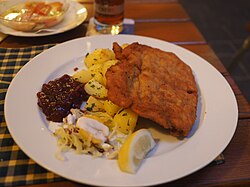
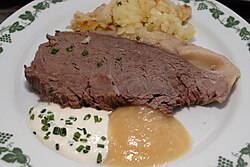
Other traditional savory staples include Tafelspitz (boiled beef often served with horseradish and apple sauces), Beuschel (a ragout made from veal lungs and heart), and Selchfleisch (smoked meat) served with dumplings and sauerkraut. For those seeking a hearty stew, Gulasch—a hotpot similar to the Hungarian pörkölt—is a local favorite.
The Art of Viennese Pastries
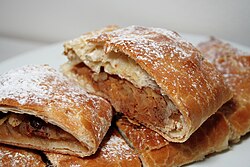
The city's Konditorei (confectioneries) are legendary. Sweet treats are traditionally enjoyed with coffee in the afternoon. Highlights include Apfelstrudel (apple-filled pastry), Sachertorte (a double-layer chocolate cake with apricot jam), and Kaiserschmarrn (shredded, caramelized pancakes served with fruit compotes).
Other notable sweets include Topfenstrudel (quark cheese-filled strudel), Buchteln (sweet yeast rolls filled with Powidl—a thick plum jam base—or apricot jam), and various fruit-based dumplings like Marillenknödel.
The Viennese Coffee House Culture
More than just a place to drink, the Viennese coffee house is a social institution. It is described as a space "where time and space are consumed, but only the coffee is found on the bill." This unique cultural phenomenon is so vital to the city's identity that it is listed as Intangible Cultural Heritage by UNESCO.
Summary of Traditional Viennese Fare
| Category | Dish Name | Description |
|---|---|---|
| Main Course | Wiener Schnitzel | Breaded and fried veal |
| Main Course | Tafelspitz | Boiled beef with apple and horseradish |
| Main Course | Gulasch | Hearty meat hotpot |
| Pastry | Apfelstrudel | Apple-filled strudel pastry |
| Pastry | Sachertorte | Chocolate cake with apricot jam |
| Pastry | Kaiserschmarrn | Shredded caramelized pancakes |
| Spread/Base | Liptauer | Savory cheese spread |
| Spread/Base | Powidl | Plum jam used in dumplings and rolls |
Frequently Asked Questions
What is the difference between Viennese and Austrian cuisine?
While Viennese cuisine is a part of Austrian gastronomy, it is specific to the city of Vienna and is characterized by an eclectic mix of imperial influences from across the former Austro-Hungarian Empire, whereas other Austrian regions have their own distinct variations.
What is "Neue Wiener Küche"?
Neue Wiener Küche, or New Viennese Cuisine, is a modern culinary movement where chefs combine traditional Viennese recipes with the principles of nouvelle cuisine, often incorporating vegetarian options and lighter preparation methods.
What is Powidl?
Powidl is a thick plum jam of Czech origin (povidla) that serves as a popular base for various Viennese dumplings and fillings for sweet rolls like Buchteln.
Why is the Viennese coffee house UNESCO-recognized?
It is recognized as Intangible Cultural Heritage because it represents a unique social space where the experience of lounging and socializing is as important as the consumption of coffee.
Which international cultures influenced Viennese food?
Viennese cuisine was heavily influenced by Italian and French cooking, as well as traditions from Hungary, Bohemia (Czech), Poland, the Balkans, and Jewish communities.