Video Games: The Evolution of Interactive Electronic Entertainment
A video game is an electronic game that requires a user to interact with a user interface or input device—such as a joystick, keyboard, or motion sensor—to generate visual feedback on a display. While most commonly viewed on televisions, computer monitors, or handheld touchscreens, modern gaming has expanded into immersive virtual reality headsets. These experiences are typically audiovisual, often incorporating haptic technology to provide tactile sensations, and may utilize microphones and webcams for livestreaming and social interaction.
Key Facts
- First Consumer Game: Computer Space, released in 1971.
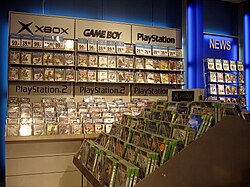
- Best-Selling Console: The PlayStation 2, with over 155 million units sold.
- Industry Pivot: The 1983 North American market crash led to a shift in dominance toward Japanese companies like Nintendo, Sega, and Sony.
- Modern Trends: A rise in "indie games" (independent development) and "games as a service" monetization.
- Diverse Platforms: Gaming spans arcades, home consoles, PCs, mobile devices, and cloud-based systems.
The History and Evolution of Gaming
The journey of video games began in the 1950s and 1960s with simple prototypes running on room-sized mainframe computers. These early experiments laid the groundwork for the first commercial successes.
In 1962, Spacewar! emerged as a pivotal mainframe game, which later inspired the first consumer arcade game, Computer Space, in 1971. The industry saw a massive surge in 1972 with the release of the iconic Pong and the Magnavox Odyssey, the first home console.



The late 1970s and early 1980s are remembered as the "golden age" of arcade games. However, this growth was interrupted by the North American video game crash of 1983, caused by market saturation and a lack of publishing control. In the aftermath, the industry matured under the leadership of Japanese firms, which established the development and distribution standards still used today.
By the 2000s, the market was dominated by "AAA" games—high-budget productions with limited experimental risk. This environment, combined with the rise of the internet and digital distribution, paved the way for the 2010s indie game boom. Today, the industry continues to evolve with the growth of Asian markets and the proliferation of "cozy" and casual gaming on smartphones.

![The PlayStation 2 is the best-selling video game console, with over 155 million units sold.[45]](/images/da/c5/dac5d4c7345dbd36d268350cb3fee28e832cac004b49fe166798124a08c5cd64.jpg)
Platforms and Hardware
Video games are primarily categorized by the hardware used to play them. This includes traditional platforms and emerging technologies:
- Arcade Games: Coin-operated machines typically found in public venues.
- Home Consoles: Dedicated electronic devices connected to a television.
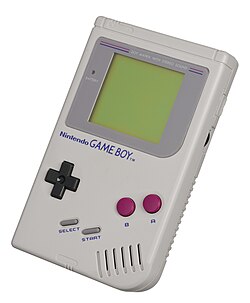
- Handheld Consoles: Portable units with built-in screens and speakers.
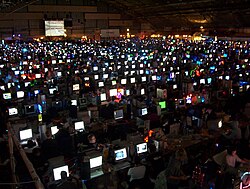
- Computer Games: Including PC-based LAN, online, and browser games.
- Mobile Gaming: Games played on smartphones and tablets.
- Cloud Gaming: Remote gaming where processing happens on a server rather than local hardware.
- Virtual and Augmented Reality: Systems that create immersive 3D environments.


Input and Output Systems
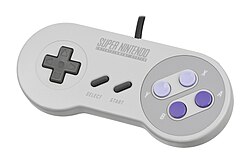
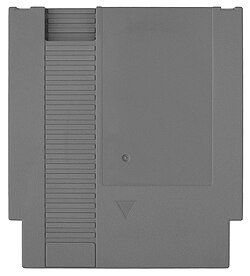
Interaction is facilitated through various input devices, such as controllers, light guns, and keyboards. The output is delivered via display devices and audio equipment, with some systems offering backward compatibility—the ability to play games from older hardware generations.

Classifications and Development
Games are classified by their genre (style of gameplay) and their intended purpose. While most are for entertainment, they are often divided into several types:
- Core Games: Complex games designed for dedicated gamers.
- Casual Games: Simple, accessible games for a wider audience.
- Educational and Serious Games: Designed for learning or professional training.
- Art Games: Created as a form of artistic expression.
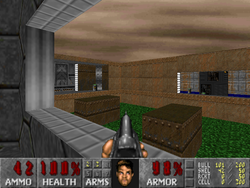

The development process involves specialized tools to fine-tune elements like virtual camera systems. To protect consumers, content rating systems (such as the ESRB) provide labels indicating the age-appropriateness and content of a game.


Industry and Cultural Impact
The video game industry is a global commercial powerhouse, supported by massive trade shows like E3 and Gamescom. Beyond commerce, gaming has entered the realm of fine art, with exhibits appearing in institutions like the Smithsonian American Art Museum.



Culturally, gaming has sparked debates regarding its effects on society. While some express concern over addictive behaviors linked to dopamine-triggering "compulsion loops," other research suggests that gaming can relieve stress and improve mental health.

| Era | Key Milestone | Primary Platform |
|---|---|---|
| 1950s-60s | Mainframe Prototypes | Mainframe Computers |
| 1970s | Commercialization (Pong) | Arcades / Early Consoles |
| 1980s | Golden Age & Market Crash | Arcades / Home Consoles |
| 1990s-2000s | Industry Maturation (AAA) | Consoles / PC |
| 2010s-Present | Indie Boom & Mobile Shift | Smartphones / Cloud / VR |
Frequently Asked Questions
What was the first consumer video game?
The first consumer arcade video game was Computer Space, released in 1971, which was inspired by the 1962 mainframe game Spacewar!.
What caused the video game crash of 1983?
The North American market crash was primarily caused by a loss of publishing control and the saturation of the market with too many low-quality titles.
What is the difference between AAA and indie games?
AAA games are high-budget productions developed by large companies, while indie games are developed independently, often allowing for more experimental gameplay and risk.
Which video game console has sold the most units?
The PlayStation 2 is the best-selling video game console of all time, with over 155 million units sold.
Can video games be considered art?
Yes, video games are increasingly recognized as art, as evidenced by their inclusion in museum exhibits, such as those at the Smithsonian American Art Museum.