Vicinity Centres: The Evolution of a Retail Property Giant
The journey of Vicinity Centres is a complex saga of rapid international expansion, financial crisis, and strategic rebirth. From its origins as a construction-linked entity to its current status as a leader in Australian regional shopping centres, the company has navigated some of the most volatile periods in global real estate history.
The Early Years and the Rise of Centro
The company began its journey on 18 February 1985, established by the diversified construction firm Jennings Industries as Jennings Properties. After listing on the Australian Securities Exchange, the company was renamed Centro Properties in January 1991. By September 1997, it transitioned into a stapled security structure—a financial arrangement where a trust (Centro Property Trust) and a company (Centro Properties Limited) are linked together as a single investment.
Throughout the late 1990s and early 2000s, Centro aggressively expanded its footprint. A pivotal moment occurred in October 2004 when it merged with Prime Retail Group. This era was marked by a series of high-profile acquisitions, including the CT Retail Investment Trust in 2001 and the MCS Syndication Business in 2003.
International Expansion into the United States
Between 2003 and 2007, Centro pivoted toward the American market, acquiring numerous convenience shopping centres. This expansion included the purchase of 14 California assets in 2003 and the acquisition of several listed US Real Estate Investment Trusts (REITs), such as Kramont Realty Trust for USD $1.6 billion in 2005 and New Plan Excel Realty Trust in 2007.
At its peak, Centro was the fifth-largest retail property owner and manager in the United States, overseeing 682 properties with over US$10 billion in assets under management. These operations were primarily centered in Los Angeles and Philadelphia. This US arm eventually became an independent entity known as Brixmor, though Centro currently maintains no affiliation with that company.
Financial Crisis and Restructuring
The company's aggressive growth strategy collided with the 2008 global credit crunch. The American subprime mortgage meltdown led to a severe decline in lending, leaving Centro struggling to refinance A$1.3 billion in maturing facilities by early 2008. The crisis deepened as the company faced the need to refinance $4.5 billion in loans by December 2008, while simultaneously battling two shareholder class actions seeking up to $1 billion.
In January 2009, Centro reached a debt stabilisation agreement with financiers, which included a three-year extension on A$3.9 billion of senior syndicated debt and the issuance of a $1.05 billion Hybrid Security to reduce the immediate pressure to sell assets.
The Great Divestment and Legal Challenges
By 2011, a comprehensive restructure was implemented to save the organization. A primary component of this plan was the sale of the entire US assets platform to BRE Retail Holdings (an affiliate of Blackstone Real Estate Partners VI, L.P.) for an enterprise value of approximately US$9.4 billion.
This period was also marked by significant legal turmoil. In June 2011, the Federal Court of Australia found that eight executives and directors had breached the Corporations Act by signing off on financial reports that failed to disclose billions of dollars in short-term debt. This led to further legal action by the Australian Securities & Investments Commission (ASIC) and a A$200 million investor class action.
The Path to Vicinity Centres
The final stages of the restructure involved the cancellation of $2.7 billion in senior debt in exchange for the transfer of Australian assets. In December 2011, several managed funds were aggregated to create a new listed Australian retail property trust, known as CRF. This entity eventually rebranded as Federation Centres in June 2013.
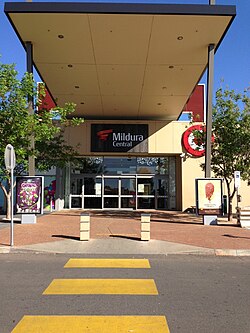
The modern era began in June 2015, when Federation Centres merged with Novion, resulting in the creation of Vicinity Centres. Since 2009, the group has strategically shifted its focus away from convenience retail toward high-quality regional shopping centres, using divestment funds to redevelop core assets.
Recent Leadership
Following the retirement of CEO Grant Kelley on 31 October 2022, Peter Huddles served as interim CEO before being officially appointed to the role on 31 January 2023.
Key Facts
- Founded: 18 February 1985 as Jennings Properties.
- US Peak: Once the 5th largest US retail property manager with 682 properties.
- Major Sale: Sold US portfolio to Blackstone affiliate for approx. US$9.4 billion in 2011.
- Debt Crisis: Faced a $4.5 billion refinancing requirement during the 2008 credit crunch.
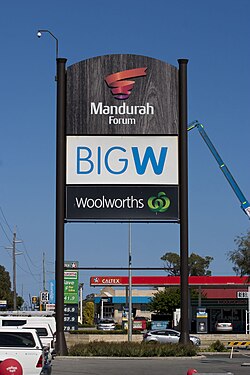
- Current Strategy: Transitioned from convenience retail to regional shopping centres.
| Period/Date | Entity Name | Key Event |
|---|---|---|
| 1985 | Jennings Properties | Established and listed on ASX |
| 1991 | Centro Properties | Renamed from Jennings Properties |
| 1997 | Centro Properties Group | Restructured as a stapled security |
| 2013 | Federation Centres | Rebranded from Centro Retail |
| 2015 | Vicinity Centres | Merged with Novion |
Frequently Asked Questions
What is a stapled security structure?
A stapled security is a financial arrangement where two or more securities—typically a unit in a trust and a share in a company—are legally bound together and must be bought or sold as a single package.
Why did Centro sell its US assets?
Centro sold its US platform to BRE Retail Holdings (Blackstone) for approximately US$9.4 billion as part of a massive restructuring effort to manage its debt following the 2008 global financial crisis.
What was the result of the ASIC legal action in 2011?
The Federal Court of Australia found that eight directors and executives breached the Corporations Act by failing to disclose billions of dollars of short-term debt in financial reports.
How did Vicinity Centres form?
Vicinity Centres was created in June 2015 through the merger of Federation Centres (formerly Centro Retail) and Novion.
What is the current portfolio strategy of Vicinity Centres?
Since 2009, the company has narrowed its focus, moving away from convenience retail to concentrate on the redevelopment and management of regional shopping centres.