Vertical Cut Recording: The Mechanics of Hill and Dale Audio
Before the standardization of modern vinyl, the early days of audio engineering saw a competition between different methods of etching sound into physical media. One of the most significant early techniques was vertical cut recording, a process where audio information is stored through variations in the depth of a record groove rather than its width.
Also known as the hill and dale process, this method was fundamental to the production of phonograph cylinder records and specific disc formats. While later superseded by lateral recording, the vertical cut remains a fascinating example of early mechanical audio engineering.
How Vertical Cut Recording Works
In a vertical cut system, a recording stylus moves up and down to carve a groove into the recording medium. The depth of this cut is determined by the electrical current in the recording coil, which translates acoustic energy—the physical vibrations of sound—into mechanical movement.
Unlike lateral recording, where the needle moves side-to-side and the groove depth remains constant, vertical recording maintains a constant separation between grooves. The audio data is instead encoded in the varying depth of the groove itself.
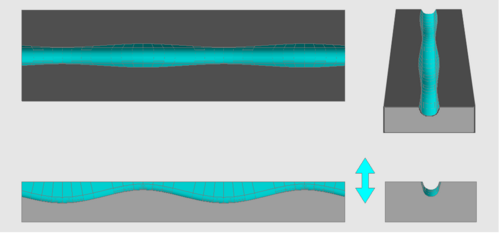
The Hill and Dale Effect
When viewed along its length, a vertically cut groove appears as a continuous wavy line. The needle cuts deeper or shallower based on the tone and loudness of the audio, creating a series of smooth curves. This visual pattern resembles a undulating landscape, which is why the technique earned the nickname "hill and dale."
Technical Challenges and Implementation
Because the process is entirely mechanical, precision is critical. Engineers had to carefully calibrate the cutting depth to ensure playback stability. If the groove was cut too shallow during silent passages, the playback needle could slip out of the track. Conversely, if the groove was too deep, the stylus risked cutting entirely through the recording medium or causing excessive wear during playback.
Interestingly, total silence is virtually impossible to achieve in these recordings. Due to the inherent mechanical noise of the recording system, the needle is never perfectly still. Consequently, the hill and dale effect persists across the entire recording, even during quiet sections.
Applications and Usage
Vertical cut recording was utilized by several major and minor entities in the early audio industry. It was the primary method for phonograph cylinders and was used extensively for Edison Disc Records and Pathé disc records.
Beyond consumer music, the technology served a functional purpose in copyright protection. Early 16-inch background music discs produced by Muzak employed vertical cuts to prevent the records from being played on standard lateral-cut phonographs, ensuring the music remained exclusive to their proprietary systems.
Key Facts
- Alternative Name: Commonly referred to as the "hill and dale" process.
- Mechanism: Audio is recorded via vertical depth variations rather than side-to-side movement.
- Groove Characteristics: Constant groove separation with varying depth.
- Notable Users: Used by Edison, Pathé, and early Muzak.
- Primary Use Case: Phonograph cylinders and specific early disc records.
| Feature | Vertical Cut (Hill and Dale) | Lateral Cut |
|---|---|---|
| Stylus Movement | Up and Down (Vertical) | Side-to-Side (Horizontal) |
| Groove Depth | Varying | Constant |
| Groove Separation | Constant | Varying |
| Visual Appearance | Wavy/Undulating | Zig-zag/Lateral shift |
Frequently Asked Questions
What is the difference between vertical and lateral recording?
Vertical recording encodes sound by varying the depth of the groove (up and down), while lateral recording encodes sound by varying the width or position of the groove (side-to-side).
Why was it called the "hill and dale" process?
It earned this name because the varying depths of the groove, when viewed linearly, create a wavy pattern that resembles the peaks and valleys of a geographic landscape.
Which companies used vertical cut recording?
The process was used for phonograph cylinders, Edison Disc Records, Pathé disc records, and early 16-inch discs by Muzak.
How did Muzak use this technology for copyright protection?
By using vertical cuts, Muzak ensured that their background music discs could not be played on standard lateral-cut record players, effectively restricting playback to authorized equipment.
What happened if the cutting depth was incorrect?
If the groove was too shallow, the playback needle could slip out of place; if it was too deep, it could damage the recording medium or cause excessive wear during playback.