Venezuelan Rock: A History of Sound, Society, and Evolution
Venezuelan rock is a vibrant musical movement primarily rooted in Rock en español (rock music performed in Spanish). From its early days in the oil-rich cities of the coast to its modern international accolades, the genre has evolved through a complex interplay of global influences and local cultural identity.
The sound of the region is a diverse tapestry, blending traditional foundations like blues, psychedelic rock, and rock and roll with indigenous Venezuelan folk elements. This fusion has given rise to unique subgenres such as Joropo rock and Gaita rock, while also embracing global styles like ska punk, electronic rock, and progressive rock.
Key Facts
- Core Influence: Heavily based on Rock en español with roots in blues and psychedelic rock.
- Major Hubs: The scenes primarily developed in Caracas, Maracaibo, Valencia, and Mérida.
- Award Success: La Vida Bohème won the Latin Grammy for Best Rock Album in 2013.
- Social Dynamic: The term "Sifrino rock" describes the genre's historical association with the upper-middle class.
- Key Festivals: Festival Nuevas Bandas and Gillmanfest have been pivotal for emerging talent.
The Evolution of the Scene
The 1960s: The Oil Boom and Early Steps
The emergence of rock in Venezuela was closely tied to the economic surge of the oil industry in the late 1950s. Early pioneers included bands like Los Flipper, The Thunderbirds, and Los Dangers. A standout of this era was Los Impala, hailing from the crude oil hub of Maracaibo; they became the first South American group to achieve significant international reputation, particularly in Spain.
The 1970s: Progression and Heavy Metal
The 1970s saw a shift toward complexity and power. The progressive rock trio Ficción (known for Sobre el Abismo) became an emblem of the Prog scene and remains active today. Simultaneously, a hard rock and heavy metal movement surged with bands such as Sacrifice and Power Age—the latter of which evolved into Arkangel, founded by Paul Gilman and Freddy Marshall.
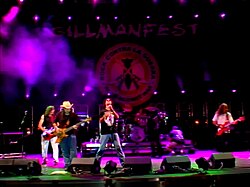
Other notable acts included Spectro, José Arevalo Rock Band, and Resistencia. While blues was initially performed in English, the band Pastel de Gente broke ground in the mid-1980s by recording blues with Spanish lyrics. Toward the end of the decade, artists like Aditus, Melissa, and Jorge Aguilar integrated pop, new wave, synth-pop, and funk, making rock more accessible to the general public.
The 1980s: Underground Resistance
While the commercial scene leaned toward pop-rock, a gritty underground punk scene emerged. Bands like Sentimiento Muerto and Desorden Público gained international attention despite facing media blockades due to their provocative language and strong political stances. Their eventual commercial success paved the way for other late-80s acts like Zapato 3, while La Misma Gente earned a reputation as a cult favorite.
The 1990s and 2000s: Diversification and Cult Status
The 1990s witnessed a proliferation of new sounds with the arrival of Caramelos de Cianuro, Los Mentas, and Malanga. This era also produced several "cult bands," including Dermis Tatú, La Puta Eléctrica, and Seguridad Nacional.
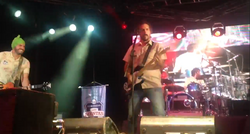
By the 2000s, a new wave of bands like Viniloversus, La Vida Bohème, and The Asbestos revitalized the live music circuit. This period also saw the rise of influential cult acts such as Domingo en llamas and Cunaguaro Soul.
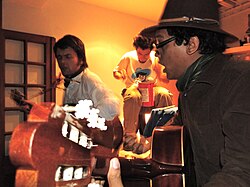
2010 to Present: International Recognition and Tragedy
The 2010s marked a period of high critical acclaim. La Vida Bohème achieved a milestone by winning the Latin Grammy Award for Best Rock Album for Será in 2013. Other nominees during this decade included Viniloversus, Charliepapa, and Arawato.
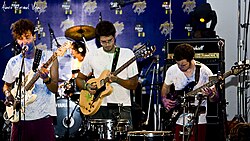
This momentum continued into the 2020s, with Los Mesoneros and Caramelos de Cianuro receiving Latin Grammy nominations in 2021. However, the scene also faced tragedy in 2026 when all four members of the promising band Van Der Dijs perished in earthquakes.
Understanding Sifrino Rock
Sifrino rock (or sifri-rock) is a term used to describe rock music associated with the upper and upper-middle classes. While the term was popularized in the early 2000s by commentator Rufi Guerrero, the social divide has existed since the genre's inception. In Venezuela, unlike in many other countries where rock began as a working-class rebellion, it was often linked to the cultural and economic elite.
Bands such as Sentimiento Muerto were sometimes derisively called "Sifri Muerto" due to their social origins. In later years, groups like Los Amigos Invisibles and Los Mesoneros continued this association with an educated, private-school audience. Over time, this perception has shifted; the Venezuelan diaspora has helped these bands reach a more universal audience, redefining the genre beyond its elitist roots.
Summary of Venezuelan Rock Eras
| Decade | Key Characteristics | Notable Artists |
|---|---|---|
| 1960s | Early Rock and Roll, Oil Industry influence | Los Impala, Los Flipper |
| 1970s | Progressive Rock, Heavy Metal, Hard Rock | Ficción, Arkangel, Spectro |
| 1980s | Underground Punk, Political lyrics, Pop-Rock | Desorden Público, Sentimiento Muerto |
| 1990s | Alternative Rock, Emergence of cult bands | Caramelos de Cianuro, Los Mentas |
| 2000s+ | International awards, Indie scenes, Diaspora | La Vida Bohème, Los Mesoneros |
Frequently Asked Questions
What is Sifrino rock?
Sifrino rock refers to a current of Venezuelan rock associated with the upper and upper-middle classes, reflecting the social inequalities and elite cultural identity that influenced the genre's development in the country.
Which Venezuelan band has won a Latin Grammy?
La Vida Bohème won the Latin Grammy Award for Best Rock Album in 2013 for their work Será.
How did the oil industry affect Venezuelan rock?
The economic jump caused by the oil industry in the late 1950s provided the foundation for the first rock bands to emerge, particularly in cities like Maracaibo.
What are some unique Venezuelan rock subgenres?
Some of the most distinct subgenres include Joropo rock and Gaita rock, which fuse traditional Venezuelan folk music with rock elements.
Who were the pioneers of Spanish-language blues in Venezuela?
While blues was played in English since the late 1960s, Pastel de Gente was the first band to record blues music with Spanish lyrics, releasing two albums in the mid-1980s.