Vegetable Oils: History, Production, and Chemical Composition
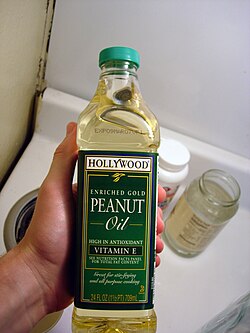
Vegetable oils, also known as vegetable fats, are lipids extracted from the seeds or other edible parts of plants. Chemically, these fats are mixtures of triglycerides—the main constituents of body fat in humans and other animals, as well as vegetable fat. While the term often refers to oils that remain liquid at room temperature, it encompasses a wide variety of substances, from the creamy cocoa butter to the fluid nature of canola oil.
These oils are generally recognized as safe (GRAS) by the United States Food and Drug Administration (FDA), and scientific evidence does not support claims that seed oils are unhealthy.
Key Facts
- Ancient Origins: Olive oil production dates back as far as 6000 BC in present-day Israel.
- Global Growth: Total vegetable oil production rose 130% between 2000 and 2022, reaching 212 million tonnes.
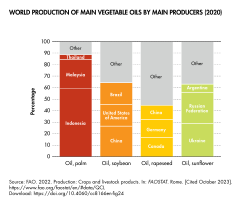
- Dominant Producer: Palm oil became the world's primary vegetable oil in 2006, overtaking soybean oil.
- Versatile Uses: Beyond cooking, these oils are essential for cosmetics, lubricants, paints, and biofuels.
- Extraction Methods: Oils are produced via pressing (such as the traditional Ghani) or chemical solvent extraction.
The Evolution of Vegetable Oil
Antiquity and Early Use
The use of plant oils spans millennia. Archaeological evidence indicates that olive oil was produced in the Levant between 6000 BC and 4500 BC. In ancient Egypt, plant oils—including olive, cypress, and cedar oils—played a critical role in the mummification process.
Modern Industrialization
During the Industrial Revolution, palm oil emerged as a major global commodity. The 19th and 20th centuries brought scientific breakthroughs in the understanding of fats and the process of hydrogenation (the chemical process of adding hydrogen to liquid vegetable oils to make them more solid). This led to the creation of modern staples like shortening and margarine, while soybean and canola oils rose to market dominance.
Production and Yield
Vegetable oils are extracted using various methods, with efficiency varying by technique. Solvent extraction is the most efficient, yielding 40–43% of the oil, compared to expellers (34–37%) and the traditional Ghani press (20–30%).
Crop Efficiency
Different crops provide vastly different yields per hectare. Palm oil is the most productive, yielding 4.0 tonnes per hectare per year, significantly higher than coconut (1.4 t/ha/yr) or soybean oil (0.45 t/ha/yr).
| Oil Source | World Consumption (Million Metric Tons) | Yield (t/ha/yr) | Primary Notes |
|---|---|---|---|
| Palm | 41.31 | 4.0 | Most produced tropical oil; used for biofuel. |
| Soybean | 41.28 | 0.45 | Widely consumed cooking oil. |
| Rapeseed/Canola | 18.24 | 0.75 | Common global cooking oil. |
| Sunflower | 9.91 | 0.6 | Used in cooking and biodiesel. |
| Olive | 2.84 | N/A | Used in cooking, cosmetics, and traditional lamps. |
Applications of Vegetable Oils
Culinary Uses
In the kitchen, vegetable oils serve three primary purposes:
- Enriching: Increasing caloric density and satiety.
- Texture: Modifying how starches and fats combine.
- Flavoring: Adding distinct tastes, such as those found in sesame or almond oils.
Industrial and Technical Uses
Beyond food, these oils are utilized as additives in pet food, as lubricants in manufacturing, and as a base for cosmetics and paints. They are also a primary feedstock for the production of biofuels.
Chemical Composition and Smoke Points
The utility of an oil often depends on its fatty acid profile—comprising saturated, monounsaturated, and polyunsaturated fats—and its smoke point (the temperature at which the oil begins to decompose and smoke).
For example, avocado oil has a very high smoke point of 250°C, making it ideal for high-heat cooking. In contrast, flaxseed oil has a low smoke point of 107°C, limiting its use to cold applications. Coconut oil is notably high in saturated fatty acids (82.5%), while oils like hemp seed are predominantly polyunsaturated (82%).
Frequently Asked Questions
What is the difference between seed oils and other vegetable oils?
Seed oils are extracted specifically from seeds (e.g., soybean, canola, grapeseed), whereas other vegetable oils can come from different plant parts, such as the fruit pulp of olives or the mesocarp of the palm fruit.
Which vegetable oil has the highest production yield?
Palm oil has the highest yield, producing approximately 4.0 tonnes per hectare per year.
What is hydrogenation in the context of vegetable oils?
Hydrogenation is a chemical process that converts liquid vegetable oils into semi-solid fats, which was historically used to create products like margarine and shortening.
Are seed oils considered unhealthy?
No, there is no scientific evidence that seed oils are unhealthy, and they are generally recognized as safe (GRAS) by the FDA.
What is a smoke point and why does it matter?
The smoke point is the temperature at which an oil begins to break down and produce visible smoke. It determines the oil's suitability for different cooking methods; high smoke point oils are better for frying, while low smoke point oils are better for dressings.