Variolites: The Unique Globular Structures of Mafic Volcanic Rocks
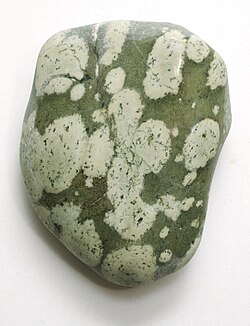
In the diverse world of igneous geology, certain rocks exhibit striking visual patterns that provide clues about their volcanic origins. Among these are variolites, a specific type of mafic igneous rock—typically volcanic—characterized by the presence of small, light-colored, spherical structures known as varioles embedded within a fine-grained matrix.
These rocks are most commonly found in tholeiite, basalt, or komatiite. Because they often appear in pillow lavas (rounded volcanic structures formed during underwater eruptions), subaerial lava flows, or volcanic dykes, they serve as important markers for geologists studying ancient volcanic environments.
The Nature and Appearance of Varioles
The term variolite was first coined in 1648 by Aldrovandi to describe aphanitic (fine-grained) igneous rocks containing these distinct globules. The name is derived from the Latin word variola, meaning smallpox, which refers to the pock-marked appearance these rocks acquire after weathering.
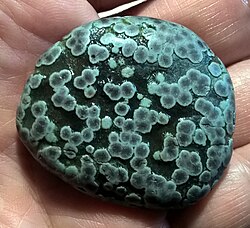
Varioles themselves are globular to spherical structures that range in size from 0.05mm to over 5cm in diameter. They are typically lighter in color than the surrounding host rock. Because varioles are generally less resistant to weathering than the enclosing aphanitic rock, they erode more quickly, leaving behind the characteristic pits or pock-marks on the rock's surface.
Defining Varioles in Geologic Literature
The classification of varioles has historically been a point of confusion in geologic literature. Some modern texts define a variole as a type of spherulite—a structure composed of radiating crystals of plagioclase or pyroxene. However, not all varioles are spherulites.
Because different geological mechanisms can produce these light-colored spheres, experts recommend using the original, broader definition. This is particularly important when studying Precambrian and Archean volcanic rocks, where intense mineralization and deformation make it nearly impossible to determine the exact origin of the structures without advanced laboratory analysis.
Summary of Variolite Characteristics
| Feature | Description |
|---|---|
| Rock Type | Mafic, igneous, typically volcanic (e.g., basalt, komatiite) |
| Structure | Light-colored, spherical globules (varioles) in a fine-grained matrix |
| Size Range | 0.05mm to over 5cm in diameter |
| Common Settings | Pillow lavas, subaerial flows, and volcanic dykes |
| Weathering Effect | Pock-marked surface due to differential erosion |
Key Facts
- Variolites are mafic volcanic rocks containing centimeter-scale spherical structures called varioles.
- The name originates from the Latin word for smallpox (variola) due to the rock's weathered appearance.
- Varioles can be found in various mafic rocks, including basalt, komatiite, and tachylite.
- They are typically lighter in color and more susceptible to weathering than the surrounding matrix.
- The term is sometimes confused with "spherulite," though not all varioles are composed of radiating crystals.
How Varioles Form
Petrographic and geochemical analyses have debunked older hypotheses suggesting that varioles were quenched immiscible liquids. Instead, current scientific evidence suggests they result from one of three primary processes:
- Blotchy Alteration: The chemical alteration of a fine-grained igneous rock.
- Magma Mingling: The mixing of magma originating from two distinctly different sources.
- Spherulite Degradation: The alteration and subsequent degradation of plagioclase spherulites.
Frequently Asked Questions
What is the difference between a variolite and a variole?
A variolite is the entire igneous rock, while a variole is the individual light-colored, spherical structure found within that rock. Although some scientists use the terms synonymously, they refer to the whole and the part, respectively.
Why do variolites look pock-marked?
Varioles are less resistant to weathering than the surrounding fine-grained (aphanitic) rock. As the rock is exposed to the elements, the varioles erode faster, leaving small depressions or pits on the surface.
Are all varioles spherulites?
No. While some varioles are spherulites (composed of radiating plagioclase or pyroxene crystals), others are formed through magma mingling or blotchy alteration. Because multiple mechanisms can create these shapes, the term variole is used as a general descriptive term.
In what types of volcanic environments are variolites found?
They are commonly found in mafic volcanic settings, specifically within pillow lavas, subaerial lava flows, and volcanic dykes.